


Classical studies achieves significant progress during 14th FYP
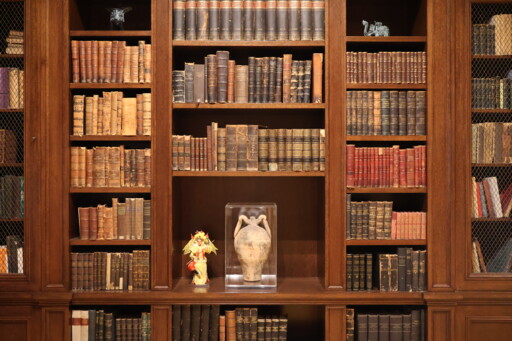
Part of the collection of the Archaeological Library of the Chinese School of Classical Studies at Athens Photo: Lian Zhixian/CSST
As a foundational humanities discipline centered on the study of classical civilizations, classical studies bears the academic mission of exploring the origins of human civilization and uncovering its universal values. During the 14th Five-Year Plan period (2021–25), guided by General Secretary of the CPC Central Committee Xi Jinping’s important discourses on exchanges and mutual learning among civilizations, as well as the spirit of his congratulatory letter to the inaugural World Conference of Classics, classical studies in China achieved historic progress. The field has developed from a subfield of world history or foreign literature into an independent discipline characterized by scale, institutional foundation, and capacity for cross-civilizational dialogue. It has also made systemic breakthroughs in the construction of an independent knowledge system, disciplinary development, and the collation of canonical texts.
Clear direction
In November 2024, the inaugural World Conference of Classics was held in Beijing, and the establishment of the Chinese School of Classical Studies at Athens (CSCSA) in Greece was also announced. In his congratulatory letter to the conference, President Xi Jinping noted that the conference, co-organized by China and Greece, along with the establishment of the Chinese School of Classical Studies in Athens, has created a new platform for civilizational exchange and mutual learning between China, Greece, and other nations around the world. This important statement has charted the course for Chinese classical scholarship.
In keeping with the spirit of this message, the Chinese Academy of Social Sciences (CASS) explicitly set out three strategic goals: to build a foundational theoretical system for classical studies under the guidance of Xi Jinping Thought on Culture; to forge a Chinese school of classical studies dedicated to carrying forward historical legacies, preserving cultural lineages, and revitalizing academic traditions; and to develop the CSCSA into a new platform for implementing the Global Civilization Initiative and promoting exchanges and mutual learning among civilizations worldwide.
The convening of the inaugural World Conference of Classics and the establishment of the CSCSA marked a historic transformation in Chinese classical scholarship—a shift toward developing an independent knowledge system centered on civilizational exchange and mutual learning.
Formation of cross-civilizational comparative research system
During the 14th FYP period, classical studies in China showed strong momentum toward institutionalization, systematization, and standardization. CASS has collaborated with the Greek Ministry of Culture to advance Eastern classical studies centered on Sanskrit research, alongside Western classical studies centered on ancient Greek and Roman studies, through regular bilateral forums, joint archaeological projects, and other initiatives. Meanwhile, institutions including the Department of History and the Center for Classical Philology at Peking University and the Department of History at Fudan University have engaged in active scholarly exchange with the Faculty of History at Moscow State University and the Department of Classical Philology at St. Petersburg University in Russia. These partnerships involve regular faculty visits and collaborative research projects focusing on the works of historians such as Herodotus, Thucydides, and Polybius, exploring the influence of the classical historiographical tradition on later generations. By deepening academic cooperation with countries such as Greece and Russia, Chinese classical scholarship is moving from recipient to contributor in civilizational dialogue, bringing Eastern wisdom to the inheritance and development of human civilization.
During the 14th FYP period, Nankai University drew on its disciplinary strengths to undertake the major project “Hellenistic Civilization and the Silk Road,” with support from the National Social Science Fund of China. Its concluding monograph, From the Mediterranean to the Yellow River: Hellenistic Civilization and the Silk Road, integrates diverse historical sources including Hellenistic urban remains, numismatic inscriptions, epigraphic evidence, and artistic statuary. The monograph systematically traces the interaction between Hellenistic civilization and Silk Road civilization, identifying both shared patterns and distinctive pathways by which different classical civilizations addressed fundamental human concerns such as order, virtue, knowledge, and the sacred. Through this cross-civilizational dialogue, the project powerfully demonstrates the urgent relevance of classical studies for responding to the crisis of modernity, understanding inter-civilizational mutual learning, and shaping a shared future for humanity.
Classical studies recognized as independent discipline
CASS has long championed the development of classical studies as part of its initiative to sustain rare and endangered disciplines, providing comprehensive, full-chain funding and institutional support for 10 disciplines, including “Chinese Classical Studies” and “Classical Philology.” The Institute of Foreign Literature at CASS, with its deep foundation and academic lineage in classical studies, established the Department of Sanskrit and South Asian Literature and the Department of Classical Studies during the 14th FYP period. It also founded a classical studies branch of the Chinese Association of Studies of Foreign Literature, launched Research in Classics—the country’s only professional journal in the field—and operates influential WeChat public accounts such as “Classical Studies” and “Classics and Civilization.”
At the same time, 12 leading universities, including Peking University and Fudan University, have introduced general education courses such as Introduction to Classical Languages. Tsinghua University, meanwhile, has established a minor in classical studies, systematically teaching Ancient Greek, Latin, and the foundational theories of the discipline.
Beyond curriculum development, a number of key universities have established dedicated research centers, further consolidating the institutional presence of classical studies departments and centers. The Center of Chinese and Greek Ancient Civilizations at Southwest University, the Center for Research of Ancient Civilizations on the Silk Road at Nankai University, and the Institute of Western Classical Philosophy at Sichuan University have become three distinctive research hubs focused respectively on classical historiography, Hellenistic civilization, and ancient Greek philosophy. Led by Southwest University and in partnership with Renmin University of China, Shandong University, and Sichuan University, the Center of Chinese and Greek Ancient Civilizations was jointly established with the National and Kapodistrian University of Athens, the University of Patras, Aristotle University of Thessaloniki, and the University of Crete. Its establishment marked the transition of the China-Greece civilizational dialogue mechanism into a phase of substantive operation.
Together, these institutions have further strengthened the discipline’s foundation through independent student enrollment quotas, curriculum systems, and faculty teams. Southwest University, for example, hosts the National Collaborative Research Center for Revolutionary Cultural Relics, a key humanities and social science research base approved by the Ministry of Education and the National Cultural Heritage Administration. In collaboration with the National Library of Greece, the center has digitized 100,000 pages of ancient Greek documents and 20,000 excavated Chinese documents, enabling cross-linguistic retrieval.
In June 2025, the Center of Chinese and Greek Ancient Civilizations at Southwest University, alongside the International Plato Society and the National and Kapodistrian University of Athens, established the “Global Contemporary Greek Studies Community” and the “Global Plato Studies Community,” attracting more than 60 scholars from five continents. In addition, the digital museum of mutual learning among civilizations, launched in 2025, uses VR technology to recreate scenes of dialogue between the Academy of Athens and the Jixia Academy of the Warring States Period (475–221 BCE) and has attracted over 500,000 visits. During the 14th FYP period, classical studies in China completed its transformation from a mere curriculum offering into a fully fledged independent discipline.
Systematization of foundational document translation, publication
Classical scholarship in China has evolved beyond the isolated efforts of individual scholars and begun to take shape as a systematic, large-scale academic undertaking. This shift is reflected in CASS’s Institute of Foreign Literature’s editing and publication of the “Classical Studies” series, comprising two sub-series: “Classics and Interpretation: Ancient and Modern Collections” and “Classics and Interpretation: Collections of Classical Studies.”
At Sichuan University, the “Wangjiang Plato Academy” has deepened research on the Platonic tradition through open reading groups, leading the compilation of the “Ficino Collection” and the “Wangjiang Treatises on Plato Studies” and propelling Greek philosophical literature to move from fragmented translation toward systematic collation. Meanwhile, Shanghai People’s Publishing House has continued to organize the publication of the “Rizhi Classical Collection” series. During the 14th FYP period, translations of classical works such as Manetho’s Aegyptiaca (History of Egypt) and Seneca’s De Vita Beata (On the Happy Life) were released.
In addition, Peking University Press completed the second phase of its “Studies of Western Classics” series in November 2021, publishing 32 titles across 33 volumes. In March 2025, Beijing Normal University Publishing Group published a Western classics translation series under the chief editorship of Yang Gongle, a professor from the Center for Studies of Historical Theory and Historiography at Beijing Normal University.
Taken together, these publishing efforts show that scholars have moved beyond simple translation toward annotated critical editions with detailed introductions, extensive notes, and original research. To overcome bottlenecks in documentary resources, the CASS Library established the Documentation Center for Classical Studies and the Archaeological Library of the CSCSA. The new center houses more than 15,000 volumes of Chinese and Western classical texts and research monographs, while integrating 45 Chinese and foreign-language databases. These holdings and services provide strong documentary support for the advancement of classical studies in China.
Bright prospects for 15th FYP
The progress of Chinese classical scholarship during the 14th FYP period represents not only an academic breakthrough within the discipline itself, but also a substantive response—at the levels of civilizational inheritance, mutual learning, and development—to President Xi Jinping’s earnest expectation of “implementing the Global Civilization Initiative and promoting the advancement of human civilization.”
Looking ahead to the 15th FYP period (2026–30), it is essential to continue constructing an independent knowledge system for classical studies, and in doing so, stimulate the cultural creativity and innovation of the entire nation and develop a strong socialist culture.
First, efforts should be made to strengthen the international communication of Xi Jinping Thought on Culture, helping the world better understand the theoretical foundations and value orientations of Chinese classical studies.
Second, interdisciplinary integration should be promoted, drawing on history, literature, linguistics, political science, archaeology, and other fields to explore the connotations and value of classical civilizations in greater depth.
Third, the collation and translation of primary sources should be strengthened to provide more accurate and comprehensive foundational materials, thereby vigorously advancing cultural programs.
Fourth, research should be rooted in the depth and breadth of Chinese civilization, with greater efforts to excavate and interpret China’s fine traditional culture so that the world can better understand the profound foundations and contemporary value of Chinese civilization.
At the same time, classical studies must maintain a global vision. Scholars should follow the trends of information technology by strengthening the construction of a “Global Academic Network for Classical Studies” and working with their counterparts around the world through joint exploration and cooperative research to modernize the discipline.
The role of the CSCSA should also be leveraged to disseminate the socialist culture with Chinese characteristics of the new era—a culture marked by strong intellectual guidance, spiritual cohesion, value appeal, and international influence—so that the “true voice of China” can be heard clearly and powerfully in classical studies on the world stage.
In addition, the avenues of classical studies should be broadened through multidisciplinary research, allowing the wisdom of classical civilizations to better serve the development of human society, advance the building of a strong cultural nation, and contribute Chinese strength to global inter-civilizational dialogue.
Hou Weihong is a research fellow from the Institute of Foreign Literature at the Chinese Academy of Social Sciences.
Editor:Yu Hui
Copyright©2023 CSSN All Rights Reserved