


Li Hu’s legacy of truth-seeking and originality

FILE PHOTO: Li Hu
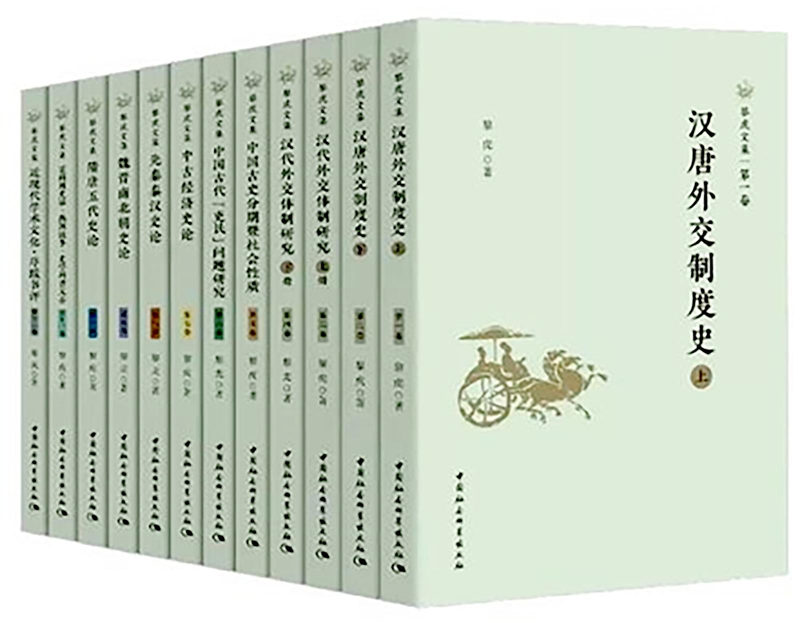
FILE PHOTO: Collected Works of Li Hu
Li Hu (1936-2022) was a renowned Chinese historian who devoted his life to teaching and researching ancient Chinese history. Known for his rigorous and diligent scholarship, intellectual originality, firm command of textual sources, and broad intellectual horizons, he challenged established narratives throughout a career spanning more than six decades. He opened up new fields of inquiry, developing distinctive scholarly frameworks in four areas: the history of China’s classical diplomatic system, the socioeconomic history of the Wei, Jin, and Southern and Northern Dynasties (220-589), limin (officials and commoners) society in middle antiquity, and the periodization of ancient Chinese history. His output was substantial and his influence far-reaching. The twelve-volume Collected Works of Li Hu brings together his scholarly writings from across his career, offering a comprehensive account of his intellectual development and his achievements over more than four decades since reform and opening up.
Pioneering study of China’s classical diplomatic system
Scholars long held that premodern China lacked formal diplomatic systems and that interactions between Central Plains dynasties and surrounding regimes should not be considered diplomatic activities. This consensus left classical diplomatic systems largely unexplored as a field of study. Li was the first to challenge these assumptions, drawing on transmitted texts and archaeological findings to reconstruct these systems and establish a coherent framework for their study.
Li’s 1979 paper “The Historical Contribution of Princess Jieyou’s Journey to the Western Regions” marked the beginning of his research into ancient diplomacy. His 1988 article “A Preliminary Study on the Diplomatic System of the Shang Dynasty,” drawing on oracle bone inscriptions from the ruins of Yin, identified shiren (scribal envoys) as the earliest professional diplomats in Chinese history, responsible for communicating with regional states, delivering decrees from the central court, and facilitating tribute missions. The study revealed the wide geographical reach of Shang diplomacy, tracing relations conducted at multiple levels with dozens of neighboring polities. By examining these early diplomatic practices—rudimentary, unstable, and nonreciprocal as they were—Li challenged the traditional notion that antiquity lacked diplomacy altogether.
In 1998, Lanzhou University Press published his History of Diplomatic System in Han and Tang Dynasties, the founding work of the field. It was the first to define the core concept of “China’s classical diplomatic system” and systematically traced the evolution and workings of Han-Tang diplomatic decision-making, specialized diplomatic agencies, and other participating bodies, establishing a distinctive research paradigm.
In 2014, Li published A Study of the Han Diplomatic System, which systematically analyzed the channels, methods, protocols, and legal regulations governing the diplomacy of the Western (206 BCE?24 CE) and Eastern Han (25-220) dynasties, further refining the research framework for classical diplomatic systems.
In-depth study of socioeconomic history of the Wei, Jin, and Southern and Northern Dynasties
Li’s 1984 paper “Two or Three Facts About the Shu Han’s Policy on Southern Tribes” marked his formal entry into the study of the Wei, Jin, and Southern and Northern Dynasties period. For nearly four decades thereafter, this area remained his core scholarly focus. His work on the socioeconomic history of this period encompassed land taxation, regional economies, population and transportation systems, and social life, while also addressing political, cultural, and ethnic issues. His papers on these subjects, later collected in Studies on the History of the Wei, Jin, and Southern and Northern Dynasties, combined meticulous research with fresh insights that frequently challenged established scholarly views.
For example, most scholars emphasized the importance of the state-run tuntian (agricultural colony) system in the Three Kingdoms economy while overlooking the role of smallholder farming. Li redressed this long-standing imbalance in scholarship by arguing that self-sufficient smallholder economies were central to economic recovery during this era, rivaling the tuntian system in importance.
Li’s original research also filled important gaps in historical scholarship. “The Hunting Economy of Early Northern Wei” clarified how the Tuoba Xianbei people made the transition from fishing and pastoral livelihoods to an agricultural economy, addressing a significant blind spot in the economic history of early Northern Wei (386?534). “The Development of Gastronomy during the Wei, Jin, and Southern and Northern Dynasties” established a framework for ancient culinary studies, extending the frontiers of social history. “Sources of Warhorses for the Eastern Wu Regime During the Six Dynasties” demonstrated how closely state stability depended on access to warhorses, while “A Brief History of Murong Xianbei Music” traced the role of music in cultural integration and the evolution of the Xianbei people.
Grounded in historical evidence and careful reasoning, these studies yielded original conclusions, many of which have since gained wide acceptance. His Studies on the History of the Wei, Jin, and Southern and Northern Dynasties has come to be regarded as a model of truth-seeking and innovative historiography.
Reconstructing limin society in middle antiquity through Wu bamboo slips
The status of lihu (clerk households) is a central question in the study of grassroots society during the Wei, Jin, and Southern and Northern Dynasties and the Tang era. Scholars traditionally regarded such households as legally distinct from common households—lower in social status and bound by hereditary obligations—yet firm empirical support for this view was lacking. The discovery of the Zoumalou Wu bamboo slips provided an opportunity to reassess the issue, though few scholars ventured to challenge established conclusions.
Li identified discrepancies between established interpretations and the evidence recorded on the unearthed bamboo slips. Through meticulous textual analysis and a systematic reassessment of earlier scholarship, he overturned conventional theories of “clerk households” and developed a new account of limin society in middle antiquity.
Between 2005 and 2009, Li published 11 influential papers in which he demonstrated that the Wu bamboo slips contained no evidence of a separate registration category for “clerk households.” Instead, he argued that “clerks” and “commoners” were both registered as ordinary civilian households, sharing many rights and responsibilities. He also pointed out that earlier scholars had conflated military officials with administrative clerks, leading to fundamental misunderstandings.
By explaining what “clerks and commoners as one” meant at the grassroots level, clarifying their strata, and distinguishing among categories such as “true clerks,” “provisional clerks,” and “military clerks,” he established an entirely new theoretical framework for understanding these households.
Constructing an indigenous theory of the periodization of ancient Chinese history
The periodization of ancient Chinese history has long been a central question in modern historiography. Yet existing schemes often borrowed from Western theoretical models without adequately accounting for China’s historical realities. Drawing on decades of research, Li developed a distinctive theory of periodization grounded in China’s own historical experience, which he presented in a specialized treatise published in 2020, at the age of 84.
Central to his framework were two key structural elements: the dynamics of state power and primary-level governance. He divided ancient Chinese history into three stages: the pre-Xia period (prior to 2070 BCE), characterized by wujun qunju (chiefless collectives); the Xia (c. 2070?1600 BCE) through Warring States Period (475-221 BCE), by wangquan zhongshu (kings and commoners); and the Qin (221-206 BCE) through Qing (1644?1911) dynasties, by huangquan limin (emperors, officials, and commoners). The resulting scheme combined analytical rigor with close attention to historical reality.
Li carefully distinguished between the decentralized, locally autonomous nature of pre-Qin kingship and the highly centralized, unified rule of the Qin and Han imperial realms. He identified the Spring and Autumn (770-476 BCE) and Warring States periods as transitional phases and dated the formal establishment of a huangquan limin society to the Qin and Han dynasties. Grounded in the distinctive features of China’s social structure, his periodization addressed shortcomings in earlier frameworks and offered a perspective rooted in China’s own history.
Over six decades of rigorous and original scholarship, Li established pioneering frameworks across several fields of study. His meticulous verification of sources, breadth of vision, and intellectual independence shaped a distinctive approach to the study of ancient Chinese history. His enduring legacy lies both in the substantial body of scholarship he produced and in the example of diligent inquiry he set for future generations of historians.
Zhang Jinlong is a professor from the School of History at Capital Normal University.
Copyright©2026 CSSN All Rights Reserved