
. > JOURNALS > Japanese Studies > 2014 > 201401
The Evolution of Strategic Configuration in East Asia Since the First Sino-Japanese War and Its Inspiration
Author : Source : Japanese Studies No.1(2014) 2014-01-07
Abstract: The international relations in East Asia has undergone two sixty-year stages of history since the first Sino-Japanese War in the end of the 19th century, with the feature of the first stage is colonialism, war and revolution and the second one is peace, cold war and competition. The future of East Asia, whether its direction will be stability, cooperation and regional integration or confrontation, conflict and internal friction, depends greatly on the scenario of Sino-Japanese relations. In each decade of history, the strategic configuration in East Asia has gone through one major change. It should be noted that the policies of Abe administration right now have shared some similarities with those in the decade before the first Sino-Japanese War and under Ito administration. It implies that there is a danger for the transformation of Japan’s development model to run off the track of peaceful development. It is urgent for China to understand the changing Japan in an objective and comprehensive way, and properly react to it on a well-coordinated basis.


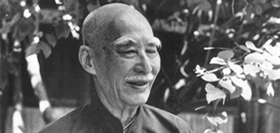
Ye Shengtao made Chinese fairy tales from a wilderness
Ye Shengtao (1894–1988) created the first collection of fairy tales in the history of Chinese children’s literature...
>> Read More









-
How northern ethnicities integrated into Chinese nation
2023-09-18
-
Mogao caves
2023-09-12
-
Mogao Grottoes as ‘a place of pilgrimage’
2023-09-12
-
Time-honored architectural traditions in China
2023-08-29
-
Disentangling the civilizational evolution of China
2023-08-28
-
AI ethics in science fiction
2023-08-23
 2011-2013 by www.cssn.cn. All Rights Reserved