


Aesthetic spirit of Yangtze River culture
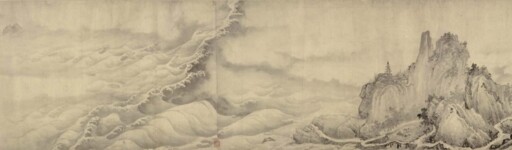
Part of Song painter Zhao Fu’s “Ten Thousand Li of the Yangtze River” Photo: Zhou Jiwu

FILE PHOTO: Part of Ming painter Wu Wei’s “Ten Thousand Li of the Yangtze River”
The Yangtze River has nurtured a millennia-old cultural context and heritage stretching from the Ba-Shu mountains and rivers of the Sichuan Basin in southwestern China to the Jiangnan water towns south of the lower reaches of the river. It is both a cradle of Chinese civilization and a source of the Chinese aesthetic spirit. The majestic beauty of the Yangtze—and the aesthetic ethos that has formed around it—is not only a precious intellectual legacy accumulated over the long course of history, but also a distinctive perspective from which to understand the river’s cultural connotations today and to envision its future.
Poetic richness of Yangtze culture
The Yangtze is more than a natural geographic concept; it is also a cultural and humanistic one. As a physical river system, it is the mother river of the Chinese nation, the longest river in China, and the third longest in the world. Originating in the Tanggula Mountains on the Qinghai–Xizang Plateau, it boasts abundant waters and countless tributaries, including the ten major tributaries of the Yalong, Min, Jialing, Wu, Chishui, Yuan, Qing, Xiang, Han, and Gan rivers. Sustained by this extensive network, the Yangtze has long nourished and sustained much of China through irrigation and transportation. Its mighty, majestic, and all-embracing grandeur has also etched spectacular landscapes, where torrents race through innumerable ravines, while drifting mists blanket the mountains.
As a humanistic concept, the Yangtze is the root and soul of Chinese culture. Along its watershed, the cultures of many ethnic groups have remained interconnected across historical periods, continuously communicating, enriching one another, and merging in new forms. The result is an enduring, resplendently diverse Yangtze River culture—one that has shaped the shared historical memory and spiritual home of the Chinese nation.
In classical poetry and prose, the Yangtze stands as one of the most central aesthetic images. As a vehicle for lyrical expression, its imagery generally falls into three categories. The first consists of natural images such as the “ten thousand li” (li, traditional Chinese unit of length, around 500 meters) Yangtze, vast rivers and mountains, the Jiangnan region, green waters and verdant mountains, flowing streams, empty mountains, the moon, white clouds, and the setting sun. The second comprises social and human images such as reclusive scholars, woodcutters and fisherfolk, wandering travelers, temple bells, boats and bridges, empty pavilions, and Zen monasteries. The third features flora and fauna, depicting images such as crying monkeys, flying birds, leaping fish, or the sound of wind through the pines. Tang (618–907) poet Li Bai’s “With monkeys’ sad adieux the riverbanks are loud; My skiff has left ten thousand mountains far away” (Leaving the White Emperor Town at Dawn, translated by Xu Yuanchong) and Tang poet Du Fu’s “The wind so swift, the sky so wide, apes wail and cry; Water so clear and beach so white, birds wheel and fly.” (On the Height, translated by Xu) are classic examples.
In painting, calligraphy, and guqin (a seven-stringed plucked instrument) music, the Yangtze transforms into subtle brushstrokes and melodic contours; what is sought is “spirit-likeness,” a rendering of inner vitality and resonance rather than mere likeness. In “Ten Thousand Li of the Yangtze River” by Song (960–1279) painter Xia Gui, now held in the collection of the Palace Museum in Taipei, the painter panoramically depicts the river’s shifting states—from surging, roaring, and swirling to rippling, serene, and ethereal. The guqin piece “Flowing Water” traces the journey of mountain streams converging into rivers and ultimately rushing toward the sea; its powerful melodic passages vividly mimic the perilous rapids and majestic torrents of the Three Gorges.
Poetry and prose endow the Yangtze with a lyrical soul and historical depth, while guqin music, calligraphy, and painting capture its spirit and atmosphere; operatic performance, by contrast, dramatizes and stages the river’s stories and emotions. The Peking opera “Red Cliff” gives voice to Cao Cao’s heroic ambition as well as the wisdom and resolve of Zhou Yu and Zhuge Liang. In the scene “Borrowing Arrows with Straw Boats,” the actors’ performance conjures—within the confines of the stage—a tense world of fog shrouding the great river and thunderous drumbeats. By intertwining the Yangtze’s natural perils—wind, fire, and water—with human ingenuity, courage, and fate, the opera allows audiences to relive that turbulent history through immersive sight and sound.
Yangtze River culture is vast and diverse. Regionally, it comprises Ba-Shu culture in the upper reaches, Jing-Chu culture in the middle reaches, and Jinling, Wuyue, Huaiyang, and Shanghai-style cultures in the lower reaches. In terms of constituent elements, it encompasses water-system culture, fishing and farming culture (such as agrarian and rice-cultivation traditions), sericulture, stoneware culture, bronze culture, ceramic cultures, religious culture, commercial and industrial culture, architectural culture, folk culture, ecological culture, and more. In terms of cultural forms, Yangtze culture is rich in cultural and artistic resources including myths and legends, epics and ballads, music and dance, opera and folk performance, and a wide range of crafts.
Yangtze culture integrating strength and grace
Yangtze River culture embodies ecological diversity, expansiveness, inclusiveness, openness, and an ever-renewing creativity. Together, these characteristics shape the aesthetic forms, imagery, and dispositions of Yangtze aesthetics. Emerging from the river’s mighty momentum as it “rushes toward the sea” and its magnanimity in its capacity to “embrace all waters,” this sensibility ultimately crystallizes into a distinctive aesthetic paradigm. At the level of immediate experience, it accommodates both the magnificent—the perilous grandeur of the Three Gorges and the roar of waves—and the subtle charm of Jiangnan’s misty rains and ink-wash atmospheres. This aesthetic infuses everyday life: It appears in the sweeping landscapes of poetry, calligraphy, and painting; it lingers in the stirring and melodious cadences of operatic singing; and it is woven into the architecture, labor, and customs of communities living along the river. Over time, it has helped shape an Eastern aesthetic orientation in which power and grace are held in creative tension.
Viewed aesthetically, the beauty of the Yangtze manifests in various forms. It not only reveals natural beauty through geography, climate, and ecology but also conveys atmospheric beauty through the viewer’s aesthetic experience. This beauty reflects the aesthetic subject’s projection of feeling and resonance within a particular aesthetic setting—an imagined beauty born of the harmony between humans and nature, and the mutual permeation of emotion and scenery.
Across literature, music, dance, painting, sculpture, architecture, theater, film, television, and other art forms, artists have used expressive languages to recreate the Yangtze’s endless natural vistas and cultural stories, thereby evoking the beauty of its artistic conception. The film “Evening Rain,” for instance, uses river fog to create an atmosphere of hazy melancholy, while the documentary “The Story of the Yangtze River” captures the grandeur of the Three Gorges through its camera lens. National cultures—represented by distinctive folk songs and dances, painting and papercutting, and handicrafts—also present the beauty of the Yangtze’s regional cultures. Chuanjiang haozi (a type of work song sung by boatmen along the Chuanjiang River), for example, shifts tempo with the water’s force—sometimes hurried like navigating rapids, sometimes gentle like sailing calm waters—creating a tragic beauty in the struggle against rushing torrents. In Jiangnan, blue calico (blue cloth printed with white patterns), with its fresh, elegant patterns and crisp contrasts, resonates with the region’s misty rains and evokes a pure, serene water-town aesthetic.
The people of the Yangtze basin have also fashioned a “beauty of everyday life” through long-established folk customs, ritualized festivals, and symbolic practices in weddings, funerals, food traditions, housing, and daily activities. In the Three Gorges, the ritual of “bowl-breaking liquor,” for example, turns the sorrow and resolve of parting into the symbolic act of drinking liquor and smashing the bowl.
In the flowing lines of artists’ brushstrokes, the spirit of the Yangtze is expressed through the river’s ten-thousand-li aesthetic imagery. Song painter Zhao Fu’s “Ten Thousand Li of the Yangtze River” places the river at the center, capturing its ceaseless, surging momentum—the entire scroll filled with the rolling, driving force of the mighty Yangtze.
Ever-generating vitality of Yangtze culture
Unlike the anthropocentric worldview in the West, which sharply separates subject and object, the Chinese aesthetic spirit has long revered the harmony of heaven and humanity, seeking a symbiotic relationship between people and nature. Shengsheng in Chinese refers to the continuous creation of life, emphasizing unending vitality, dynamic balance, and transformative creativity. It encompasses not only the exuberant growth and flourishing of all things in nature but also the continual creation and elevation of human culture, art, and spiritual life. Beauty in this sense is not merely external vibrancy, but an inner, ever-renewing life force and harmonious order marked by eternity, fluidity, and inclusiveness. The Yangtze, in turn, is a flowing, ever-generating river of civilization: Its ecological evolution, historical layers, artistic spirit, and contemporary innovations all reveal the essence of this beauty of continuous generation—eternal creation across time and an all-embracing openness across space.
The beauty of continuous generation in the Yangtze is a sublime, wordless beauty that unites nature, art, and human life into a world of “great beauty.” It arises from natural landscapes of competing ravines and cloud-filled skies, and from human landscapes where emotion and scene intertwine through endless regeneration. It is the grandeur in Li Bai’s “Where the mountains end and the plains begin; And the river winds through wilderness” (Bidding a Friend Farewell at Jingmen Ferry, translated by Xu); the magnificence in Tang poet Zhang Ruoxu’s “In spring the river rises as high as the sea; And with the river’s tide uprises the moon bright” (A Moonlit Night on the Spring River, translated by Xu); and the vastness in Du Fu’s “The boundless forest sheds its leaves shower by shower; The endless river rolls its waves hour after hour” (On the Height, translated by Xu). This aesthetic reverence for “great beauty” allows Yangtze civilization and Yellow River civilization to illuminate one another, shaping a millennia-old cultural lineage from the mountains of Ba-Shu to the water towns of Jiangnan.
In Yangtze aesthetic culture, “great beauty” represents the unity of natural, humanistic, artistic, and ontological beauty. In natural beauty, it lies in the fusion of the beauty of force and the beauty of numerals—the grandeur of the river’s ten-thousand-li flow and its nourishment that benefits all living things shaping the Yangtze’s power and resilience. In humanistic beauty, it takes the form of a harmonious balance of strength and grace: the mysterious and rugged majesty of Ba-Shu existing alongside the delicate elegance of Jiangnan, expressing the wisdom of “harmony in diversity.” In artistic beauty, it is the union of form and spirit, deepened by a profound poetic realm: Tang poet Bai Juyi’s “At sunrise riverside flowers more red than fire” (Fair South Recalled, translated by Xu) and Song poet Su Shi’s “The endless river eastward flows” (Charm of a Maiden Singer, translated by Xu) both elevate natural landscapes into artistic visions, sustaining a tradition in which “landscape enters poetry, and poetry merges with landscape.”
In the aesthetic practice of Yangtze River culture, the river is not an isolated “scenery” to be arbitrarily taken from or admired at will, but a vibrant, organic, and dynamic community of life. Ethical concern thus extends beyond human society to all life forms in the Yangtze basin—and even to mountains, rivers, and the land itself. Immersion in the Yangtze’s beauty can make palpable the joy of finless porpoises leaping from the water, the abundance of fragrant rice flowers along the banks, and the surging momentum of the river’s flow. Emotional resonance and connection of this kind becomes the most direct and enduring aesthetic force that motivates its protection.
Zhou Jiwu is a professor from the School of Arts at Nanjing University.
Copyright©2023 CSSN All Rights Reserved