


Ten-thousand-year jade culture embodies essence of Chinese civilization
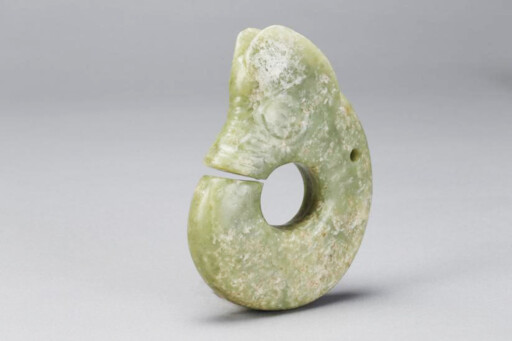
The Hongshan culture jade dragon (Banlashan Cemetery M12:1) Photo: Xiong Zenglong
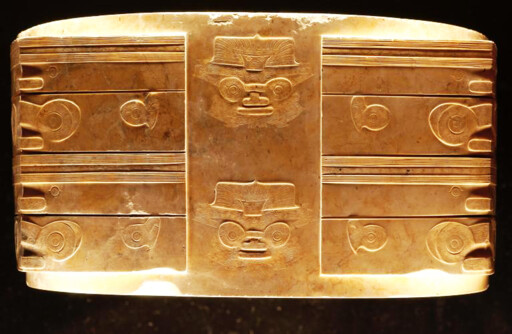
The Liangzhu culture jade tube (Fanshan M12:98) Photo: Xiong Zenglong
At a meeting on cultural inheritance and development in June 2023, General Secretary of the CPC Central Committee Xi Jinping identified five prominent features of Chinese civilization—continuity, innovativeness, unity, inclusiveness, and peaceful nature—thereby offering a profound articulation of its spiritual core. Over the ten-thousand-year course of China’s jade culture, jade artifacts, as carriers of both material and spiritual meaning, have embodied these core values in a systematic and enduring way through their distinctive forms and rich cultural connotations. From the ritual jades of the Neolithic Age to the refined jade carvings of the Ming (1368–1644) and Qing (1644–1911) dynasties, jade culture has been woven through the long arc of Chinese civilization, offering a crucial lens through which to understand these five defining characteristics.
Continuity: Ten-thousand-year transmission of jade culture and civilizational endurance
Archaeological research has established that the earliest known jade artifacts in China are those unearthed at the Xiaonanshan site in Raohe County, Heilongjiang Province, dating back more than 9,000 years. This finding not only pushes the origin of Chinese jade culture back by roughly a millennium from the previously recognized Xinglongwa culture, but also extends its geographical reach more than 1,000 kilometers northward. The jade artifacts from Xiaonanshan already display mature forms and techniques, suggesting that the origins of jade working may date even earlier.
Around 8,000 years ago, jade items were widely used at Xinglongwa cultural sites in western Liaoning, including penannular rings, tubular beads, axes, and dagger-shaped objects. The Hongshan culture represents the pinnacle of northern Neolithic jade culture, with exquisitely shaped and finely crafted pieces—such as jade human figures, jade phoenixes, hooked cloud-shaped pendants, and obliquely cut cylindrical objects—reflecting both creative ingenuity and a rich spiritual imagination. The dragon motif established in Hongshan culture continued through the Ming and Qing dynasties; although jade dragon forms varied across periods, the underlying totemic symbolism remained consistent, demonstrating the continuous transmission of civilizational genes.
During the Xia (c. 21st–16th century BCE) and Shang (c. 16th–11th century BCE) dynasties, jade culture developed further, inheriting Neolithic traditions while acquiring new cultural meanings. Ritual jades such as tooth-shaped objects, dagger-axes, and handle-shaped items have been found at sites including Erlitou. Early Shang capitals, such as Yanshi and Zhengzhou, yielded ritual, weapon, tool, and ornamental jades, forming a pattern that radiated outward from the political center. In the late Shang period, jade categories grew more diverse, with ritual jades accounting for a larger proportion in ritual vessels, and ornamental pieces increasing in number.
In the Zhou Dynasty (c. 11th century–256 BCE), both the quantity and scope of jade usage expanded, marking a period in which China’s jade ritual system was further refined. As the ritual system took shape, jade was imbued with explicit moral significance, a shift that profoundly shaped its subsequent cultural development. The Rites of Zhou records the use of six jade objects as ritual tokens. Through the Han (202 BCE –220) and Tang (618–907) dynasties and into the Ming and Qing periods, jade consistently functioned as a symbol of social hierarchy and spiritual belief. This institutionalized transmission ensured that jade culture retained stable core values across dynastic change, making it a key testament to the continuity of Chinese civilization.
From the Liao (916–1125), Song (960–1279), Jin (1115–1234), and Yuan (1271–1368) periods onward, jade culture preserved its traditions while becoming increasingly integrated into everyday life, alongside distinctive Buddhist jade objects such as flying apsaras. During the Ming and Qing dynasties, admiration for jade flourished, with diverse categories reflecting the socialization of use, the popularization of themes, the secularization of aesthetics, and the commercialization of production. Jade design followed the principle that “every image has a form, every form conveys meaning, and every meaning implies auspiciousness.”
Innovativeness: Technological advancement and intellectual evolution in jade culture
It is through this long process of formal expansion and diversification that technological innovation emerged as the core driver of jade culture’s creativity. Microscopic traces indicate that Neolithic jade production relied on techniques such as line cutting, slab cutting, tubular drilling, and polishing. With the advent of the Bronze Age, bronze tools came into widespread use for cutting, hollowing, and drilling. The seven-hole jade knife unearthed at Erlitou—65 centimeters long, 9.5 centimeters wide, and only 0.1 to 0.4 centimeters thick—exemplifies extraordinary cutting precision. The later introduction of iron tools further advanced jade carving, enabling techniques such as bas relief, openwork carving, and complex curved lines that surpassed earlier achievements and significantly enhanced jade’s aesthetic appeal.
Initially, jade served both decorative and utilitarian purposes. By the late Neolithic period, however, it had become a marker of social status and a symbol of ritual order. Centered on ritual use, jade culture embodied early forms of worship and hierarchical organization. Jade was regarded as the crystallization of the “essence of heaven and earth” and functioned as a medium between humans and the divine. During the Xia, Shang, and Zhou dynasties, the ritual function of jade was further reinforced, forming a ritual and music system of “using jade as the six vessels to pay homage to heaven, earth, and the four directions.”
The Zhou Dynasty marked a pivotal shift, as the idea of “moral jade” took shape. This notion of endowing jade with virtue elevated its meaning beyond ritual, turning it into a symbol of the cultivated gentleman’s character. Wearing jade became a means for scholars and officials to display moral integrity and self-discipline. In the Han Dynasty, lavish burial practices and the widespread use of jade burial objects—most notably jade suits sewn together with gold thread—reflected beliefs in immortality and imperishability, giving jade culture a dual connotation encompassing moral education and conceptions of life and death.
From the Tang and Song through the Ming and Qing dynasties, jade culture became increasingly secularized, with aesthetic appreciation and emotional expression taking precedence. Economic prosperity during the Tang and Song periods fostered refined jade carving, realistic styles, and a proliferation of subjects such as flowers, birds, figures, and landscapes. Literati incorporated jade into their world of connoisseurship, using it to express personal taste and cultivated leisure. In the Ming and Qing periods, jade carving reached its zenith, with centers such as Suzhou and Yangzhou flourishing. Imperial jade was elaborate and technically exacting, while folk jade—pendants, bracelets, and hairpins—entered everyday life, carrying meanings of blessing, affection, and lineage. The tradition that “a gentleman does not part with his jade without due cause” endured, making jade a witness to kinship, love, and friendship.
Unity: Jade culture’s integrative role in Chinese civilization
The relative stability of jade as a material medium underpins its unifying role. For millennia, nephrite remained the principal jade material, and recognition of “beautiful stone as jade” never fundamentally changed. Across this long historical span, jade’s core functions remained remarkably consistent. Ritual vessel use evolved from pre-Qin (prior to 221 BCE) deity worship and symbols of hierarchy into later ceremonial furnishings; decorative use expanded from exclusive aristocratic consumption to widespread popular adoption; and auspicious functions, once associated with warding off evil, continue today in familiar forms such as “peace pendants.” This continuity at the material level provided a solid foundation for cultural unity.
Regional integration and shared cultural identity further strengthened this unifying role. Although regional jade traditions possessed distinctive features—such as the divine emblems on Liangzhu jade wares around the Taihu Lake basin—they ultimately converged within the broader framework of Chinese civilization.
During the Xia, Shang, and Zhou periods, Central Plains jade traditions gradually synthesized into a more unified ritual system. After the great unification in the Qin (221–207 BCE) and Han dynasties, standards for jade production and use were further consolidated and spread nationwide. From the Tang to the Qing, although regional styles continued to differ in form and workmanship, they adhered to broadly shared aesthetic principles of “restrained elegance.” Through these successive stages, this “harmony in diversity” consistently functioned as a cultural bond that transcended regional and ethnic boundaries.
Inclusiveness: Plural integration and open development of jade culture
The plural integration of regional cultures vividly illustrates jade culture’s inclusiveness. Rather than developing in isolation, regional jade traditions interacted through migration, trade, and cultural exchange. From north–south cultural convergence in the Wei, Jin, and Northern and Southern Dynasties (220–589), to cosmopolitan exchange along the Silk Road during the Tang Dynasty, to multiethnic integration under the Liao, Song, Jin, and Yuan regimes, and finally to cross-regional influences such as Hindustani jade in the Qing Dynasty, jade culture absorbed influences from multiple directions with an open and adaptive stance, continually renewing its styles, techniques, and expressive vocabulary.
The inclusiveness of Tang jade is most clearly reflected in the extensive mutual learning between Chinese and foreign cultures. As a unified and prosperous empire, the Tang Dynasty maintained frequent exchanges with the outside world, with the ancient Silk Road serving as a vital conduit for cultural transmission. Jade styles broke free from traditional constraints and extensively incorporated elements from xiyu (the Western Regions), Central Asia, and even Southeast Asia. In terms of craftsmanship, techniques from the Western Regions were adopted, combining jade with gold, silver, and gemstones to produce gold-inlaid jade pieces. At the level of cultural connotations, aesthetic tastes from the Western Regions blended with the ritual and musical traditions of the Central Plains. While preserving distinctive aesthetic sensibilities, Tang jade craftsmen selectively absorbed the strengths of foreign cultures, embodying the Tang period’s cultural confidence and inclusiveness.
During the Liao, Song, Jin, and Yuan periods, the inclusiveness of jade culture was expressed through the coexistence and integration of multiple ethnic traditions. Song jade centered on an aesthetic of elegant restraint, characterized by simple forms and understated decoration that reflected literati tastes. By contrast, jade traditions under the Liao, Jin, and Yuan—regimes established by non Han peoples—introduced the robust and unadorned qualities of steppe culture, often depicting animals and human figures in vivid, realistic forms. These stylistic traditions did not develop in isolation but interacted with and influenced one another. Song jade absorbed the realistic techniques of the Liao and Jin, lending objects a stronger sense of everyday life, while Liao and Jin jade works, in turn, incorporated elements of Song refinement, with the ornamentation of some pieces becoming increasingly delicate.
Peaceful nature: Spiritual values embodied in jade culture
Jade’s physical qualities underpin its long-standing association with peacefulness. Unlike bronze, valued for hardness and sharpness, or iron, prized for its forceful and heavy strength, jade is appreciated for its gentle warmth and fine texture. Warm to the touch and muted in luster, it reveals no exposed sharpness and instead conveys a demeanor of humility and quiet inclusiveness. These natural attributes resonate closely with the Chinese cultural ideal that “harmony is most precious.” From their sensory engagement with jade, the ancients articulated an ethic of conduct described as being “gentle and warm like jade”—eschewing aggression and ostentation, responding to others with softness, and resolving conflict through tolerance. In their forms, jade objects likewise favor balance and compositional harmony, avoiding sharp angles or overt visual tension. This aesthetic orientation gives material expression to a broader ideal of peace, allowing jade to function as a natural emblem of harmonious values.
The association between jade and peacefulness is expressed even more fully at the level of ethical and intellectual meaning. Confucius famously observed that “the gentleman likens his virtue to jade,” using jade as a moral analogue to advocate humility, propriety, and gentle conduct, while rejecting violence and confrontation. Through this act of moral comparison, jade’s physical qualities were elevated into ethical norms, with harmony emerging as the core spiritual principle of jade culture. From the Han Dynasty onward, this moral framework further absorbed the ideal of ren (benevolence), and jade came to be understood as a material bearer of humane feeling, encouraging care for others and amicable relations within society. Whether worn by literati to signal personal virtue or used by ordinary people as objects of blessing and good fortune, jade has consistently conveyed an aspiration toward peaceful living and harmonious human relationships.
As both a material and spiritual crystallization of Chinese civilization, jade culture offers a comprehensive expression of its five prominent characteristics. Its uninterrupted development over more than ten millennia, sustained technological and intellectual innovation, integrative cultural role, openness to diverse influences, and peaceful, restrained value orientation together constitute a distinctive and enduring hallmark of Chinese civilization.
Xiong Zenglong is a professor from the Department of History at Jinan University.
Editor:Yu Hui
Copyright©2023 CSSN All Rights Reserved