


Global journey of Chinese tea culture in 17th–19th centuries
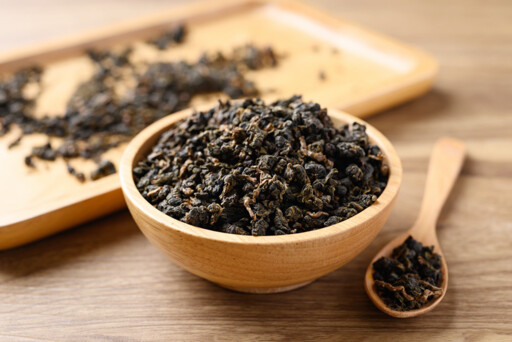
Oolong tea, a semi-fermented tea, is primarily produced in Fujian, Guangdong, and other regions. Photo: TUCHONG
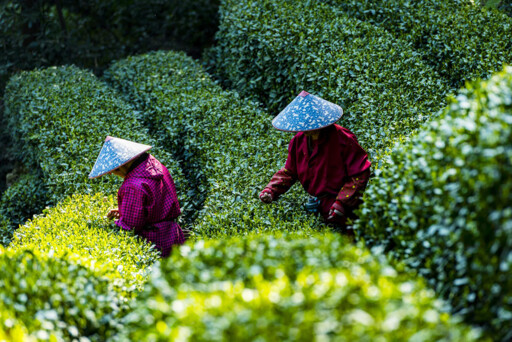
Tea farmers in Meijiawu, Hangzhou pick tea leaves. Photo: TUCHONG
Tea originated in China. From the 17th century onward, it was gradually drawn into the expanding currents of economic globalization, becoming both a traded commodity and a channel of cultural exchange through which China engaged the wider world. By the 19th century, tea drinking had spread across continents, evolving from a Chinese custom into a global cultural phenomenon. In this process, Chinese tea became world tea—an important outcome of exchange and mutual learning between Chinese and foreign civilizations.
From global trade of tea to globalization of tea production
The global journey of Chinese tea began in the 17th century, and until the 1850s China remained the world’s sole exporter of tea. During the Tang (618–907) and Song (960–1279) dynasties, tea had already travelled eastward to Japan and the Korean Peninsula. In the 17th and 18th centuries, however, tea entered a new phase of mobility, circulating along multiple routes that linked it to broader networks of early modern global trade.
One major route ran by sea from Fujian and Guangdong to Southeast Asia. European travelers observed established tea-drinking customs in Siam, Vietnam, Java, and other regions. The French merchant Jean-Baptiste Tavernier, who traveled through Southeast Asia between 1643 and 1649, recorded that locals drank tea in large quantities—“four or five times a day”—including teas that turned the water green, yellow, or red, corresponding to what are now known as green tea, oolong tea, and black tea.
A second route connected China to Europe and the Americas by sea. After the Qing government lifted the maritime trade ban in 1684, direct navigation and trade between China and the West was established. In 1757, the Qing government restricted foreign trade to a single port in Guangzhou. Green tea exported through the Guangzhou trade mainly came from Huizhou, while black tea and oolong tea were produced chiefly in the slopes of Mount Wuyi in northern Fujian. Records show that the average annual volume of tea exported from Guangzhou between 1719 and 1725 was about 12,745 dan (an ancient Chinese unit of weight equivalent to 50 kg), rising sharply to an annual average of 360,659 dan between 1828 and 1833.
A third major route was the Sino-Russian “Tea Road.” Following the signing of the Treaty of Kyakhta in 1727, black tea from Mount Wuyi and brick tea from Yangloudong were exported to Russia through the border port of Kyakhta, with shipments reaching as far as Moscow and St. Petersburg. By the mid-18th century, Russia imported an annual average of 11,000 to 13,000 poods (approximately 180 to 210 tons) of tea, a figure that climbed to an average of 270,591 poods by the 1840s.
Beyond these major corridors, additional routes carried tea westward to Central Asia via the Silk Road, the Tea Road, and transshipment through India.
The principal export markets for Chinese tea were the United Kingdom (predominantly black tea, followed by green tea), Russia (mainly black tea), and the United States (mainly green tea). After the Opium War (1840–42), Huizhou green tea and the newly emerging Pingshui green tea from Zhejiang were exported via Shanghai. After 1854, Fujian black tea was shipped through Fuzhou, while new black-tea-producing regions emerged along the middle reaches of the Yangtze River. Following the Second Opium War (1856–60), Russian merchants moved south to purchase tea in Hankou, transporting it down the Yangtze River to the coast, then onward to Tianjin, and from there back onto the old Tea Road. Tea exports continued to expand rapidly, nearly tripling by 1860 and increasing again by more than 140% by 1886.
By the 1860s, the tea industry entered a new stage characterized by the globalization of production. After Japan opened its ports in 1859, it began exporting green tea to the United States, and from the 1870s onward Japanese tea in the US maintained a market share of about 40%. During the same period, the black tea industries of India, Ceylon, and Java developed quickly. In 1887, London’s imports of tea from India surpassed those from China for the first time. By 1900, the volume of international tea trade had reached approximately 272,000 tons, with China’s share falling to less than one third.
This shift toward globalized production was rooted in the overseas transmission of Chinese tea-processing techniques. In Japan, while matcha was consumed domestically, refined methods for producing export-grade green tea were learned from tea masters invited from China. In India, black tea processing techniques were initially introduced by Chinese tea workers brought from Mount Wuyi by the British botanist Robert Fortune. Backed by mercantilist government policies, the tea industries of Japan, India, and other regions grew larger and more tightly organized, automated certain processes with machinery, and achieved higher levels of efficiency. In the 20th century, tea cultivation and processing technologies spread further still, turning tea production into a truly global industry spanning all five continents.
Product innovation in tea culture exchange
As a form of material culture rooted in China, tea did not circulate globally through one-way transmission alone. Its globalization unfolded as a process of ongoing exchange and adaptation. To accommodate tea-drinking customs in different societies, the Chinese tea industry introduced innovations in both varieties and processing techniques. Export tea, distinct from tea produced for domestic consumption, emerged as a new category shaped directly by international cultural interaction.
The earliest green teas exported overseas were sunglo teas, which had been popular since the late Ming Dynasty. European consumers, who paid high prices for green tea, were especially demanding about appearance and tenderness, while long sea voyages made green tea vulnerable to moisture. In response, Huizhou producers developed specialized export-oriented green tea varieties in the 18th century, including hyson, young hyson, hyson skin, and gunpowder tea, as well as twankay tea, which used the hyson processing method but employed more mature leaves. These teas featured tightly rolled leaves, deeper roasting, and repeated sieving and grading during refinement.
Green tea is unfermented (unoxidized), whereas European markets showed a clear preference for fermented teas. In the 17th century, tea producers in Fujian developed lightly fermented oolong tea and mildly fermented black tea. Compared with green tea, which is only suitable for infusions, fermented teas have darker leaves, produce a darker brew, have a fuller flavor, and possess a greater tolerance for repeated reheating and boiling—making them better suited to the addition of sugar. Export teas, ranked from high to low quality, mainly included pekoe, souchong, congou, and bohea teas, with the latter two becoming especially important. As Europeans increasingly preferred sweetened, deeply fermented black tea, the degree of fermentation was gradually intensified, producing darker leaves. The standard for congou tea was described as possessing “truly black leaves” and yielding “a rich, dark infusion.” After the Industrial Revolution, inexpensive, strongly flavored bohea tea—durable and well suited to prolonged boiling—gained popularity among the British working class.
Another tea produced specifically for overseas markets was black brick tea. In the late Qing period, Russian merchants learned green brick tea production techniques and established modern, steam-powered factories in Hankou, Jiujiang, and Fuzhou. There, tea dust and broken leaves were compressed into bricks and shipped to Russia as a low-grade black tea suitable for long boiling.
Available data suggest that before the Opium War, China’s tea exports accounted for about 23% of total output and roughly 35% of total production and sales value. By 1894, exports had risen to around 56% of total output, with export value exceeding 69%. Exported tea consisted largely of varieties produced specifically for overseas markets, underscoring the high degree of internationalization of the Chinese tea industry. When India and other regions later entered the export trade, they largely modeled their products on Chinese export teas.
Civilizational exchange and mutual learning in dissemination of tea culture
Around the world, tea cultures developed in a pattern of “harmony in diversity”—shaped by Chinese influence, yet adapted to local tastes and social practices.
Tea culture is a composite practice, combining multiple dietary and social functions. Tea is both a beverage for refreshment and a base to which sugar, salt, milk, and other ingredients may be added. In China, Han ethnic regions traditionally consume tea unadulterated, while in many other regions additives are customary. The globalization of tea coincided with the rapid expansion of the global sugar industry—from cane sugar production in the Americas and Java to beet sugar production in Europe—making sugar-sweetened tea a worldwide practice. In different regions, other ingredients were incorporated as well, such as milk in Western Europe and mint in Morocco.
Tea has also long been associated with traditional Chinese medicine. The Tang Dynasty text Newly Revised Canon of Materia Medica recorded tea’s effects in clearing the head and eyes, relieving irritability and thirst, dissolving phlegm, aiding digestion, promoting urination, and detoxifying the body. When Europeans first encountered tea in the 16th century, they therefore regarded it as a medicinal herb. After its introduction to Europe in the 17th century, tea was valued not only as a beverage but also as a supposed “panacea.” The Dutch physician Cornelis Bontekoe, for example, enumerated a wide range of purported benefits, claiming that tea could cure gout and scurvy, suppress epilepsy, improve vision and hearing, strengthen internal organs, and alleviate symptoms such as coughs and colds, headaches, drowsiness, edema, hepatitis, and kidney stones. With advances in science and medicine, these medicinal claims gradually receded.
In China, tea drinking has always carried a strong social dimension. As tea culture spread globally, this social character traveled with it. Drinking tea became an integral part of social interaction and commercial life, giving rise to dedicated tea gatherings such as British afternoon tea. Exquisite tea wares, reflecting artistic taste and social standing, formed an essential part of tea’s social world. Along with tea itself, Chinese-style tea utensils entered elite and middle-class households in Europe and North America. Porcelain, introduced through tea culture, was absorbed into Western daily life, and by the late 18th century Britain had successfully imitated Chinese porcelain, with factories focusing largely on everyday tea wares.
From its origins in China to its worldwide diffusion, the global journey of tea forms a remarkable chapter in the history of civilizational exchange. For more than two centuries, the tea trade sustained multiple global routes that carried not only commodities, but also culture, technology, knowledge, and art, fostering mutual understanding across civilizations. As tea culture took root around the world, it transmitted not merely a healthy beverage, but also a Chinese ethos of harmony and coexistence, along with an elegant and natural way of life. In the process of global diffusion, tea culture retained certain Chinese elements while integrating distinctive features of diverse civilizations, demonstrating its inclusive character. The globalization of tea thus stands as a successful example of exchange, mutual learning, and “harmonious coexistence” among different civilizations.
Zhang Ning (professor) and Zhang Xinran are from the School of History and Culture at Hubei University.
Copyright©2023 CSSN All Rights Reserved