


Lantern Festival: Enduring glow of Chinese New Year
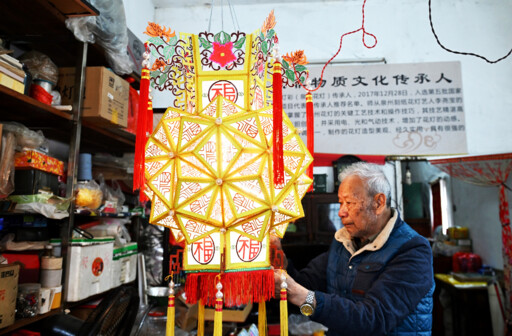
Xu Qianshen, a recognized inheritor of the Quanzhou lantern-making tradition, displays the “Baifu (Hundred Blessings) Lantern” he completed on Jan. 25, 2026. Photo: IC PHOTO
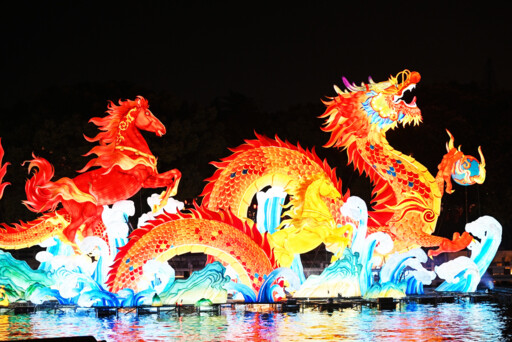
A set of dragon- and horse-shaped lanterns at the 40th Qinhuai Lantern Show in Nanjing, Jiangsu Province Photo: IC PHOTO
“As the 15th day of the first lunar month dawns with lantern revelry, the year ahead rises step by step in glory.” This Chinese folk saying captures both the final major celebration of the Spring Festival and the opening of a new year. The Lantern Festival, the grand finale of the Chinese New Year festivities, embodies heartfelt wishes for family reunion and good fortune, weaving them into the timeless glow of lanterns and the vibrant warmth of everyday life.
Cultural legacy in lantern light
From the all-night lantern rites honoring the supreme deity Taiyi in the imperial court of the Han Dynasty (206 BCE–220 CE), to the lantern-lighting Buddhist ceremonies decreed by Emperor Ming of the Eastern Han era (25–220), and later to the Taoist belief that “the Heavenly Official of the Lantern Festival bestows blessings,” diverse traditions gradually converged and integrated. Over time they formed the enduring custom of celebrating the Lantern Festival with lanterns and festive decorations on the 15th day of the first lunar month.
Over millennia, the festival evolved into a rich array of customs: eating glutinous rice balls, admiring lanterns, solving lantern riddles, and performing dragon and lion dances. Many related traditional crafts and folk activities have been inscribed on the National Intangible Cultural Heritage List, becoming cultural roots cherished and safeguarded across the Chinese nation.
Behind every festive lantern lies craftsmanship honed by time and the dedication of artisans who have passed their skills down through generations. These traditions flow quietly through the lanes of Jiangnan water towns and endure in the markets of ancient northern villages. Every lantern, every custom, and every performance invites discovery.
Within each exquisite lantern resides the legacy of intangible cultural heritage (ICH) handicrafts. Lanterns crafted in Quanzhou, Fujian Province, with their exquisite cut-paper and silk-thread work, are both radiant and intricately carved, standing as a distinguished representative of southern Chinese lantern artistry. Xianju lanterns from Zhejiang Province are renowned for their distinctive “needle-pierced, frameless” technique. Without an internal frame, their structure relies entirely on pierced paper pieces joined together, allowing light to filter through thousands of tiny pinholes in a dreamlike display. Also from Zhejiang, Xiashi colored lanterns are famed for their intricate needle-pierced patterns, requiring mastery of eight essential techniques: piercing, bending, knotting, binding, carving, painting, pasting, and mounting. Qianjiao lanterns from Dongguan in Guangdong Province integrate painting, embroidery, and carving; their numerous horns and lantern forms create a striking and majestic spectacle. Each lantern embodies the distinctive aesthetics and wisdom of its native place.
Within the lively customs of lantern fairs unfolds a vibrant display of ICH folk practices. Shanghai’s Yuyuan Garden Lantern Show and Zibo’s Lantern Fair in Shandong Province have long become cultural icons of their cities, drawing countless visitors each year. The Ba Ba Deng Lantern Show, held in Yingdu Town of Nan’an, Fujian, sees communities pulling lanterns with long ropes, strengthening group identity through collective effort. At the Jiuqu Yellow River Lantern Array in Beijing, participants navigate a labyrinth of lights, believing that walking around the array will bring a good harvest and a better life in the coming year. The Panzi Fair in Liulin County, Shanxi Province, features worship ceremonies held before multi-tiered, pavilion-like shrines, seamlessly blending faith with festive celebration. Together these traditions add a layer of lively exuberance to the brilliance of Lantern Festival night.
Colorful performing arts further embody the vitality of ICH. The Bandeng Loong in Datian County, Fujian, the Heshang Dragon Lantern in Xiaoshan, Zhejiang, and the Shangban Guan Gong Lantern in Nanchang, Jiangxi Province feature long dragons made of bamboo, wood, and lantern boards, winding and dancing through the night to the thunder of gongs and drums. The Lunhua fire performance in Luanping County, Hebei Province, produces spectacular showers of sparks resembling fireworks by spinning molten iron and burning charcoal, cascading like a golden waterfall. These performances bring the lantern lights vividly to life and lift the festive atmosphere to its peak.
Local festivity
In Songshan Village in Ezhou, Hubei Province, Lantern Festival celebrations unfold like a magnificent scroll stretching more than 400 meters, crafted from bamboo, wood, and lantern boards. In 2021, the Hundred-Section Dragon custom associated with the Lantern Festival was inscribed on the National Intangible Cultural Heritage List. The tradition of crafting the Hundred-Section Dragon dates back to the Ming Dynasty (1368–1644). According to legend, during the Tianqi reign (1621–27), the Yan clan ancestors migrated from Jiangxi Province to Songshan Village, bringing with them the craft of dragon lantern-making. To pray for favorable weather and a prosperous clan, villagers began constructing dragon lanterns and parading them during the Spring Festival to seek blessings.
Unlike other dragon dances, the “hundred sections” of the Songshan Hundred-Section Dragon is no mere name. The giant dragon consists of 101 connected sections, stretching to an impressive total length of over 425 meters. Constructing such a colossal dragon is itself a major undertaking. From the beginning of the 12th lunar month, village craftsmen start their work: shaping frames from bamboo and wood, pasting colored paper to form the dragon’s scales, and completing each step according to strict standards and time-honored techniques. The dragon’s head is the most intricate component, with towering horns, massive eyes, and densely painted patterns that radiate both majesty and auspicious symbolism.
The parade and worship of the Hundred-Section Dragon follow a complete and solemn set of rituals. On the 24th day of the 12th lunar month, villagers hold the dou deng (lantern contest) and the kai guang (opening-of-light) ceremonies, dotting the dragon’s eyes to awaken it with spirit and vitality. Afterwards, families from Songshan Village and surrounding areas “welcome the dragon” in hopes of receiving New Year blessings. On Chinese New Year’s Eve, the Hundred-Section Dragon will xian deng (reveal its lights), with every section and lantern illuminated. From the first day of the New Year until the Lantern Festival, the dragon tours the village and surrounding areas to bestow fortune. As night falls, amid booming gongs, drums, and firecrackers, the long dragon slowly rises, supported by villagers. The most respected elder leads the dragon head, followed by more than 100 strong villagers holding lantern poles and moving in perfect rhythm to steady chants. In the darkness, the winding dragon glides along mountain paths, its inner lights forming a luminous ribbon—coiling, roaming, rising, and diving. The dragon appears truly alive, patrolling the mortal world and bringing blessings to every household. Wherever it passes, families open their doors, burn incense, and offer prayers, immersing the entire region in an ancient yet vibrant carnival.
On the 18th day of the first lunar month, the dragon parades around the village one final time to bid farewell. The head and tail are then separated from the body for the pao feng (wind-chasing) ritual until they meet again. Surrounded by villagers, they are carried to a low-lying field. There, ignited by fire, the dragon ascends in flames, turning into smoke that rises toward the heights of Heaven. This ritual, known as hua deng (transformation of the lantern), symbolizes the dragon’s return to Heaven and brings the year’s grand celebration to its perfect close.
Echo of past, vision of future
From the sacred flames of ancient court rituals to the folk lanterns illuminating everyday alleyways; from meticulously preserved ICH craftsmanship to grand celebrations embraced by millions—within the lights of the Lantern Festival lives a legacy passed down through artisans’ hands, the shared faith that binds clans and communities, the joyful reunion of wanderers returning home, and the sincere hopes for a better life cherished deep in the hearts of the Chinese people.
The Lantern Festival marks the perfect conclusion of Spring Festival celebrations and heralds the beginning of a new chapter in life. As the Hundred-Section Dragon of Songshan Village rises with the blazing flames, and as countless colorful lanterns bloom against the night sky on the 15th day of the first lunar month, the very soul of the Chinese New Year is preserved through this living tradition. Illuminated by lantern light, the festival is both an echo of the past and a vision of the future. As long as lanterns are lit each year, the story of Chinese New Year will forever endure.
Zhou Yuting is from the University of Chinese Academy of Social Sciences.
Editor:Yu Hui
Copyright©2023 CSSN All Rights Reserved