


Artistic innovation enhances appeal of Chinese culture
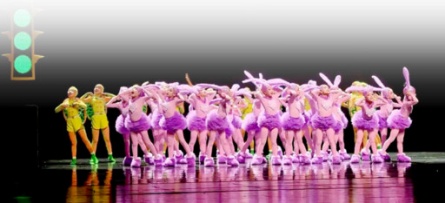
A still from the children’s dance The Tortoise and the Hare Race Again Photo: PROVIDED TO CSST
The Third Plenary Session of the 20th CPC Central Committee called for “establishing a more effective international communication system.” Cultural and artistic innovation has become a key pathway for implementing this directive, advancing the revitalization of Chinese culture, and facilitating its global outreach. The worldwide box-office success of “Ne Zha 2” (Ne Zha: Demon Child Conquers the Sea) and the international popularity of the video game Black Myth: Wukong illustrate how artistic innovation is progressing from storytelling to symbol-building, driving a qualitative shift in global perceptions of Chinese culture—from simple awareness to genuine recognition.
In recent years, international cultural communication has increasingly been shaped by three trends: contemporary expressions of Eastern aesthetics, deep technological empowerment, and cross-media integration.
Content innovation expands global resonance
The global success of “Ne Zha 2” demonstrates the boundary-breaking potential of content innovation. With box-office revenue exceeding 10 billion yuan, the film became the world’s highest-grossing animated feature of 2025. Moving beyond traditional mythological frameworks, it reimagines the classic tale “Nezha Conquers the Sea” through contemporary themes of overcoming prejudice and seeking self-redemption. Nezha’s identity as a “demon child” becomes not merely a symbol of rebellion, but a modern exploration of tolerance and value acceptance.
This innovative approach preserves core recognizable cultural symbols—such as the “Universe Ring” and “Wind Fire Wheels,” while transcending cross-cultural barriers. As a result, international audiences are able to connect emotionally with the film and intuitively grasp the Eastern value of “people-centeredness.”
Contemporary artistic innovation is also demonstrating its capacity to reach global audiences. The poetic dance drama The Journey of a Legendary Landscape Painting has traversed seas and mountains, bringing lyrical landscape imagery to audiences thousands of miles away. In 2025, it toured several cities across the United States, including San Diego, Los Angeles, and New York.
Inspired by the classic painting A Panorama of Rivers and Mountains, the production translates the essence of traditional Chinese landscape art into dance. By transcending its historical context, the performance offers international audiences an immersive experience of Chinese aesthetics and has established itself as a landmark production in the overseas promotion of Chinese culture.
In 2025, the toothy, fluffy Labubu art-toy series became a sensation both in China and abroad. Outside the Louvre in Paris, visitors were spotted posing for photos with shopping bags featuring Labubu alongside world-famous paintings—a striking fusion of Chinese pop culture and classical art. Created by Chinese art-toy company Pop Mart, the quirky figure quickly penetrated global consumer pop markets, becoming a cultural ambassador of emotional resonance and a symbol of creative products “breaking the niche” and reaching overseas audiences. In Russia, Labubu was included among several “word of the year” selections by publishing houses, appearing in the humanities category as a top term of 2025.
In March 2026, Chinese dance artist Yang Liping premiered her acclaimed work Peacock in Vietnam. With its deep reflection on Eastern aesthetics and the philosophy of life, the production presented Vietnamese audiences with a dance experience of the highest caliber.
Form innovation strengthens cultural transmission
The evolution of media formats is reshaping how art is communicated. Driven by digital technology and industry convergence, cross-border innovation in artistic forms is breaking through traditional limitations of time and space, creating multi-dimensional and immersive cultural experiences. Together, these developments are shifting Chinese culture from static display to dynamic, immersive engagement.
In 2025, the international promotion of Sanxingdui culture offered a striking example of effective cross-cultural communication. The Sichuan International Communication Center collaborated with the game Genshin Impact to incorporate Sanxingdui elements such as the “bronze sacred tree,” producing multilingual animated videos explaining the artifacts and circulating them online. Organizers also launched a bilingual official website, created multiple overseas social media accounts, and used VR and 3D cloud exhibition halls to recreate the artifacts in detail. Together, these initiatives generated more than 300 million views overseas.
On the Spring Festival Gala stage, the performance Wu BOT featured humanoid robots sharing the stage with young martial artists. Broadcast globally in ultra-high definition, the performance showcased Chinese technological innovation alongside artistic creativity.
The gaming industry has also emerged as a new engine of cultural dissemination. Following its global release in 2024, the domestically developed AAA game Black Myth: Wukong sparked widespread interest in Journey to the West on international gaming forums. Players eagerly explored the cultural symbols embedded in the game, with some even traveling to actual filming locations in Shanxi Province. The game’s innovativeness is evident in two key aspects: First, it utilizes Unreal Engine 5 to create scenes such as the Water Curtain Cave, transforming the fantastical imagery of Journey to the West into an interactive visual spectacle. Second, its “game + cultural tourism” integration elevates the game to a vehicle for cultural discovery.
Meanwhile, 37 Interactive Entertainment has pursued a strategy of “building its own ship to sail overseas” by tapping into local IP works. Its game Call Me Big Boss—centered on ancient Chinese commercial life—incorporates elements such as Maritime Silk Road history and Hui-style architecture. In its “South China Sea Silk Road” version, a virtual artifact restoration module reached 360 million overseas users, illustrating the communicative potential of gameplay.
Stage art innovation has also gained international acclaim. After years of relative obscurity, traditional Chinese Wu opera is steadily carving out a presence outside China. The captivating performance Sun Wukong Beats the White Bone Demon Three Times went viral domestically and proved popular during overseas tours. Mainstream media coverage praised the production for preserving the “soul” of tradition while expanding its form by introducing modern elements.
The Shenzhen-produced original dance drama Wing Chun toured Europe for 16 performances, selling nearly 20,000 tickets. The Times praised it for “combining the elegance of dance with the power of martial arts.”
Children’s dance offered another standout case, as The Tortoise and the Hare Race Again emerged as a niche-breaking hit. Dispensing with the traditional fable framework, the piece reimagines the classic story through inventive choreography and stage design. Highly dynamic movements—such as playful “rabbit hops” and deliberate “turtle crawls”—lend the performance a fresh, joyful rhythm. After clips circulated on TikTok, the performance garnered billions of views and inspired imitations by athletes and fitness influencers abroad.
Communication innovation builds new ecosystems
The communicative value of artistic innovation depends on effective dissemination systems. In a landscape increasingly dominated by social media, communication strategies are evolving from single-channel approaches to comprehensive ecosystems. Through platform integration, a closed loop of “creation–dissemination–feedback” is gradually taking shape.
Digital technology is building borderless communication networks. In 2024, “Spring Festival, social practices of the Chinese people in celebration of traditional new year” was inscribed on UNESCO’s Representative List of the Intangible Cultural Heritage of Humanity, with celebrations in nearly 200 countries shared simultaneously through digital platforms.
During the 2026 Spring Festival period, the National Radio and Television Administration organized the “Audiovisual China Global Showcase.” More than 40 institutions broadcast over 500 audiovisual programs across mainstream media platforms in more than 40 countries. Their content reached over 200 countries and regions worldwide, generating more than 1.5 billion overseas views. This initiative helped transform the Chinese Spring Festival into a global cultural event—cultivating shared experiences and promoting cross-cultural mutual learning.
Social media platforms have also given rise to people-to-people communication as a powerful force. In 2025, following US government restrictions on TikTok within the country, large numbers of American users flocked to China’s Xiaohongshu platform, propelling it to the top of US app store rankings. This migration quickly created new spaces for informal people-to-people exchange—overseas users shared travel experiences in China, while Chinese users responded with content introducing cultural traditions such as the zanhua wei (flower headdress). Related content, rooted in personal experience, generated more than 15 billion views overseas, affirming the communicative power of “people-to-people exchange.”
“Art + tourism” has further enabled the localized extension of cultural experiences. After the traditional zanhua wei culture in Xunpu Village, Fujian Province, gained popularity online in 2024, the village received more than 4.5 million visitors, with overseas tourists accounting for 12%. The local community transformed intangible cultural heritage into participatory experiences—wearing floral headdresses, constructing oyster shell houses, and more, creating a “viewing–participation–sharing” chain. Secondary dissemination on social media by tourists concurrently created a closed “offline experience–online spread–global attention” loop, offering a model for local culture to go global.
From the game worlds of Black Myth: Wukong to the stage lights and shadows of Wing Chun, from the bronze sacred tree of Sanxingdui to the innocent choreography of The Tortoise and the Hare Race Again, artistic innovation is propelling Chinese culture onto the global stage in diverse forms. As these successful examples demonstrate, the power to break through cultural barriers in communication stems not only from a commitment to traditional values, but also from the exploration of innovative approaches. When rooted in cultural heritage while embracing a global perspective, Chinese cultural symbols can achieve lasting vitality on the world stage.
Li Min is a professor from the School of Art at Zhejiang International Studies University.
Copyright©2023 CSSN All Rights Reserved