


Peking Opera extends global reach on digital stage
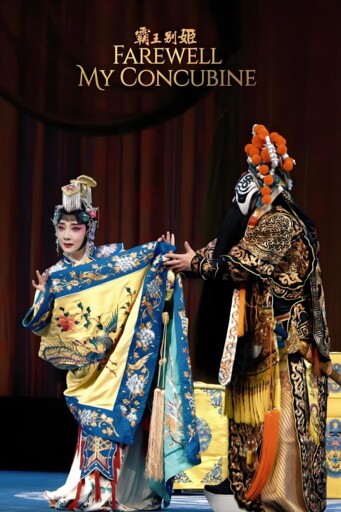
FILE PHOTO: A poster of “Farewell My Concubine,” one of the most celebrated works in the Peking Opera repertoire, which recounts the final, tragic moments of the Hegemon-King Xiang Yu and his beloved concubine Yu Ji during the fall of the Chu regime after the demise of the Qin Dynasty (221–206 BCE)
Peking Opera is one of the most representative forms in China’s traditional performing arts. Drawing together the accomplishments of opera, music, dance, and fine arts, it has developed a distinctive artistic language of singing, recitation, acting, and acrobatic combat. Through these highly stylized conventions, together with an expressive aesthetics built on suggestion and abstraction, Peking Opera gives form to a uniquely Eastern aesthetic sensibility and a rich world of cultural symbolism.
With the advance of China’s national strategy of “cultural digitalization,” this centuries-old art is beginning to move beyond the physical stage into digital space, where its reach is no longer limited to live theatrical performance. New formats in particular are enabling Peking Opera to cross boundaries of time and place, opening fresh possibilities for its global dissemination.
Serving cultural diplomacy
The history of Peking Opera “going global” can be traced to the early 20th century. Between 1919 and 1935, master Mei Lanfang led his troupe on a series of tours to Japan, the United States, and the Soviet Union, performing in more than 10 cities, including Tokyo, San Francisco, New York, and Moscow, with every performance playing to full houses.
Through his exquisite acting and elegant stage aesthetics, Mei allowed Western audiences to experience the artistic power of Eastern drama at close range for the first time. Media outlets including The New York Times, The New York Herald Tribune, and the New York World covered both his performances and his social activities.
The resulting “Mei Lanfang effect” helped establish Peking Opera as an important symbol of Chinese art stepping onto the world stage. In the decades that followed, Peking Opera featured in numerous state-level cultural exchange programs, including the China National Peking Opera Company’s visit to the Soviet Union in 1956 and the National Academy of Chinese Theatre Arts’ performances in France in 1986, both of which generated wide attention. In this sense, Peking Opera served throughout much of the 20th century as a distinctive vehicle for China’s cultural diplomacy.
From physical stage to digital space
Entering the 21st century, the evolution of communication media has fundamentally transformed the ways in which art can be presented and encountered. International touring remains costly, while the size of an audience is inevitably constrained by the capacity of a theater. Digital dissemination, by contrast, is subject to virtually no spatial limitations.
As of October 2025, the high-definition online video of “Farewell My Concubine,” one of the most celebrated works in the Peking Opera repertoire, had surpassed 10 million views on video-sharing platforms, making digital communication a new engine for the internationalization of Peking Opera.
In 2025, the 9th Chinese Opera Culture Week brought robotics, VR/MR, and AI interactive technologies into an “Opera-Tech Market,” offering experiences ranging from highly dynamic mecha-based interactive performances to AI-generated personalized opera-themed newspapers. Such experiments are beginning to dissolve the traditional boundary between performance and audience.
VR and AR technologies are likewise allowing the Peking Opera stage to move beyond the confines of the traditional “proscenium-arch” theater. In 2024, a livestreaming event themed “When Technology Meets the Beauty of Opera” attracted more than 7 million netizens online. Productions such as “Consort Mei” incorporated 6DoF (six degrees of freedom) immersive technology, enabling audience members wearing VR headsets to “enter” the stage within a 360-degree environment and even interact virtually with the performers. Meanwhile, the combination of AI and motion-capture technology has made it possible to recreate a “digital Mei Lanfang.”
Digital experimentation is changing not only how Peking Opera is disseminated, but also how it is produced, managed, and experienced. Smart theaters use modern technologies to digitize, network, and intelligently upgrade the full range of theater operations, creating a more interconnected and responsive environment for performance and cultural entertainment. The result is an emerging theater model in which operations, management, and audience services are more closely integrated. The convenience and accessibility of such venues have also helped attract growing numbers of younger audience members.
Preserving the essence of the art
Digital technology has opened new pathways for Peking Opera to cross national borders, while greatly expanding both its visual expressiveness and the scale of its reach. Yet the essence of the art lies not simply in the grandeur of stage design or the immediate impact of visual effects. More fundamentally, it resides in an aesthetic spirit of “combining the virtual and the real” and “conveying inner spirit through external forms.” The negative space of the traditional stage, the precision of stylized movement, and the cadences of singing and recitation together create an imaginative realm shared by performer and audience.
In the digital arena, however, the highly realistic effects and immersive spectacles enabled by technology can draw audiences toward the sensory pleasures of “visual wonders,” potentially weakening their attention to singing, rhythm, and the emotional expression of the characters.
Excessive technological embellishment may also reduce Peking Opera to little more than “visual material,” stripping it of cultural depth and emotional resonance. Its digital dissemination therefore requires vigilance against “overly complex forms” and the “shallowing of aesthetic layers.” The central challenge is to find a balance between “technological assistance” and “preserving the essence of the art.”
At the same time, as a quintessentially symbolic art form, Peking Opera is governed by an intricate system of cultural codes embedded in nearly every gesture onstage. The height to which an actor raises a hand, the direction of a glance, or even the number of steps in a movement can correspond to a particular plot meaning or reveal a character’s inner state. Refined over centuries, this symbolic system is a source of Peking Opera’s distinctive artistic charm, yet it also presents a major barrier to understanding for overseas audiences.
In the classic work “Farewell My Concubine,” for instance, a sequence of movements performed by Yu Ji collectively conveys the complex emotions of “remaining faithful unto death” and “reluctance in parting”—a quintessential manifestation of Peking Opera’s aesthetic of “conveying spirit through form.”
For Western audiences unfamiliar with this codified language, however, such movements may be read simply as the “externalized emotions of a character before death,” leaving the cultural connotations and contextual meanings embedded in the gestures largely unseen. Cross-cultural dissemination therefore cannot stop at the level of mere “technical output.” It also requires a cultural framework of interpretation tailored to international audiences.
Defining rights in digital landscape
As the digitalization of Peking Opera accelerates, questions of copyright and content governance have also become increasingly prominent, emerging as a key bottleneck in its international dissemination. Current practice suggests that three major areas—virtual-stage technology, AI-generated content, and cross-platform dissemination—are making the boundaries of Peking Opera’s digital works increasingly difficult to define. The emergence of “digital human Peking Opera” offers a particularly revealing example.
In 2024, the Virtual Human Laboratory team at Beijing Institute of Technology launched a “digital Mei Lanfang,” recreating Mei’s stage movements and vocal performances through AI technology. While the project offered a new form for the dissemination of Peking Opera, it also raised questions over whether the use of Mei Lanfang’s likeness constituted an infringement of portrait rights.
Copyright protection in China’s digital arts sector remains, at present, in an exploratory phase. The “Top 10 Copyright Events of 2024 in China,” released in 2025, noted that the National Copyright Administration would continue advancing copyright protection in new business sectors, including measures to strengthen digital copyright governance. When regulatory frameworks lag behind technological development, the consequences may extend beyond the rights and interests of individual artists to questions of cultural security in international cooperation. Promoting the digital innovation of Peking Opera therefore requires, in parallel, the construction of a governance system capable of balancing incentives for innovation with broader cultural-security considerations.
Liu Wen is an associate professor from the School of Marxism at Hubei University of Education.
Copyright©2026 CSSN All Rights Reserved