


Conceptualizing Haihun culture: Archaeology, regional history of Han-era polity in south China
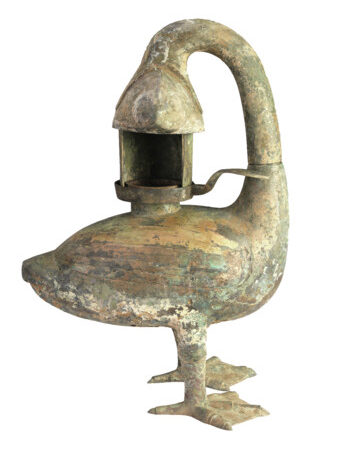
Bronze goose-and-fish lamp unearthed from the Tomb of Marquis Haihun Photo: PROVIDED TO CSST
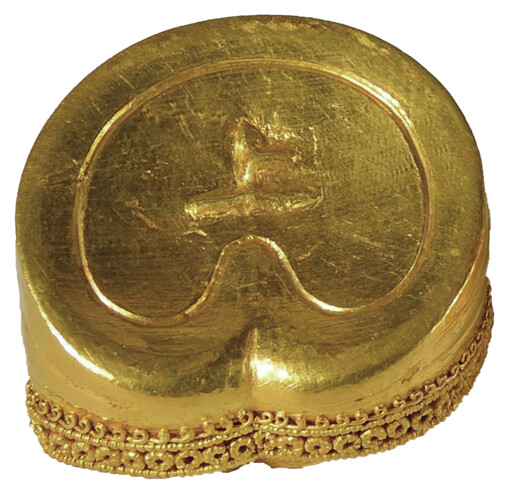
Hoof-shaped gold ingot unearthed from the Tomb of Marquis Haihun Photo: PROVIDED TO CSST
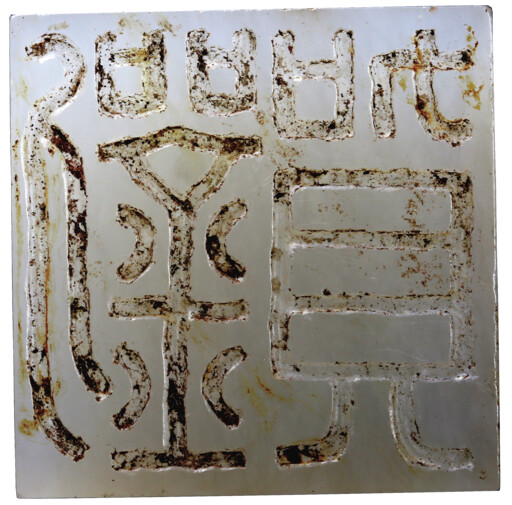
Jade seal of Liu He unearthed from the Tomb of Marquis Haihun Photo: PROVIDED TO CSST
Since the archaeological excavation of the Tomb of Marquis Haihun of the Western Han Dynasty (206 BCE–24 CE) in Nanchang, east China’s Jiangxi Province, was announced in 2015, systematic archaeological work conducted with scientific rigor, exacting standards, and meticulous techniques has brought to light a history sealed away for more than two millennia, yielding remarkable discoveries that have drawn worldwide attention.
A wealth of precious artifacts—including gold objects, bronzes, lacquerware, chariot and horse fittings, and bamboo slips and wooden tablets—has emerged from the site. Their richness and completeness have captivated scholars and the public alike, while opening a valuable window onto the Han Dynasty (206 BCE–220 CE), particularly the history, politics, economy, culture, art, science and technology, and social life of the mid-Western Han period. The excavation stands as a landmark archaeological discovery, and the research it has generated has greatly broadened and deepened our understanding of Han civilization.
Concept of Haihun culture
As a cultural symbol, “Haihun” embodies a historical and cultural legacy deeply rooted in the Gan-Po region [an alternative name for Jiangxi, derived from its two most important waterways: the Gan River and Lake Poyang]. Viewed historically, Haihun culture can be traced along a continuous trajectory of development, encompassing the regional history associated with Haihun County and the Haihun Fief.
Specifically, this history encompasses the origins and development of regional civilization in the Haihun area from the pre-Qin period (prior to 221 BCE); the establishment of Haihun County in the early Western Han; the crisis of imperial authority surrounding Liu He’s accession and deposition in the mid-Western Han; his subsequent relocation to Yuzhang [the commandery-level administrative region in present-day northern Jiangxi, which had Nanchang as its seat] and enfeoffment as Marquis Haihun; the repeated abolition and restoration of the Haihun Fief; its final abolition at the end of the Western Han and the changing status of Haihun County and the Marquisate in the early Eastern Han; and, ultimately, the disappearance of Haihun as a county- or fief-level administrative unit during the Liu-Song period (420–79), also known as the Southern Song Dynasty, one of the Southern Dynasties of the Northern and Southern Dynasties period (420–589).
Over the several centuries of its existence, this administrative region accumulated a rich historical and cultural legacy, shaped by sustained social development and, above all, by the political, economic, and cultural transformations that unfolded from the Western Han onward.
In October 2016, the major commissioned project of the National Social Science Fund, “Archaeological Excavation of the Marquis Haihun’s Tomb and Research on the Collation of Historical and Cultural Materials,” was established in Jiangxi. To date, it has produced a range of research outcomes encompassing the archaeological excavation of the tomb, cataloging, restoration, and display of cultural relics, and collation of related documentary materials, greatly advancing the study of Haihun’s history and culture.
As research into the unearthed materials from the Marquis Haihun’s tomb and related historical documents has deepened, scholarly understanding of Haihun’s history and culture has steadily grown, while its wider significance has come into sharper focus. Haihun’s history and culture have become an indispensable component of Han Dynasty studies in Jiangxi. Considered alongside the broader history of Han culture in south China and the regional history of ancient Jiangxi, Haihun research offers considerable scope for further scholarship.
Scope of Haihun culture studies
In a broad sense, research on Haihun culture encompasses the archaeology of the Marquis Haihun’s tomb; study of unearthed artifacts; cataloging and interpretation of Haihun bamboo slips and wooden tablets; collation of historical documents relating to Liu He and Haihun; study of historical events such as Liu He’s accession, deposition, and relocation to Yuzhang; and research on related historical figures, social, political, and economic structures, intellectual and cultural currents, music, calligraphy and other arts, as well as social customs and mores. Together, these fields define the broad academic scope of Haihun history and culture.
In a narrow sense, the fundamental task of historical research on Haihun culture is to systematically organize, punctuate, and interpret unearthed documents in order to address key historical questions; cross-reference, verify, critically examine, and explicate historical materials; reinterpret and reanalyze relevant sources; and apply the theories and historiographical methods of historical materialism to produce more soundly grounded accounts and evaluations of the historical facts concerned.
At present, research on Haihun culture has focused primarily on the archaeology, exploration, and conservation of the Tomb of Marquis Haihun and the Haihun Fief site. This includes studies of the marquis’ tomb and cemetery, research on the Haihun bamboo slips and wooden tablets, analysis of unearthed artifacts, and investigation of the cultural meanings embodied in these objects and texts, including intellectual concepts, social customs, music and art, and Han Dynasty calligraphy. Research also extends to Liu He’s accession and deposition and his subsequent relocation to Haihun; the socioeconomic development of the Haihun region; the evolution of local administrative institutions and official systems; transportation networks; and regional customs, among other topics.
Research prospects
To understand the historical context of the Tomb of Marquis Haihun, archaeologists have undertaken a series of preparatory studies, reviewing historical documents and surveying surrounding sites and remains—work that, in effect, already fell within the scope of Haihun culture research. Over the past decade or more, particularly in the wake of the major discoveries yielded by the archaeological excavation of the tomb, the concept of Haihun culture and the meanings it encompasses have attracted growing scholarly attention. The designation “Haihun” alone, and the meanings attached to it, can be examined from three perspectives.
First, Haihun denotes a historical administrative unit. From the “Haihun County” recorded in the Book of Han to the county’s abolition in 425, the second year of the Yuanjia era of the Liu-Song period, Haihun existed as an administrative designation for roughly six centuries. Analysis of the origins of the place name “Haihun” also suggests that settlements bearing the name may have existed even before the county was formally established.
Second, Haihun also denotes a historical-geographical region. The Haihun region primarily encompasses the Liao River basin, extending from the southeastern reaches of present-day Jiuling Mountains to the western shores of Lake Poyang, as well as parts of the Xiu and Gan river basins. Its historical-geographical boundaries, however, shifted over time.
From a cultural perspective, many of the counties that emerged in this area between the Western Han and the Southern Dynasties occupied territory that had once formed part of Haihun County. Research into the historical geography of the region can therefore be framed around Haihun’s history and culture, making it an important dimension of Haihun culture studies.
Third, Haihun can be understood as a cultural concept in the broad sense. The meaning of culture itself may vary according to the subject of research. It can encompass the material and spiritual productive capacities developed through social practice, together with the full range of material and spiritual wealth thereby created. Within the geographical space denoted by the name “Haihun,” the material and spiritual wealth generated through the activities of its inhabitants—continually evolving, accumulating, developing, and eventually receding into history—can be regarded as forming the fundamental substance of Haihun’s history and culture.
In addition, various cultural phenomena that have emerged within the historical Haihun region through historical transmission and social influence remain closely connected to Haihun’s history and culture. These phenomena can be regarded as extensions of Haihun culture into the present, contributing to contemporary socioeconomic development. The planning and construction of the National Archaeological Park for Nanchang Han Dynasty Haihun Fief Site, environmental protection in the surrounding area, tourism development, and culture-related initiatives associated with rural revitalization all draw on achievements in archaeological excavation, exploration and survey, cultural relic conservation, historical research, and cultural industry studies concerning the Haihun tomb and the Haihun Fief site. Together, they bring the distinctive cultural value of Haihun into contemporary life.
Wu Fanglang is an associate professor from the School of History Culture and Tourism at Jiangxi Normal University. Zhao Ming is a professor from the Center for Haihun History and Culture Research at the university.
Copyright©2023 CSSN All Rights Reserved