


Digital ethnography: Continuation, adaptation of traditional methods
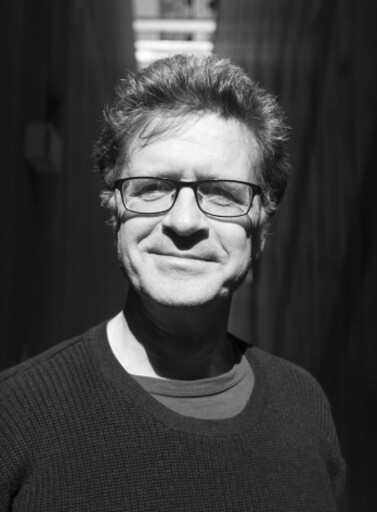
John Postill Photo: PROVIDED TO CSST
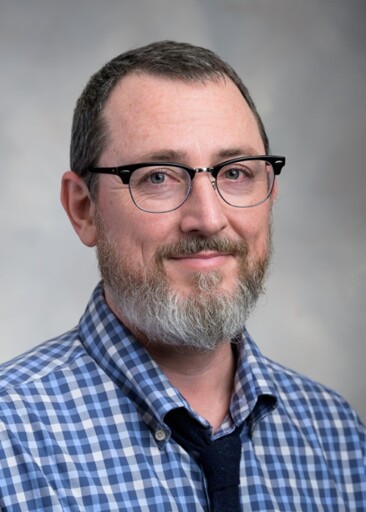
Devin Proctor Photo: PROVIDED TO CSST
In recent years, as the internet has gradually become a deeply embedded part of daily life, methodological discussions around digital ethnography have given rise to a narrative suggesting that the digital realm differs so markedly from the physical world that a fundamental reconstruction of traditional ethnographic methods is warranted. Traditional fieldwork has been associated with geographically bounded, relatively stable settings characterized by extended immersion. By contrast, digital spaces are fluid, multi-nodal, and temporally fragmented, presenting researchers with complex methodological choices between established techniques and emergent phenomena.
However, in interviews with CSST, John Postill, a senior research fellow in Communication at RMIT University in Australia, and Devin Proctor, an assistant professor of Anthropology at Elon University in the United States, offered a perspective informed by historical and methodological reflection. They argued that the challenges of digital ethnography should not be reduced to binary opposition between the traditional and the emerging. Instead, they should be understood as a reflexive continuation and innovative adaptation of ethnographic methods within a new technological context.
Expanded boundaries of field
CSST: In traditional ethnography, the concept of the “field” has long been closely tied to geographic boundaries. Yet when the daily practices of research subjects traverse multiple digital platforms, span time zones, and oscillate between online and offline, is a geographically bounded perspective still adequate?
Proctor: I think the field in digital ethnography is better understood as relational and processual: It is defined by practices, interactions, shared references, and flows of meaning instead of by location alone. It erupts from spaces like forums, platforms, in-game spaces, social media, and offline contexts as we follow people, artifacts, and connections across multiple sites.
The boundaries of digital ethnography are provisional and analytically constructed. The ethnographer decides what counts as “in the field” based on research aims, tracing how participants themselves mark relevance, belonging, and distinction.
Postill: I don’t think the distinction between traditional ethnography and digital ethnography is as clear-cut as that. As far back as the 1940s, the Manchester School of anthropology was dealing with fluidity and open-endedness in rapidly urbanizing areas of what today is Zambia. In my own 2000s research on internet activism in suburban Malaysia, I was inspired by both the Manchester School and American anthropologist George E. Marcus’ multi-sited ethnography while focusing on a single locale, namely the township of Subang Jaya, near Kuala Lumpur.
We ethnographers have been adapting existing methods and developing new ones ever since. There is, therefore, a digital ethnography tradition stretching back at least four decades. What remains constant is careful attention to everyday practices and experiences and a commitment to an insider (or emic) perspective. It’s all about finding out what matters to our research participants rather than imposing a preexisting theoretical framework.
Short-term immersion vs. long-term tracking
CSST: The “one-year fieldwork” has long been regarded as the gold standard for ethnographic research. However, this standard faces challenges when the life cycle of a research subject may last only a few days—as with viral internet memes. Does this mean digital ethnography must shift toward a model of short-term, intensive immersion, and if so, would that compromise the depth and credibility of the research?
Postill: Again, I’m reluctant to draw too sharp a contrast between the supposedly stable, unchanging rural locations of pre-digital ethnography and today’s seemingly fast-changing digital spaces. Although there is some truth to this portrayal, it needs qualifying. For one thing, the 20th century—when modern fieldwork first appeared—was anything but unchanging. Also, it’s perfectly possible to find online environments to immerse oneself for a year or longer that will still be there at the end of fieldwork—for example, large organizations, social movements, or digital platforms.
To me, the key thing is to decide which group of people (“ethnos”) we want to research and write about (“graphy”). This could be a hashtag movement, a fan scene, a technical “community,” or any other number of groups.
Proctor: The pace and temporality of digital culture challenge our traditional ideas about long-term, single-site immersion, but this doesn’t mean ethnography should abandon duration altogether. It just means we have to rethink what “long-term” means and how it is enacted. Short-term, high-intensity immersion can be methodologically appropriate for capturing emergent or fast-moving phenomena, especially when speed is central to their cultural significance. At the same time, many digital ethnographers engage in continuous or intermittent tracking—returning to a site, community, or platform over months or years, even if participation is uneven. This can provide depth without requiring uninterrupted presence. In this sense, a meme may last days, but the practices, affective registers, and infrastructures that support it often extend much further in time.
Rather than undermining credibility, these temporal shifts make ethnography more explicit about its conditions. Traditional fieldwork has never been as temporally uniform as the “year in the field” model suggests; it relied on selective attention, moments of intensity, and retrospective sense-making based on notes, reflections, and further research. Digital ethnography foregrounds those dynamics by necessity. The key question becomes not how long the researcher was present, but what forms of engagement were sustained, how reflexively they were documented, and where those same practices and effects can be seen in other digital spaces.
So the main commitments of “on-sight” ethnography still hold. Thick description, contextualization, and reflexivity are still some of the most important attributes.
Algorithms and ‘cultural reality’
CSST: Algorithmic recommendation and content moderation systems are fundamental components of digital platforms. When ethnographers observe cultural practices through these platform interfaces, how can they determine whether they are witnessing “cultural reality” or distortions introduced by algorithms?
Postill: I don’t think there is a Platonic “cultural reality” standing apart from people’s messy lives, which these days are shaped—to some extent—by algorithms. Ethnographers study people by typically spending months or years immersed in a social world. As I said earlier, whatever matters to our research participants, matters to us. If our participants happen to be interested in algorithms, then we become interested in them, too. That’s the difference between an ethnography and, say, a survey. An ethnographer can enter the field thinking they will study, say, algorithms and content moderation, and end up focusing on something else entirely. By contrast, a large-scale survey will remain on topic throughout its delivery and analysis.
Proctor: Algorithmic recommendation systems and content moderation undeniably shape what is visible or amplified on digital platforms, and this has real consequences for what ethnographers can observe. Algorithms, moderation policies, and platform governance are not external filters. Rather, they actively structure sociality, attention, and meaning-making. Ignoring them would produce a far more misleading account.
What researchers encounter on a platform is always a curated environment, but this is also the case with offline ethnography. Digital ethnographers face an analytical challenge, treating algorithmic visibility and content removal as ethnographic data and asking how users understand, anticipate, or resist these systems in everyday practice.
Rather than reinforcing platform control, reflexive digital ethnography can make that control visible and contestable. By documenting how platforms shape cultural life—and how users experience, negotiate, or subvert those constraints—ethnographers can critically engage the very infrastructures that condition their research. Participant observation, interviews, archival tracing, and cross-platform comparison can reveal what Application Program Interfaces (APIs) cannot, including absences, shadows, and workarounds.
Ethical boundaries of covert observation
CSST: One of the most controversial methodological issues in digital ethnography is covert observation—anonymously entering online communities, private forums, or fan groups to collect data in what is perceived as a “natural” state. How do you view and navigate this form of “data extraction?”
Postill: It depends on how it is carried out. If the researcher has taken appropriate steps in consultation with ethics experts (e.g. via the Internet Association of Internet Researchers) and their own institution’s ethics committee, there are instances in which this research is morally and scientifically justifiable.
Proctor: In these situations, I look to offline parallel for ethical guidance. If I were to attend a public gathering in a park or open area and I overheard people talking, then I could ethically assume that these people had no reasonable expectation of privacy and that their words are public. I could not say the same it was a private event. The same can be said of public vs. private web forums or spaces: If it requires a login and password (the digital equivalent of a ticket or invitation), it is a private space and therefore requires consent. Public digital space gets more complicated though. In the public offline space, even though I do not introduce myself, people can still see me in the space. In the digital, however, if I am “lurking” there is no representation in the space. I am invisible to others, so must make myself “known” somehow to consider it public.
Non-human actors: Shift in cultural interpretation
CSST: As AI agents and bot accounts become a common part of online interactions, should non-human actors be included in ethnographic analysis? What theoretical impact would this have on the human-centric tradition of “cultural interpretation?”
Postill: Ethnographic research is at its best when it “follows the people.” Being human-centered, however, doesn’t mean neglecting technologies. Technologies like fire, clothing and dwellings have been integral to the cultural evolution and global expansion of the human species. We can’t study humans at any point in history without studying their technological practices. Today it is becoming hard to imagine an online ethnographic study where AI agents and bots played no part at all.
As for the theoretical impact of including them in the analysis, we shall have to see how this plays out in the coming years. I am particularly interested in how generative AI might already be shaping the creation of public personas. We urgently need imaginative new “formation stories” that can help us track the elusive effects of human and non-human actions and how these contribute to the making of new social kinds.
Proctor: AI agents and bot accounts should absolutely be included in ethnographic analysis, not as stand-ins for human subjects, but as significant actors within digital social environments. Bots and AI systems do not have culture in the human sense—they don’t possess lived experience or meaning-making intentions. However, they are designed with particular logics, affordances, and assumptions, and they operate within sociotechnical systems that embed power, norms, and values. From an ethnographic perspective, the question is not what AIs “mean,” but how their presence reorganizes human interaction, authority, and trust and in how our interactions with them can influence notions of identity and personhood.
Editor:Yu Hui
Copyright©2023 CSSN All Rights Reserved