


New popular literature and art holds social value
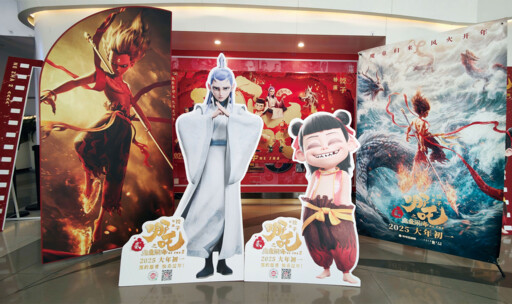
Ne Zha: Demon Child Conquers the Sea (Ne Zha 2) reimagines classic elements of Chinese mythology, preserving cultural authenticity while offering fresh interpretations with themes such as personal identity, self-fulfillment, family and friendship. Photo: IC PHOTO
The emergence of new popular literature and art has been propelled by the development of emerging technologies and the evolution of media forms. It originates from the people and serves the people. As stated in The Analects, “The Odes [Book of Poetry] serve to stimulate the mind. They may be used for purposes of self-contemplation. They teach the art of sociability. They show how to regulate feelings of resentment.” This timeless passage succinctly captures the social functions of literature and art and offers a key to understanding the social value of new popular literature and art.
“Stimulating the mind” refers to the capacity of vivid artistic images to inspire the spirit and evoke emotions. In this expansive landscape of cultural production, the agency of creators has undergone unprecedented transformation: no longer confined to professional writers, directors, or photographers; ordinary individuals now articulate their lived experience through creative work. Representative of this phenomenon is Wang Jibing, a delivery worker navigating the city’s streets, who recorded episodes from his daily routes in plain yet affecting prose. His poetry collection Man in a Hurry has resonated widely online.
“Self-contemplation” reflects the realist orientation of new popular literature and art, serving as a window onto the customs and social currents of the new era. It represents the outward expression of human creative energy through new cultural forms. More than a means of cultivating “enriched” or “well-rounded” individuals, it embodies a form of artistic practice infused with humanistic concern, illuminating the relationship between literature and art and lived reality. Themes such as childrearing, marriage and family life, economic pressures, and elder care recur throughout the series. However dramatic the narrative twists may be, the constant thread remains the warmth of human connection.
In the context of the new era, “the art of sociability” manifests in the linking of diverse groups and the cultivation of collective spirit. The cultures of various ethnic regions are rich and diverse; empowered by new technologies, ethnic arts are now more widely disseminated and deeply cherished. For example, members of the Ulan Muqir art troupe from Ulanqab, Inner Mongolia Autonomous Region, for example, staged performances of ethnic song and dance in the Xi’an subway, creating a “mobile platform” for cultural exchange.
In the new era, new popular literature and art allows global audiences to encounter a renewed image of China. IShowSpeed, an online influencer with 40 million followers, embarked on a journey to China in March 2025. His livestreams—unedited and unfiltered—offered viewers glimpses of China’s landscapes, cuisine, cultural vitality, and technological innovation.
“Regulating feelings of resentment” refers to the capacity of literary and artistic works to intervene in and critique reality. As a reflection of contemporary social life, new popular literature and art has generated a dynamic interaction between artistic expression and social governance. Online public discussion spaces have become important arenas for gathering public opinion and regulating social sentiment.
Through real-time comments and bullet chats, netizens engage in active debate on social issues. The powerful interactive effects generated in these exchanges contribute both to the collection of public opinion and to the channeling of social emotion. Ordinary workers participate in content creation through short-video platforms, transforming grassroots life practices into vivid cases relevant to social governance. These micro-level perspectives provide useful reference points for policy formulation and underscore the importance of embedding humanistic care within institutional development.
In summary, new popular literature and art should adhere to the people-centered principle of creation—“dig deep into life and root among the people”—while articulating, in contemporary form, the practices of “stimulating the mind,” “self-contemplation,” “the art of sociability,” and “regulating feelings of resentment.” It should aim to both provide more abundant cultural supply for Chinese modernization and lend strong momentum to the prosperity and development of socialist literature and art.
Zhao Ran is a professor from the College of Art at Hebei University.
Editor:Yu Hui
Copyright©2023 CSSN All Rights Reserved