


Interpreting ‘new cultural entity’
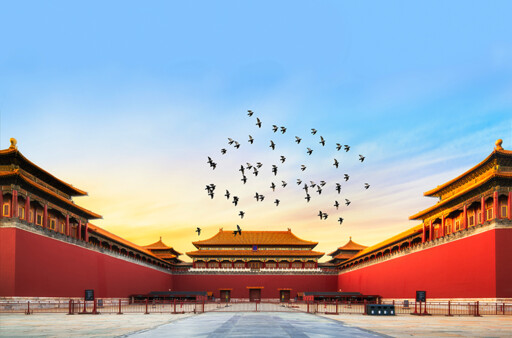
Peacefulness represents the culmination of Chinese civilization’s prominent features. Photo: IC PHOTO
At the Meeting on Cultural Inheritance and Development in June 2023, General Secretary Xi Jinping delivered an important speech in which he put forward a series of iconic concepts and propositions that constitute the essence of Xi Jinping Thought on Culture. Xi Jinping Thought on Culture systematically reflects on the scientific connotation and essential characteristics of the “new cultural entity,” revealing the prominent features of Chinese civilization that this entity has inherited. It thus provides a fundamental guideline for responding to profound changes unseen in a century, promoting the building of a community with a shared future for humanity, and creating a new form of human progress.
‘Two Integrations’ as source of vitality for ‘new cultural entity’
The “new cultural entity” took shape amid the modern revival of China’s national spirit. Following the incursions of Western colonial powers, Chinese civilization found itself in the passive predicament of “being buried beneath the dust of history.” The introduction of Marxism into China revitalized the national spirit of the Chinese nation and gave rise to the great founding spirit of the CPC. Upon its founding, the CPC immediately assumed the mission of safeguarding the cultural identity of the Chinese nation, beginning the process of adapting Marxism to the Chinese context and the times. On the foundation of China’s fine traditional culture and revolutionary culture, an advanced socialist culture was cultivated. In this process, the Chinese nation pioneered the paths of both socialism with Chinese characteristics and Chinese modernization, giving rise to a “new cultural entity.”
The “new cultural entity” is fundamentally socialist and communist in nature. Its journey began during the period of the new-democratic revolution, when it entered the revolutionary course of world socialism and ushered in the dawn of the Chinese nation’s advance toward communism. During the period of socialist revolution and reconstruction, its socialist foundations were formally established through socialist transformation and the establishment of the socialist system. In the new period of reform and opening up, the “new cultural entity” preserved its socialist character amid economic globalization through the development of a socialist market economy and the implementation of reform and opening up. It pioneered the path, theory, system, and culture of socialism with Chinese characteristics, while also forging the path of Chinese modernization.
The “Two Integrations”—integrating the basic tenets of Marxism with China’s specific realities and fine traditional culture—encompass two principal cultural elements: the basic tenets of Marxism and China’s fine traditional culture. Specifically, the concept consists of two dimensions: integrating the basic tenets of Marxism with China’s specific realities—the “first integration;” and integrating the basic tenets of Marxism with China’s fine traditional culture—the “second integration.” Through these two forms of integration, the path, theory, system, and culture of socialism with Chinese characteristics were developed and established, making the “Two Integrations” the source of vitality from which the “new cultural entity” emerged.
Peacefulness of ‘new cultural entity’
In his speech at the Meeting on Cultural Inheritance and Development, General Secretary Xi Jinping identified continuity, creativity, unity, inclusiveness, and peacefulness as the five defining characteristics of Chinese civilization. Among these five characteristics, peacefulness was discussed last, suggesting that it represents the culmination of Chinese civilization’s prominent features.
The peaceful character of the “new cultural entity” can be understood in relation to the dialectical principle of unity between the collective and the individual, which Chinese civilization has consistently upheld. At its core, the relationship between the two is one of dialectical unity. This dialectic principle, in essence, entails unity within difference and difference within unity. The collective is composed of individuals, while the individual exists within the collective. It is precisely this dialectical unity that provides the philosophical foundation for the peaceful nature of the “new cultural entity.”
Viewed as a whole, the “new cultural entity” is consistently characterized by the pursuit of peace on the basis of respect for individual differences. The Global Civilization Initiative, which advocates promoting the “common values of humanity” on the basis of “respect for the diversity of civilizations,” represents a creative transformation and innovative development of the peacefulness of the “new cultural entity” in light of this dialectical principle.
As General Secretary Xi Jinping emphasized: “Chinese civilization stands against isolation and in favor of interaction, advocates coexistence and shared progress, opposes coercion, advocates peace through harmony, and rejects the law of the jungle.” Together, these qualities encapsulate the broader civilizational outlook of the “new cultural entity,” highlighting its enduring commitment to upholding peacefulness.
Wu Hongzheng is a professor from the School of Marxism at Jilin University.
Editor:Yu Hui
Copyright©2023 CSSN All Rights Reserved