


Between destruction and creation: Innovation-driven economic growth
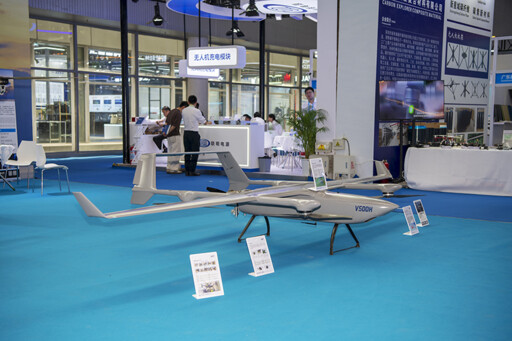
A VTOL aircraft developed by Shenzhen SMD UAV Co., Ltd., on display at the 8th Global Unmanned Systems Conference & International Low-Altitude Economy Expo 2025 in Guangzhou, Guangdong Province, Dec. 12–14, 2025 Photo: IC PHOTO
The 2025 Nobel Prize in Economics was awarded to Joel Mokyr “for having identified the prerequisites for sustained growth through technological progress,” and to Philippe Aghion and Peter Howitt “for the theory of sustained growth through creative destruction.” This recognition not only affirms the central role of innovation and intellectual property in sustaining long-term economic growth, but has also brought the concept of “creative destruction” back to the center of theoretical inquiry. As China transitions from high-speed economic growth to high-quality economic development, a clear understanding of the theoretical implications and institutional conditions of creative destruction carries important real-world relevance. China’s economic advancement exhibits certain characteristics of creative destruction, highlighting the role of innovation in supporting high-quality growth. At the same time, this role is shaped by the interplay between institutions and markets, giving rise to features that differ in important respects from the classical model of creative destruction.
At the institutional level, reform of China’s bankruptcy system has provided an important foundation for the operation of creative destruction. The implementation of the Enterprise Bankruptcy Law of the People’s Republic of China in 2007 marked the country’s formal entry into a rule-of-law-based exit mechanism, yet for a long period the actual use of bankruptcy procedures remained limited. In recent years, however, the establishment of the National Enterprise Bankruptcy Information Disclosure Platform, the creation of specialized bankruptcy courts, and the piloting of pre-reorganization mechanisms have significantly improved judicial efficiency. The average duration of bankruptcy cases—from acceptance to closure—fell from around 500 days in 2015 to less than 300 days in 2021. These reforms have reduced institutional friction in corporate exit, making the process more standardized, transparent, and predictable, and providing institutional support for linking innovation with reorganization.
Structural adjustments in the labor market are becoming an increasingly important channel through which innovation affects China’s economy and society. Technological progress and industrial upgrading are accelerating employment restructuring: Jobs are contracting in traditional manufacturing, wholesale and retail, and certain low-value-added service sectors, while the digital economy, intelligent manufacturing, and emerging service industries are generating large numbers of new positions. In the short term, this process is accompanied by structural unemployment and skills mismatches, placing transition pressures on some low- and medium-skilled workers. Over the longer term, however, labor reallocation and skill upgrading are likely to become key mechanisms for promoting innovation diffusion and improving social welfare. It is therefore necessary to enhance flexible employment and lifelong career training systems to mitigate the “growing pains” of creative destruction and facilitate reemployment and income growth for workers in new economic sectors.
From the perspective of market mechanisms, China’s innovation dynamics display a dual pattern in which policy guidance and competitive forces coexist. The new energy vehicle industry offers a representative example. In its early stages, the sector relied on fiscal subsidies and market-access policies to achieve what might be called “policy-driven creation.” As the market matured, it gradually shifted toward competition-led market clearing. With the phasing out of subsidies and intensifying competition, firms with genuine technological strengths and brand advantages consolidated their positions, producing a cycle reminiscent of creative destruction. Similar processes have unfolded in industries such as photovoltaics, the internet, and education. This “policy-led, market-realized” innovation and clearing mechanism has become a distinctive feature of China’s innovative economic development. Policy intervention in the early stages can nurture emerging industries and accelerate technology diffusion, while timely policy withdrawal allows market mechanisms to assert their disciplining role.
Financial mechanisms, particularly venture capital and government guidance funds, are also emerging as important engines of innovation-driven growth. By supporting startups, frontier technologies, and new business models, venture capital accelerates the commercialization and industrialization of innovation, continuously replacing existing economic structures. The participation of government guidance funds further amplifies this effect, fostering the growth of unicorn companies while also driving structural upgrading in traditional industries. The interaction between venture capital and policy capital has given China’s innovation-driven growth a more institutionalized, clustered, and accelerated character.
A prosperous society is not one without destruction, but one in which destruction becomes the starting point for renewal. For China, enhancing the role of technological innovation in supporting economic growth through creative destruction requires a more refined institutional environment: accelerating the professionalization of bankruptcy adjudication, improving corporate bankruptcy information disclosure and credit repair mechanisms, reducing administrative protection and policy inertia, and better coordinating competition policy and innovation policy rather than relying solely on market forces.
Li Bo is an associate professor from the Guanghua School of Management at Peking University.
Editor:Yu Hui
Copyright©2023 CSSN All Rights Reserved