


Intelligent agents may redefine boundaries, meaning of ‘home’
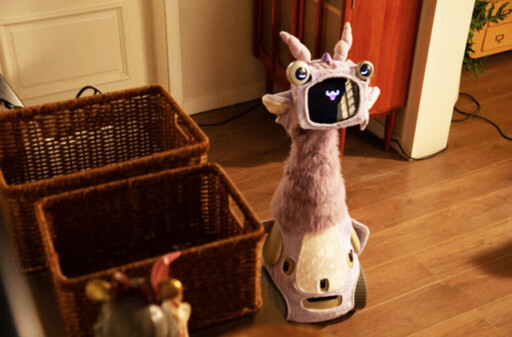
Intelligent pet robot “OlloNi” developed by Chinese manufacturer Ollobot Photo: IC PHOTO
In the current landscape of shifting family composition, digital beings or intelligent agents—such as smart robots and virtual companions that transcend traditional anthropocentric assumptions—are increasingly seen as potential new types of family members. As intelligent agents equipped with emotional interaction capabilities and rudimentary cognitive functions begin to emerge as a possible “third category” of family members, their prospective integration into family ethical relations may challenge social-theoretical paradigms of “home” that have been constructed exclusively on the basis of human relationships. Before such a transformation fully materializes, pets—the earliest non-human members accepted into human families—offer an important experiential reference point for understanding cross-species family relations, given their distinctive position and emotional value within family networks.
Familialization of pets
In contemporary family structures, pets are often affectionately referred to as “fur babies,” forming kinship-like bonds with human family members. These furry companions are not merely objects of emotional attachment; they also assume a range of social functions in everyday life. They may serve as sources of comfort in moments of loneliness, as loyal guardians who provide a sense of security, or, in some households, as indispensable pillars of emotional support.
Research on “human–pet cohabitation,” cross-species dependency, and the phenomenon of “pets substituting for family members” point to the possibility of reconstructing familial emotions and moral boundaries through relationships with animals in contexts of interpersonal alienation. These dynamics reflect a broader social psychology in which, against the backdrop of strained or weakened human relations in modern society, individuals seek to rebuild emotional ties within the family and renegotiate moral boundaries through their interactions with pets. Notably, the ongoing development of cross-species kinship is quietly driving institutional change. Issues such as the refinement of pet health insurance systems and the establishment of pets’ inheritance rights have gradually entered legal and ethical debates, giving rise to new questions concerning animal rights and welfare.
Intelligent agents, limits of familial integration
If pets in the traditional sense are still regarded as living quasi-family members, then technological advances that bring intelligent robots and virtual assistants into the household mark a further expansion of family composition toward non-living entities, often described as silicon-based life forms. This shift not only highlights technological progress but also reflects the continuous broadening of the conceptual boundaries of “family members” in contemporary society, reshaping how people understand and define the idea of home.
The growing adoption of intelligent agents is altering patterns of interaction among family members and may even redefine parental roles, potentially freeing up more time for emotional communication within the household. At the same time, the expanding use of intelligent agents in commercial and professional settings suggests that they may assume more prominent roles in domestic life, further influencing family structures and interpersonal relationships.
For family members, the function of the family lies not merely in the provision of material support or daily care, but in the cultivation of sustained emotional feedback and bonds of ethical responsibility. By analogy, the role of intelligent robots in relation to human family members can be examined to assess their potential to become “members” of the family. The functions of intelligent agents in domestic settings are not limited to practical assistance; they also encompass emotional interaction and companionship. Through long-term engagement, family members may develop forms of emotional dependence on intelligent robots, giving rise to distinctive affective ties. Practices such as assigning names, attributing roles, and incorporating these agents into family rituals may further facilitate their gradual recognition as social “members.”
Accordingly, the likelihood that intelligent agents will come to be regarded as family members is increasing alongside technological advancement, evolving social demands, and shifting public perceptions. Nevertheless, unlike pets, intelligent robots are widely regarded as lacking physical embodiment as well as genuine life and emotion, which makes it difficult for them to form emotional bonds comparable to those between humans and animals. Moreover, treating intelligent robots as family members continues to face multiple constraints.
From a technological standpoint, current robots do not possess true self-awareness or a genuine capacity for emotional understanding. Their interactions with humans remain largely driven by preprogrammed algorithms, limiting their ability to flexibly navigate complex emotional situations. Ethically, incorporating non-human entities into the category of family members may challenge established ethical frameworks, particularly in relation to the attribution of responsibility. From the perspective of cultural identity, family concepts in some cultures place strong emphasis on blood ties and human nature, making it difficult to accept non-human entities as core members of the family.
While such scenarios may not yet be widespread, there is reason to believe that as related technologies continue to mature, intelligent agents will play an increasingly significant role within households. This development will not only reshape patterns of interaction among family members but also prompt deeper reflection on social structures and interpersonal relationships. Social theories of “home” will therefore need to respond in a timely manner to these emerging realities.
Bao Lei is a research fellow from the Institute of Sociology at the Jiangsu Provincial Academy of Social Sciences.
Editor:Yu Hui
Copyright©2023 CSSN All Rights Reserved