


Humanistic economics marks shift in modern economic thought
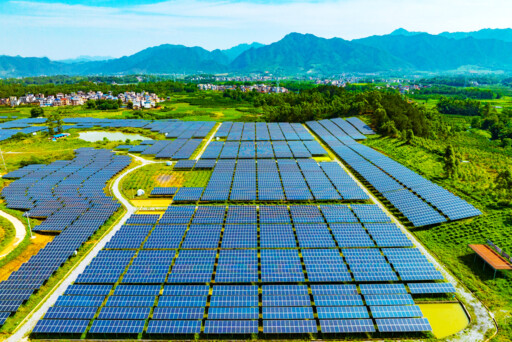
A photovoltaic power station supporting poverty alleviation, integrating solar energy generation with agricultural production, in Tongyouping Village, Mengshan County, Wuzhou City, Guangxi Zhuang Autonomous Region Photo: IC PHOTO
Humanistic economics is a major theoretical proposition advanced by General Secretary of the CPC Central Committee Xi Jinping on the basis of China’s economic development practices, and its introduction signals a profound shift in the trajectory of modern economic thought. Humanistic economics redirects the measure of economic development from “things” to “people,” seeking to uncover the humanistic foundations and ethical dimensions of economic activity and thereby achieve a critical transcendence of Western mainstream economics. This shift reexamines the normative questions surrounding the fundamental purpose and ultimate meaning of development, embedding them within a concrete, holistic, and historically grounded analysis of individual life, social interaction, and civilizational evolution. In doing so, it explores pathways of economic development that uphold individual dignity, forge social consensus, and sustain the continuity of civilization.
Multidimensional, all-encompassing, and intergenerational return to the human
In terms of its object of study, humanistic economics highlights a multidimensional, all-encompassing, and intergenerational return to the human. The “multidimensional” aspect reflects a comprehensive understanding of the human condition. Humanistic economics maintains that humans are neither the purely self-interested “rational economic agents” posited in neoclassical economics nor the “one-dimensional individuals” disciplined by technical rationality and consumerism. Accordingly, humanistic economics understands human beings as cultural beings whose behavior is deeply embedded in networks of meaning and traditional customs, as agentic beings endowed with reflexivity, creativity, and the capacity to transcend existing structures, and as beings pursuing holistic development whose needs extend across material fulfillment, social recognition, intellectual richness, and self-actualization.
The “all-encompassing” dimension embodies the intrinsic demands of inclusive development and social justice. Humanistic economics upholds the proposition in Marx and Engels’ The Communist Manifesto that “the free development of each is the condition for the free development of all,” emphasizing that economic development must benefit the entire population. China’s sweeping achievements in poverty alleviation vividly exemplify this principle in practice.
The “intergenerational” dimension extends humanistic concern from the present into the future. Humanistic economics stresses intergenerational equity and sustainable development, maintaining that genuine development must never come at the expense of the ecological environment, resource base, or development opportunities of future generations. Contemporary economic activity must therefore assume a civilizational responsibility toward the future.
Establishing diversified, balanced, and contextualized value orientations
Regarding developmental goals, humanistic economics establishes value orientations that are diversified, balanced, and contextualized. “Diversification” entails the equal consideration and integration of economic, social, ecological, and cultural values. Humanistic economics rejects the equation of economic growth with social progress, emphasizing that development must simultaneously generate well-being across four dimensions: Economic value provides material foundations and operational efficiency; social value fosters trust, fairness, and cohesion; ecological value safeguards sustainability and the natural basis of development; and cultural value carries meaning, identity, and intellectual heritage.
“Balance” reflects harmonious coexistence within societies, among countries, and between humanity and nature. Within societies, humanistic economics seeks institutional reconciliation between efficiency and equity, and between production and distribution. Among countries, it advocates cooperative mechanisms capable of narrowing development gaps, reconciling competing interests, and easing structural tensions. Between humanity and nature, it upholds a dynamic equilibrium between ecological carrying capacity and developmental needs, and between resource utilization and natural regeneration.
“Contextualization” demonstrates a profound respect for regional heterogeneity, adaptability, and development pathways rooted in local cultures. Humanistic economics emphasizes the traditional wisdom of adapting measures to local conditions, rejects the notion of universally applicable “standard answers,” and holds that any development strategy must be embedded within specific natural environments, historical traditions, institutional arrangements, and cultural mindsets.
Aligning individual interests with social responsibility
With regard to its implementation logic, humanistic economics calls for the development of incentive mechanisms that align individual interests with social responsibility, and ethical norms with historical missions. Such mechanisms would rely on the deep integration of effective markets, well-functioning governments, and an orderly society. Effective markets help discover and integrate diverse values, allocating tangible material resources while also converting non-economic values—such as social trust, ecological welfare, and cultural heritage—into measurable, tradable, and accumulable economic signals and social capital through mechanisms including property rights delineation, price formation, and reputation transmission. In this way, choices oriented toward the greater good can be transformed into rational advantages in market competition.
Well-functioning governments establish institutional rules, invest in long-term interests, and safeguard public value. They translate concerns for universal welfare, intergenerational equity, and civilizational continuity into stable institutional environments and clearly defined expectations. This not only helps address market failures but also actively shapes and cultivates new markets and industries that embody humanistic value.
An orderly society, as a bearer of humanistic spirit and local knowledge, performs multiple functions including value cultivation, ethical oversight, and community building. Through community networks, charitable organizations, and public discourse, it sustains trust and nurtures civic virtue, ensuring that the development process remains aligned with genuine human needs and the long-term welfare of society.
Liao Zujun is vice president of the Sichuan Academy of Social Sciences.
Editor:Yu Hui
Copyright©2023 CSSN All Rights Reserved