


Traditional views on aging outdated in medical context
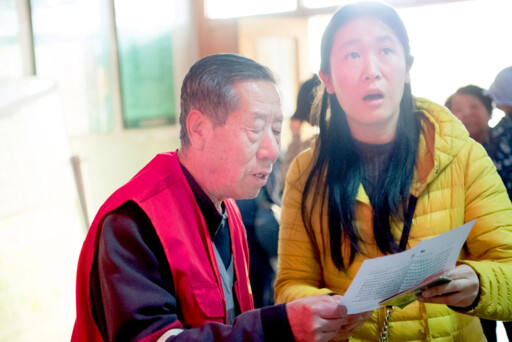
An adult over the age of 80 volunteers as a hospital guide in Taiyuan, Shanxi Province. Photo: IC PHOTO
Traditional thinking often casts older adults as a vulnerable group dependent on care, while reducing their use of healthcare to a passive response to physical decline. Yet Chinese society is changing as medical thinking continues to evolve and proactive strategies for responding to population aging advance. Older adults today are increasingly well educated, health conscious, and self-directed. Their engagement with healthcare is no longer confined to the treatment of disease, but is expanding into a comprehensive form of health practice encompassing prevention, rehabilitation, social participation, and improved quality of life. Advancements in digital healthcare and smart eldercare technologies are also giving older adults greater scope to manage their own health. These changes call for a broader and more nuanced understanding of aging in healthcare settings.
First, older adults should not be viewed simply as recipients of care. They are neither merely a vulnerable population nor passive recipients of healthcare services. Rather than regarding them solely through the lens of dependency, healthcare providers and institutions must move beyond the stereotype that older adults invariably need to be looked after and redefine the range of social roles they can assume. Older adults possess considerable social value and development potential. Empirical evidence shows that they can serve a range of useful roles—such as transmitters of experience, volunteers, and health communicators in the healthcare process—and in some cases may even provide medical or caregiving services themselves.
Second, the utilization of healthcare services should not be equated with declining health. Medical visits are often treated as evidence of deterioration, especially among older adults, for whom frequent use of healthcare can become almost synonymous with “aging.” This is a misconception. Modern medicine emphasizes prevention over treatment, and regular engagement with healthcare is often a positive form of health management. Through routine checkups, medical consultations, and chronic disease management, older adults can monitor their health status, track disease progression, and improve their quality of life. Seeking medical care can also be a process of self-empowerment—every visit offers an opportunity to acquire new health-related knowledge.
Third, being accompanied to a medical appointment does not necessarily amount to a positive healthcare experience. Many assume that older adults should naturally be accompanied when seeking care, and the presence of a family member is sometimes even treated as a criterion for evaluating the quality of the experience. Although accompaniment may appear to reflect family support and care, it can also expose inadequacies in age-friendly healthcare services and obscure society’s neglect of older adults’ ability to navigate the system independently.
In reality, many seniors are both willing and able to seek medical care on their own. The problem is often not a lack of willingness or ability, but a service environment that assumes dependence. Inhospitable healthcare settings may therefore deprive them of that choice. Service processes often fail to account fully for their needs: Procedures may be complex and frequently changed, hospital departments poorly laid out, smart devices difficult to operate, and accessibility facilities inadequate. These barriers not only make medical visits more burdensome but also undermine older adults’ autonomy.
Fourth, promoting integrated medical and eldercare does not mean erasing the boundary between them. Such integration is an important strategy for responding to population aging, but in practice, blurred boundaries can give rise to a tendency to substitute medical treatment for everyday care. Although medical services and eldercare both form part of the broader health service system, they differ fundamentally in their objectives, content, and approaches. Medical care focuses on the diagnosis and treatment of disease and therefore emphasizes professional expertise and technological capabilities. Eldercare, by contrast, centers on assistance with daily living and requires long-term, comprehensive support.
Overmedicalizing eldercare institutions can result in inefficient resource allocation, including the indiscriminate expansion of medical facilities, while also subjecting older adults to unnecessary examinations and treatment. An ideal model of integrated medical and eldercare services should achieve a balance among tiered services, clearly differentiated institutional roles, and the rational allocation of resources.
Fifth, improving services for older adults should not mean fragmenting healthcare by population group. As services for older adults are strengthened, policymakers must also guard against intergenerational imbalances in the allocation of medical resources and avoid undermining overall healthcare equity by favoring any single group too heavily. Better healthcare for older adults should not come at the expense of the medical needs of other groups. It should instead be incorporated into a life-course approach to health management, with healthcare resources planned and allocated in a coordinated manner. An ideal healthcare system must balance equity with efficiency, meeting older adults’ needs for chronic disease management and rehabilitative care, while ensuring equitable access for other groups, including pregnant women and children.
Wang Zheng is an associate professor from the School of Sociology and Humanities at Jiangxi University of Finance and Economics.
Editor:Yu Hui
Copyright©2023 CSSN All Rights Reserved