


China brings certainty to changing global climate order
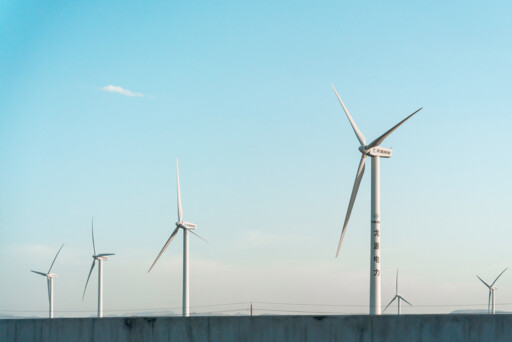
A wind farm in Yumen, Jiuquan, northwest China’s Gansu Province, which provides sustained clean power support for the construction of a 10-million-kilowatt wind power base and the implementation of low-carbon development strategies along the Hexi Corridor Photo: IC PHOTO
Global climate governance is entering a period of transition: The old order is rapidly unraveling, while a new framework is gradually taking shape. The 30th Conference of the Parties to the United Nations Framework Convention on Climate Change, held in Belém, Brazil, in 2025, was the first such gathering to take place without official participation by the United States. Even so, delegates adopted the Belém Political Package and made substantive progress. The outcome reaffirmed multilateral cooperation as the principal avenue for climate governance and laid an institutional foundation for the full implementation of the Paris Agreement on Climate Change over the coming decade.
Amid this uncertainty, China is bringing a measure of stability and momentum to global climate governance—upholding multilateralism through concrete action, anchoring expectations in coherent long-term commitments, driving down costs through large-scale industrial development, and enabling broader emissions reductions through inclusive cooperation.
China injects conceptual certainty into global climate governance by firmly upholding multilateralism through the vision of building a community with a shared future for humanity and the Global Governance Initiative. Working within the framework of the Paris Agreement, it helped secure provisions opposing unilateral measures in the conference’s outcome documents while also supporting the development of a just-transition working mechanism. This brings employment protection, social equity, and industrial transformation more firmly into the institutional framework of climate governance.
China’s joint launch of the Open Coalition on Compliance Carbon Markets with the European Union and Brazil also signals a shift from following carbon-market rules to actively shaping global carbon-pricing governance. Complementing this initiative, China is advancing the standardized development and large-scale rollout of zero-carbon industrial parks, building an integrated system of standards encompassing carbon accounting, the use of renewable electricity, circular production, and carbon-management platforms, while developing demonstration projects that can be replicated and scaled up.
At the institutional level, China’s targets for peak carbon emissions and carbon neutrality have driven the steady improvement of mechanisms for green and low-carbon development. Since President Xi Jinping announced the country’s “dual carbon” goals at the 75th Session of the UN General Assembly in September 2020, China has established a “1+N” policy framework for achieving them. Now comprising more than 130 policy documents, this institutional architecture covers all major areas of economic and social development, including energy, transportation, technology, and finance. By providing industry and technological innovators with a clear, predictable long-term policy environment, the framework has helped foster the world’s largest green industrial ecosystem.
China’s green and low-carbon development is also moving beyond a purely techno-economic paradigm. Institution-building translates medium- and long-term emissions commitments into near-term rules and incentives, while consistent policy signals shape how markets assess future costs and returns. In this way, China is bringing greater institutional certainty to global climate governance.
At the technological level, China is reshaping the economics of global emissions reduction through green productive forces. For more than a decade, it has been the world’s largest investor in and producer of clean energy, as well as the leading force behind falling green-technology costs. By the end of 2025, China’s installed renewable power capacity had approached 2.34 billion kilowatts, accounting for roughly 60% of its total installed power-generation capacity. Renewables overtook thermal power for the first time in history, allowing China to meet its original 2030 renewable-energy capacity target ahead of schedule and cementing its position as the principal driver of global renewable-energy expansion.
The global spillover effects of China’s green productive forces extend beyond exports of finished products to the international diffusion of production equipment and technical standards. The massive scale of Chinese manufacturing, combined with continuous innovation, has placed clean-energy costs on a more predictable downward trajectory, reducing the volatility that once characterized the sector. This has substantially lowered the risks and discount rates associated with low-carbon transitions worldwide and fundamentally altered developing countries’ expectations about access to clean energy.
In international cooperation, China has sought to break the zero-sum logic of climate governance by linking climate action to shared development. Under the framework of South-South cooperation on climate change, it has provided and mobilized more than 177 billion yuan (roughly US$26 billion) in project funding for developing countries since 2016. China has signed 54 climate-cooperation documents with 42 countries, conducted more than 300 capacity-building programs, and trained over 10,000 officials and technical personnel from more than 120 developing countries. The significance of this model extends well beyond the scale of its financial support: By coupling climate cooperation with industrial development and cultivating countries’ own capacities, it has opened a “development-oriented” path distinct from traditional approaches to aid.
Sun Yongping is a professor and deputy director of the Institute of State Governance at Huazhong University of Science and Technology.
Editor:Yu Hui
Copyright©2023 CSSN All Rights Reserved