


What is cinema? The answer is being rewritten in the new era
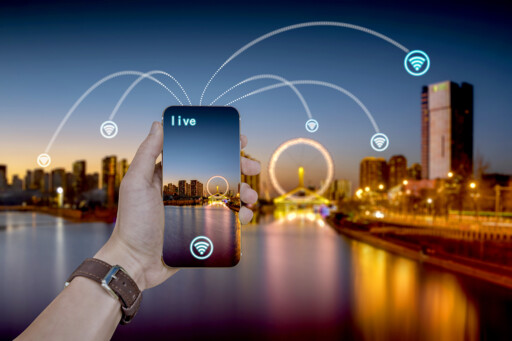
Online live streaming transcends spatial boundaries while creating a sense of real-time presence, making it an important form and medium for new forms of literature and art for the general public. Photo: CFP
The widespread adoption of streaming media, the deep penetration of short-form video, the growing maturity of VR/AR technologies, and the comprehensive integration of AIGC are collectively reshaping the media boundaries, social structures, and cultural logic of today’s audiovisual ecosystem. In the digital-intelligent era, the ontological question of “what is cinema?” urgently demands a new answer. As digital technologies profoundly transform the ways audiovisual works are created, circulated, and consumed, the concept of “new popular audiovisual media” offers not only a theoretical response to the future development of cinema, but also a contemporary continuation of the tradition of popularizing literary and artistic creation.
Ontological challenges in the new era
Since its inception, cinema has undergone successive technological revolutions and conceptual transformations. From silent films to talkies, from black-and-white to color, and from film stock to digital media, every major transition has renewed debate over the question of “what is cinema?” At its core, defining cinema involves distilling the essential characteristics of cinematic practice and delineating its boundaries within a particular historical era. Traditional cinema rested on three fundamental pillars: film stock as its material medium, the movie theater as its primary exhibition venue, and a professionalized system of production. The digital media revolution, however, has shaken each of these foundations, posing an epochal challenge to traditional theories and making the redefinition of cinema increasingly necessary.
First, cinema’s technological foundations have been transformed. Traditional cinema relied on film stock as its medium, optical projection as its core technology, and 24 frames per second as its frame rate standard, creating a closed industrial chain encompassing filming, processing, and projection. Digital technology has broken this closed loop. Digital cameras, CGI, and virtual production have reconfigured production processes, while streaming platforms and mobile devices have transformed films from physical copies into digital streams of information that can be endlessly duplicated, edited, and disseminated. When films can be shot on smartphones, premiered on short-video platforms, and distributed algorithmically, an understanding of cinema centered on its material medium inevitably begins to dissolve.
Second, the boundaries separating different media are increasingly blurred. The movie theater was once an inseparable part of the cinematic experience, with its enclosed space creating a sense of ritual and exclusivity that helped distinguish cinema from other media. With the advent of 5G and streaming services, however, the traditional rules governing theatrical release windows have been disrupted. Emerging forms such as portrait-format video, interactive content, and VR have moved beyond conventional norms of aspect ratio, duration, and narrative structure, while seamless viewing across multiple devices has become commonplace. Whether a work is shown theatrically is therefore no longer the central criterion for determining whether it constitutes a film, further eroding the media boundaries on which traditional definitions of cinema were based. Within today’s audiovisual ecosystem, all forms of “moving images” produced through electronic or digital technologies can, in a broad sense, be understood as cinema.
Finally, cinema’s industrial ecosystem is undergoing fundamental restructuring. Traditional cinema was organized around the studio system and director-centered production, while audiences largely occupied the position of a “silent majority” in the creation and dissemination of literary and artistic works. Today, the ranks of creators have expanded from professional elites to the general public. Game engines have entered virtual production, short-video platforms have become important arenas for film promotion and distribution, and the line separating production from consumption has become increasingly porous. For some works, user-generated secondary creations may even attract more attention than the originals themselves. Traditional models of film production are therefore increasingly unable to accommodate these emerging industrial practices.
Defining new popular audiovisual media
Broadly speaking, new forms of literature and art for the general public refer to a new cultural paradigm in which emerging technologies such as the internet and artificial intelligence create more egalitarian mechanisms for participation, allowing audiences to move beyond the role of passive recipients and engage extensively and deeply in literary and artistic creation as genuine participants in cultural production. Within this framework, new popular audiovisual media can be understood as a new form of audiovisual cultural practice that maintains a fundamental people-centered orientation, is driven by internet and digital-intelligent technologies, breaks through traditional boundaries between production, dissemination, and reception, and enables collaborative creation among diverse actors alongside cross-media circulation.
At the level of creation, production rights are being redistributed and a collaborative production system is taking shape. Enabled by digital technologies, the gradual transfer of production rights from professional elites to a wider range of participants is a defining characteristic separating new popular audiovisual media from traditional cinema. It directly addresses the fundamental questions of “who produces” and “how production takes place.” Traditional filmmaking operated through a relatively closed, vertically organized professional system in which production rights were highly concentrated in the hands of directors and core creative teams. New popular audiovisual media, by contrast, brings professional creators, ordinary users, and algorithmic systems into a new collaborative production structure. Cinema is evolving from an expression dominated by individual creativity into a collaborative product shaped by collective intelligence and technological logic.
At the textual level, audiovisual narratives are becoming increasingly cross-media and open-ended. Breaking away from the closed and relatively self-contained nature of traditional film texts is another defining feature of new popular audiovisual media, addressing the fundamental question of “what is produced.” Traditional films are relatively fixed in duration and closed in form, with theatrical exhibition often marking the endpoint of their lifecycle. New popular audiovisual media, by contrast, is increasingly cross-media and extensible. In terms of media forms, differentiation and integration are occurring simultaneously. Narrative structures, meanwhile, are becoming more open. More fundamentally, audiovisual works are increasingly taking shape within IP-centered ecosystems. The complete “text” of a film is no longer confined to the feature itself, but may encompass an entire IP ecosystem spanning fan-created derivative content, behind-the-scenes materials, public discussion, offline cultural-tourism activities, and merchandise. Value is continually generated and amplified through ongoing adaptation, circulation, and recreation. In an era of media convergence, the meaning of an audiovisual text is no longer fixed once and for all by its creators, but continually produced through cross-media circulation and public participation.
At the functional level, audiovisual consumption is becoming embedded in everyday life, reshaping the social role of audiovisual media. New popular audiovisual media is transforming audiovisual culture from a ritualized art form that stands “above everyday life” into an interactive medium of everyday cultural perception deeply integrated into multiple spheres of society. This change addresses the question of “how audiovisual media act upon society.” The dissemination and reception of traditional films were largely confined to specific times and spaces within movie theaters, making filmgoing a collective, social, and ritualized activity distinct from everyday life. New popular audiovisual media, by contrast, has fundamentally reconfigured how films circulate and are consumed. Streaming platforms and mobile devices make audiovisual content accessible across devices, times, and locations, dramatically increasing both the efficiency and reach of dissemination. Viewing has expanded beyond the single spatial setting of the movie theater into a wide range of everyday contexts, including the home, commuting, and social interaction. The concentrated artistic experience associated with traditional cinema has thus evolved into a more fragmented yet continuous form of everyday cultural practice. Meanwhile, mechanisms such as bullet-screen interaction and online community discussion allow new popular audiovisual media to serve as a cultural bond connecting individuals and facilitating the formation of social groups and communities.
Toward a new future of people-centered, collaborative creation
The history of Chinese cinema is, in essence, a history of continually exploring new pathways toward popularization while repeatedly redefining what cinema means. The transition from “cinema” to “new popular audiovisual media” emerges from an examination of China’s evolving audiovisual practices. At its core lies a deeper reconsideration of how audiovisual media should be understood, how the public should be defined, and what functions audiovisual culture should perform as creative concepts and aesthetics undergo transformation in a new era.
As an art form that evolves with its times, cinema is always in the process of “becoming.” As the era calls for the flourishing development of new popular literature and art, Chinese cinema must actively embrace transformation, broaden its boundaries, and open new possibilities through collaborative creation among diverse actors and cross-media circulation. Guided by the people-centered principle, new popular audiovisual media makes digital-intelligent technologies a foundational force for empowering popular innovation and creativity, enabling cinema to move beyond elite expression and redefine the essential attributes of popular culture in the digital-intelligent era. New popular audiovisual media points toward a new landscape in which people-centered values and innovation advance together, local grounding is integrated with a global perspective, and technological empowerment converges with humanistic values.
Gu Yaqi is a professor from the School of Arts at Renmin University of China (RUC); and Zhang Ming is a research fellow from the Research Center for Digital Humanities of RUC.
Editor:yu-hui
Copyright©2023 CSSN All Rights Reserved