


Formation of competitive advantages in China’s emerging industries
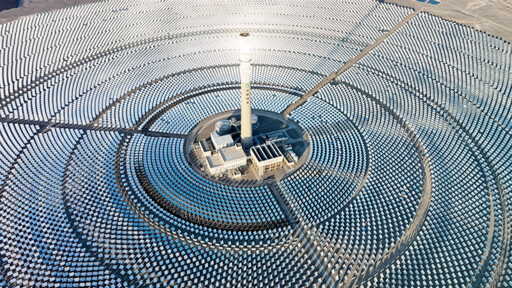
Baishuiquan Photovoltaic Industrial Zone in Jinta County, Jiuquan City, Gansu Province Photo: IC PHOTO
The healthy development of emerging industries is a concrete manifestation of the advancement of Chinese modernization. It is a key means for the state to foster new drivers of growth and secure new competitive advantages for the future, and an important determinant of China’s transition from innovation catch-up to innovation leadership. At present, China has achieved world-leading technological levels in emerging industries such as high-speed rail, nuclear power, new energy vehicles, and photovoltaics (PV), while strategic emerging industries including big data, artificial intelligence, the Internet of Things, semiconductors, and chips are also being cultivated and developed at an accelerated pace. This makes it necessary to adopt a more macro-level, holistic analytical lens through which to conduct systematic research on how China’s emerging industries build competitive advantages, to identify development patterns suited to China’s national conditions, and provide experience-based guidance for cultivating emerging industries.
Perspective of innovation ecosystem
Drawing on a decade-long longitudinal study of China’s PV industry—supported by extensive first-hand data obtained through interviews and field investigations—this article analyzes, from the perspective of the innovation ecosystem, how competitive advantages formed across different phases of industry development, and distills the pathways through which emerging industries build such advantages.
As a driver of innovation distinct from markets, collective action, and social forces, the innovation ecosystem facilitates the formation of core competitive advantages in emerging industries by enabling value co-creation and value sharing. Through a shared value proposition, the innovation ecosystem coordinates the innovative behavior of participating actors and advances collective innovation goals, thus contributing to the emergence of integrated competitive advantages at the industry level. In this process, core members of the ecosystem collaborate and share resources with other participants to co-create new value, while value sharing is realized through appropriate allocation mechanisms. At the same time, the ecosystem’s openness attracts an increasing number of new participants, enhancing its complexity and stability. As a result, the system evolves toward higher stages and ultimately produces core competitive advantages for the emerging sector as a whole.
Based on the evolutionary sequence of core enterprises in China’s PV industry and key event milestones, this study divides the development of the industry’s ecosystem into four stages: embedding into the global value chain (2001–07), improving industrial layout (2008–13), developing core technologies (2014–19), and whole-industrial-chain collaborative innovation (2020–present). Across these stages, China’s PV industry gradually developed an independent innovation knowledge system and acquired full-spectrum product innovation capabilities. As the ecosystem matured, the industry has moved from follower to frontrunner, ultimately becoming a representative case of the rapid development of China’s emerging industries.
Competitive advantage formation
In the early stage of China’s PV industry, firms gained access to capital, land, talent, and other resources with government support; competitive advantage at the time stemmed from capital and institutional advantages enabled by fiscal backing. The main competitors were foreign firms whose products were relatively expensive. Although issues of legitimacy and the absence of a domestic market were partly addressed, the vulnerability of the value chain still required resolution.
As the domestic market gradually opened, Chinese firms began to strengthen the industrial value chain through vertical integration and equipment localization. Complementary firms enhanced their technological capabilities, while upstream and downstream firms reduced transaction costs. The industry’s competitive advantage at this stage lay in the integrated advantages achieved through supply-chain unification. Primary competitors included foreign firms as well as domestic rivals. Although products offered strong cost-effectiveness, technological innovation remained fragmented, and the industry lacked the capacity for core technological breakthroughs.
As firms’ technical capabilities improved, China’s PV industry built an independent innovation knowledge system through knowledge sharing, accelerating technological iteration across the sector and forming a technology-based competitive advantage rooted in independent innovation—innovation grew increasingly systematized. Competition at this stage centered on rivalry between domestic monocrystalline and polycrystalline routes, while most foreign companies had already exited the market. The industry then faced the challenge of transitioning toward a market-driven model after the withdrawal of government subsidies.
Once the industry’s technology reached a leading international level, China’s PV sector has achieved system-level product innovation through collaborative innovation across the entire industrial chain, acquiring full-product innovation capability. The industry’s competitive advantage at this stage was defined by the collaborative innovation that emerges from a mature innovation ecosystem. Under the grid-parity policy, the PV industry’s competitors shifted toward traditional energy industries. Through collaborative innovation, the PV sector significantly reduced costs and improved efficiency, successfully completing its market-oriented transformation and entering the “grid-parity era.”
Thus, the evolution of competitive advantage in China’s PV industry has closely tracked changes in the industrial environment, shifts in competitive rivals, and the breaking of development bottlenecks. Throughout this process, the innovation ecosystem gradually matured and stabilized: It evolved from a fragile link in the industrial chain into a highly coordinated and integrated structure; technological innovation moved from fragmented efforts and a lack of core technologies to systematized core technologies and system-level product innovation; and the actors participating in innovation became increasingly diverse and complex. Different firms developed core technologies within their respective market segments and, while engaging in collaborative innovation, retained distinct competitive advantages.
Based on this analysis, the generation and sustained development of competitive advantage in emerging industries follows four pathway patterns. First, the micro-level formation of competitive advantage involves changes in ecosystem relationships, shifts in mechanisms of value co-creation and sharing, and the reshaping of firms’ resource endowments and capabilities. Through repeated cycles, industrial competitive advantages are reinforced, and the innovation ecosystem evolves toward maturity. Second, the sustained creation of competitive advantage requires the innovation ecosystem to continuously articulate new shared value propositions that guide firms in ongoing value co-creation, enabling industries to navigate crises. In contexts where institutional voids are widespread, challenges such as weak trust among firms, shortages of core technologies, and inadequate intellectual property protection can be mitigated to some extent by building an innovation ecosystem. Third, core firms may need to relinquish part of their own interests, taking a long-term view in sharing value with other firms and jointly promoting overall industrial development. Fourth, as the innovation ecosystem evolves toward maturity, new core firms may emerge at different stages to guide other actors in transforming their modes of value co-creation and value sharing, addressing industrial crises and ecosystem challenges, and continuously enhancing industrial competitiveness.
Policy implications
Using an exploratory case-study approach, this research examines the processes and mechanisms through which the PV industry built its core competitive advantages, offering insight into the long-term drivers of emerging-industry development. Firms within an industry can achieve value co-creation and value sharing by constructing an innovation ecosystem, partly compensating for certain institutional shortcomings common to latecomers and accelerating the improvement of international competitiveness in emerging industries. This extends industrial competitiveness theory and provides a basis for reflecting on China’s future industrial development. The findings also offer policy implications for the cultivation of China’s emerging and future industries.
First, the sustained development of emerging industries requires the continuous evolution of the industrial innovation ecosystem, and cultivating core firms is essential. A volatile environment brings crises and practical challenges to emerging industries, and China’s emerging sectors frequently encounter bottlenecks, including incomplete industrial chains, shortages of core technologies, unclear industry directions, blind investment, and containment by advanced economies. This study suggests that resolving such bottlenecks does not rely solely on technological innovation, particularly in early developmental stages. Even when firms generally lack core technologies, participants in an innovation ecosystem can coordinate and collaborate to pool strength, create and share new value, and jointly confront crises—for example through product-level collaborative innovation, unified industry standards, equipment localization, and technology sharing. Once an industry moves beyond its vulnerable initial phase or weathers major crises, the maturation of the ecosystem supports the development of independent innovation capability and mastery of core technologies. At that point, emerging industries can advance rapidly under the leadership of core firms. Building and coordinating an innovation ecosystem also requires core firms to exercise ecosystem leadership: making accurate judgments, articulating value propositions, and clarifying industry development directions. Cultivating core firms with this form of ecosystem leadership is therefore critical for emerging industries, strategic emerging industries, and future-industry development.
Second, policy-making for emerging industries should prioritize functional industrial policies. Latecomers, in particular, should avoid excessive intervention in market competition in their rush to accelerate emerging-industry development. For industries such as PV, new-energy vehicles, and AI, functional industrial policies are preferable to selective industrial policies; creating a favorable entrepreneurial and business environment is often more effective than picking winners. Developing countries tend to adopt planned-economy management approaches and seek rapid short-term industrial growth through selective industrial policies. However, such direct intervention can generate negative effects that become increasingly salient as the industry grows. After scaling up and weathering significant risks, China’s PV industry gradually shifted toward a system dominated by functional policies, emphasizing improved market mechanisms, safeguarding fair competition, and promoting innovation. This shift facilitated open industrial development and provided firms with an inclusive and level playing field. As a result, firms could address survival challenges while focusing on technological innovation and pursuing cost reductions and efficiency gains as shared objectives, gradually forming a mature innovation ecosystem.
Liu Xielin is a distinguished professor from the School of Business Administration at Capital University of Economics and Business. Ge Shuang is from the Business School at China University of Political Science and Law. This article has been edited and excerpted from China Industrial Economics, Issue 6, 2025.
Editor:Yu Hui
Copyright©2026 CSSN All Rights Reserved