


How population aging drives skill-biased technological progress
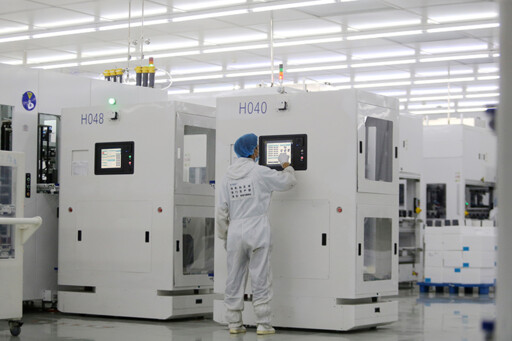
A smart workshop at a photovoltaic solar panel manufacturing company in the Yizheng Economic Development Zone, Yizheng, Jiangsu Province Photo: IC PHOTO
Technological progress is a fundamental driver of economic development and a key channel through which macroeconomic growth is sustained and enterprise performance is enhanced. Technological change is inherently characterized by factor bias. Depending on the type of input it favors, technological progress can broadly be classified as capital-biased or labor-biased. This distinction can be further refined to include forms such as skill-biased technological progress, which favors skilled over unskilled labor, and automation-capital-biased progress, which advantages automated capital relative to non-automated capital.
Given its positive role in promoting high-quality economic development, skill-biased technological progress has attracted considerable scholarly attention. Existing studies have explored a wide range of factors influencing this form of technological change, yet much of the literature remains concentrated at the macro level, with empirical evidence at the micro level still relatively limited. Examining skill-biased technological progress from the perspective of individual firms is nonetheless essential for gaining a deeper understanding of corporate behavior, improving firm-level productivity and performance, and designing more effective, targeted policy interventions.
Meanwhile, as population aging is leading to mounting constraints on labor supply, firms are compelled to adjust their allocation of production factors in order to sustain productivity growth and preserve market competitiveness. Moreover, population aging is accompanied by changes in factor prices, most notably a substantial rise in labor costs—particularly for unskilled workers. These cost pressures create strong economic incentives for firms to adopt labor-saving technologies and to redirect technological investment toward skill-intensive trajectories, thereby reinforcing skill-biased technological progress.
Drawing on data from publicly listed Chinese manufacturing firms combined with national population census data, this study empirically examines how population aging influences the direction of technological progress toward skills and how this process, in turn, affects labor market outcomes. By linking demographic change to firm-level technological behavior, the analysis offers new insights into the mechanisms by which aging societies can navigate labor scarcity and sustain long-term economic development.
Population aging driving skill-biased turn in technological progress
This study situates firm-level technological progress behavior within the broader context of macro-level population aging and constructs a regression framework using a two-way fixed effects model. The sample consists of Chinese A-share manufacturing firms from 2011 to 2022, matched with city-level data. Listed manufacturing firms are selected because they reflect, at the micro level, how the market economy responds to population aging, while manufacturing itself constitutes the material foundation of high-quality economic development. Data on population aging are drawn from the 2010 and 2020 national censuses and the 1% population sample survey from 2015, while city-level indicators are sourced from the annual China City Statistical Yearbook. Robustness checks and heterogeneity analyses indicate that population aging drives skill-biased technological progress through three primary mechanisms.
First, population aging reduces labor supply, significantly raising labor costs. Changes in factor prices motivate firms to restructure the bias of their technological progress. To cope with rising costs, firms increasingly adopt labor-saving technologies, such as automated equipment and intelligent systems, which require skilled workers for operation and maintenance. This shift encourages firms to invest more heavily in training and recruiting skilled labor, thereby promoting skill-biased technological progress.
At the same time, firms increase R&D investment to develop more efficient production technologies, a process that also relies heavily on skilled labor, further reinforcing skill-biased progress. Rising labor costs additionally influence investment decisions, leading firms to favor technologies and equipment that enhance productivity and reduce dependence on labor. In practice, firms respond by adopting new technologies, enhancing skills training, increasing R&D spending, and adjusting investment strategies, all of which collectively push technological progress in a skill-biased direction.
Second, labor supply contraction induced by population aging alters the relative scarcity of production factors, forcing firms to adjust their input mix. When labor-intensive production faces effective labor supply shortages, firms tend to substitute labor with capital accumulation. Capital deepening, however, is not a simple mechanical replacement of labor, but rather an upgrading of the technology–skill match with pronounced skill-selective characteristics. For example, introducing automated equipment substitutes repetitive positions while simultaneously increasing demand for workers with higher-order skills, such as programmers and maintenance technicians.
In an aging context, capital investment increasingly concentrates on intelligent systems—including industrial internet platforms—whose technological complexity demands abstract problem-solving skills and sophisticated human–machine coordination. These systems fully leverage the comparative advantage of skilled labor. According to the capital–skill complementarity hypothesis, the marginal productivity of skilled workers relative to capital equipment exceeds that of unskilled workers. Labor shortages caused by aging, together with widening factor price differentials, amplify this complementarity. As a result, firm-level capital deepening functions as a carrier of skill-biased technological progress, forming a “capital–skill” virtuous cycle through equipment upgrading, skill enhancement, and technological iteration.
Third, population aging significantly reshapes labor market supply by reducing the number of prime-age workers and shifting the overall age structure upward. This change compels firms to reassess human resource allocation and leads to profound adjustments in workforce composition. Confronted with a shrinking labor pool, firms increasingly prioritize skilled labor, intensifying training and recruitment efforts to achieve workforce optimization based on “quality over quantity.” Consequently, the proportion of skilled workers rises, while that of unskilled workers declines. Skilled workers, equipped with specialized expertise, technical capabilities, and innovative capacity, play a crucial role in technological progress: They are better able to absorb and internalize new technologies, reduce adoption frictions, and accelerate diffusion. Firms’ investments in specialized human capital—through professional training and R&D support—not only enhance productivity but also deepen reliance on skilled labor, reinforcing skill-biased technological progress. In addition, the concentration of skilled workers facilitates knowledge sharing and collaborative innovation, generating new technical ideas and solutions that further drive skill-biased technological advancement.
The study further finds that in export-oriented cities and cities with net population inflows, the positive effect of population aging on skill-biased technological progress is more pronounced. Export-oriented cities capitalize on regional comparative advantages within global value chains, enabling rapid manufacturing growth and accelerating skill-biased progress. Cities with net population inflows, by contrast, attract large numbers of high-skilled workers due to stronger urban appeal. Furthermore, by driving skill-biased technological progress, population aging not only improves labor productivity but also moderates skill premiums and alleviates downward pressure on labor income shares.
Addressing labor challenges posed by population aging
This study identifies a causal relationship between population aging and skill-biased technological progress, offering important insights for promoting firm-level technological upgrading, cultivating new quality productive forces, and advancing high-quality corporate development amid ongoing demographic transition.
First, governments should design regionally differentiated policy support frameworks to ensure that skill-biased technological progress becomes a key engine of high-quality firm development in aging societies. Population aging should be viewed not only as a constraint but also as an opportunity to intensify support for skill-intensive innovation through measures such as R&D tax incentives and enhanced intellectual property protection. These policies can encourage firms to invest in automation and artificial intelligence, thereby improving competitiveness. In export-oriented cities, policy efforts should prioritize building comprehensive innovation ecosystems, while in cities experiencing net population inflows, greater emphasis should be placed on improving residency policies and harmonizing skill certification systems to attract high-skilled talent and sustain long-term technological advancement.
Second, a more nuanced understanding of the mechanisms through which population aging influences the direction of technological change is essential for designing more targeted and effective policies. Governments can guide firms to establish dynamic wage-adjustment mechanisms that respond flexibly to changes in labor supply and demand, enabling firms to better absorb rising labor costs and mitigate cost pressures. At the same time, the introduction of skill-based allowances can help ensure that skilled workers share more equitably in the gains from technological progress. Policymakers may also explore integrated subsidy schemes that jointly support capital investment and skilled labor, thereby easing capital–skill matching constraints. Strengthening systems for skill transmission, training, and formal certification can further incentivize firms to invest in human capital development and talent recruitment.
Third, demographic transition should be addressed proactively through well-calibrated policies that enhance the labor market effects of skill-biased technological progress, mitigating the broader socioeconomic challenges associated with population aging. Incentive mechanisms for skill-oriented firms should be refined, with tiered subsidies offered to firms that actively pursue skill-intensive development strategies. For firms that have not yet adopted skill-oriented production models, targeted tax incentives and technical support can facilitate their transition toward more skill-intensive activities. Where technological upgrading leads to declining labor income shares in non-skill-biased firms, mechanisms such as profit-sharing arrangements or clearly defined employee shareholding schemes can help rebalance the distribution of gains between capital and labor.
Looking ahead, future research could extend this analysis to a broader range of industries, examining sectoral heterogeneity and underlying mechanisms to better understand how population aging affects firms at the industry level. Further studies could also explore the determinants and economic consequences of technological progress biased toward capital, energy, environmental inputs, or other factors.
Xiao Zhouyan (professor) and Ma Changqun are from the School of Labor Economics at Capital University of Economics and Business. This article has been edited and excerpted from Economic Management, Issue 7, 2025.
Editor:Yu Hui
Copyright©2026 CSSN All Rights Reserved