


Rethinking funding mechanisms for scientific and technological breakthroughs
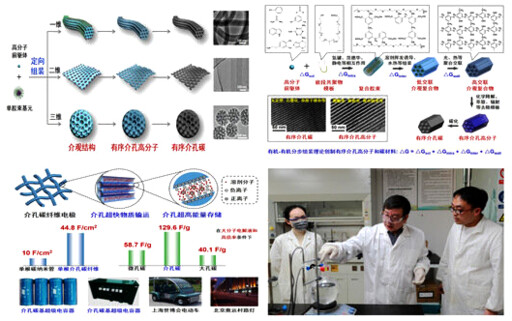
The study “The Creation and Application of Ordered Mesoporous Polymers and Carbon Materials” won the First Prize of the 2020 National Natural Science Award. PHOTO: FUDAN UNIVERSITY
From 2000 to 2023, China’s national fiscal expenditure on science and technology (S&T) increased more than twentyfold, driving a rapid expansion in scientific and technological output. Over the same period, the number of SCI-indexed publications and granted invention patents rose by 24 times and 72 times, respectively. Yet alongside this aggregate growth, significant shortcomings remain in breakthrough innovation: Nobel Prize-level achievements are still scarce, and key technological fields such as semiconductors and high-end equipment face persistent bottlenecks. The principal contradiction in China’s S&T funding has thus shifted from insufficient total investment to inefficiencies in how resources are allocated. How to optimize the allocation of S&T funding to improve efficiency and foster major breakthroughs has thus become a critical policy issue requiring in-depth research.
S&T breakthroughs encompass both scientific and technological advances. Mission-oriented innovation policy theory suggests that major technological breakthroughs often emerge from organized R&D driven by clearly defined needs, while technological progress in turn feeds back into and stimulates scientific research and discovery. In most countries, government S&T funding broadly falls into two categories: curiosity-driven exploratory projects and mission-oriented projects. The former emphasizes the role of scientists’ curiosity and autonomy, while the latter is guided by practical demands and characterized by clearer objectives and pathways to results. These two approaches follow different funding and organizational logic and may complement one another, but they can also create coordination challenges or even conflict. Which approach is more conducive to S&T breakthroughs? Under what conditions and through what mechanisms can they generate synergy? And what funding mechanisms best suit different types of institutions?
To address these questions, this study draws on 552 survey questionnaires collected from recipients of China’s National Natural Science Award and Technological Invention Award between 2008 and 2020. Using Qualitative Comparative Analysis (QCA), it examines the effects and coordination mechanisms of different funding types, compares configurations across institutional settings, and analyzes representative cases to trace the evolution and interaction of funding models over time. The analysis identifies three main configurations involving government funding—academic autonomy–driven, national strategy–driven, and national strategy–market demand resonance—within which mission-oriented projects include those funded by programs such as the Major Research Plan Projects of the Natural Science Foundation of China (NSFC), the National Basic Research Program of China (973 Program), the Spark Program, the National Key R&D Program, and the Torch Program.
Academic autonomy–driven breakthroughs
In this category, the way typical outcomes are obtained highlights the high degree of uncertainty inherent in scientific research, as well as its reliance on the expertise, accumulated experience, and flexible judgment of researchers. Although such achievements later demonstrated considerable application value and market potential—and were further accelerated in their maturation and commercialization with additional government and corporate funding—the initial research stage, when success indicators had not yet materialized, relied primarily on support from curiosity-driven exploratory projects. These projects are characterized by greater ambiguity and tolerance for failure, allowing scientists to define research questions and assemble teams independently. This aligns closely with the university research model centered on academic freedom and supports the transformation of ideas and inspiration into scientific breakthroughs.
The study “The Creation and Application of Ordered Mesoporous Polymers and Carbon Materials,” conducted by researchers at Fudan University, won the First Prize of the 2020 National Natural Science Award. The research originated from a moment of scientific insight and initially lacked clear feasibility or obvious prospects. Nevertheless, with a flexible research environment and a modest amount of start-up funding provided by Fudan University, as well as substantial funding provided by the NSFC, the team was able to pursue the idea, recruit relevant expertise, and quickly carry out extensive experimentation, ultimately achieving a landmark breakthrough.
National strategy–driven breakthroughs
A national strategy–driven configuration exists in both scientific and technological breakthrough funding arrangements, and it is particularly important in central research institutes. In this type of arrangement, for scientific breakthroughs, the initial research idea often still originates from scientists themselves, but because such projects typically require substantial personnel and financial input, it is difficult for exploratory funding alone to support them through to completion. Advancing the research therefore depends on identifying points of alignment between research agendas and national strategic needs through ongoing interaction and coordination, achieving a high degree of coupling between government priorities and academic objectives. Research institutes, owing to their institutionalized organizational structures, are particularly well suited to undertaking mission-oriented projects. They are able to allocate funding, facilities, and talent resources around specific tasks over extended periods, thereby consolidating collective efforts to overcome key challenges. Although members of these teams also accumulate foundational research results through exploratory projects, their work remains anchored in the ultimate problem to be solved, with scientific breakthroughs providing entirely new solutions.
The project “Nano-confined Catalysis,” which also won the First Prize of the 2020 National Natural Science Award, illustrates this dynamic. The research originated from the coupling of a bottom-up scientific initiative with national demand. In 2006, a team at the Dalian Institute of Chemical Physics of the Chinese Academy of Sciences drafted an initial research proposal based on preliminary ideas, which was subsequently revised more than 30 times through repeated consultation with multiple scientists before it could be aligned with national priorities related to economic development and emissions reduction. Once this alignment was achieved, the project received support from the Ministry of Science and Technology and, over the following two decades, went on to receive sustained funding from multiple mission-oriented programs.
For nationally driven technological breakthroughs, this configuration is even more pronounced. Research is often oriented toward national strategic needs from the outset, and early-stage funding comes primarily from mission-oriented programs established by the central government, with relatively limited support from exploratory projects. As outcomes begin to show potential for industrialization, subsequent collaboration between industry and research institutions is also mainly coordinated under the leadership of the National Development and Reform Commission and local governments. This highlights the critical role of mission-oriented projects in supporting technological breakthroughs by concentrating national strategic intent and mobilizing superior resources—enabling research institutions to organize teams around specific technological fields, maintain long-term focus, coordinate effectively, and sustain efforts over time—ultimately producing major technological breakthroughs capable of responding to national strategic needs.
National strategy–market demand resonance
The joint support of mission-oriented government funding and application-oriented market funding constitutes an important configuration for promoting technological breakthroughs in universities. Case studies suggest that this configuration typically unfolds through two distinct temporal sequences.
One pathway involves sequential government-to-enterprise funding. For national missions relatively close to market application, universities’ open and dynamic research environments offer clear advantages. Researchers continue to pursue mission-related tasks while maintaining openness in technological pathways, working across multiple approaches to overcome key bottlenecks and generate results with commercialization potential. Enterprise funding then follows—primarily directed toward knowledge application—accelerating the development, deployment, and iterative refinement of the technology. This sequence effectively amplifies the leverage of fiscal funding and promotes high-value, high-impact breakthroughs.
The second pathway follows the reverse sequence, moving from corporate funded horizontal projects on specific technologies to mission-oriented national programs supporting applied basic research, reflecting the resonance between market demand and national strategy. Universities provide a flexible platform for independent thinking and exploration, encouraging scientists to derive research interests and directions from market needs. Drawing on their own interests, knowledge, and capabilities, scientists respond flexibly and rapidly to market demand, identifying points of alignment between academic objectives and industrial goals. Ultimately, this enables the full-chain integration from abstracting scientific questions from engineering problems, to solving technical challenges, and then addressing engineering issues at a higher level.
The project “Precision Manufacturing Technology and Equipment for Complex Curved Parts of Hard and Brittle Materials,” which won the First Prize of the State Technological Invention Award in 2008, exemplifies this process. Initially driven by practical industrial needs, supported primarily by enterprise funding, and involving direct corporate participation in the research, the study gradually identified common technological challenges within the industry from engineering needs. These were then abstracted into scientific problems aligned with national strategic priorities in advanced manufacturing, leading to subsequent support from a series of mission-oriented project grants.
Funding coupling for S&T breakthroughs
Through the discussion of representative cases across different configurations, this study further identifies the dynamic mechanisms through which government and corporate funding operate across different types of universities and research institutes.
First, the government is the primary funder of scientific breakthroughs. It supports free exploration, enabling scientists to choose research directions and pursue pathways based on their own knowledge, interests, and inspiration. This funding model aligns with the university tradition of academic freedom and creates a flexible environment that encourages breakthroughs amid scientific uncertainty. At the same time, mission-oriented projects guide basic research by coupling national needs to the capabilities of universities and research institutes, thereby promoting scientific breakthroughs through organized research efforts. This model is particularly well suited to the institutionalized nature of research institutes, supporting them in assembling teams and deploying facilities around mission tasks to overcome key scientific bottlenecks through sustained effort.
Second, the funding model for technological breakthroughs is more diverse, with the joint involvement of government and enterprises closely tied to real-world problems. For critical technologies related to national security, government mission-oriented projects play the central role by defining research goals, breaking down tasks, and organizing collaborative efforts around national strategic needs. By contrast, key generic technologies aimed at industrial demand depend more heavily on resonance between national strategy and market demand. In the first stage, universities and research institutes are primarily coupled independently with either government or enterprise funding. In the second stage, outcomes produced under government funding must attract enterprise interest, or outcomes produced under enterprise funding must attract government attention, thereby establishing consensus and co-funding between government and enterprises. In this process, the role of strategic scientists is crucial: They must identify points of alignment among national strategy, corporate demand, and institutional capabilities so as to achieve deep coupling among the three and jointly drive shifts in technological trajectories.
Third, the formation pathways and funding mechanisms of S&T breakthroughs differ significantly, yet remain deeply interconnected. Scientific breakthroughs generate spillover effects by producing new knowledge for various forms of technological research. Technological breakthroughs feed back into government agencies, universities, and research institutes, potentially stimulating new attention, interest, enhanced capabilities, and improved research tools, thereby catalyzing subsequent rounds of scientific breakthroughs. In this way, a dynamic coupling relationship of diversified funding for S&T breakthroughs is formed, in which science and technology remain distinct yet co-evolve, achieving full-chain integration under the differentiated effects of multiple funding mechanisms.
You Dingyi is from the School of Public Administration at Sichuan University. This article has been edited and excerpted from China Soft Science, Issue 10, 2025.
Editor:Yu Hui
Copyright©2026 CSSN All Rights Reserved