


City clusters as pathway to intensive development
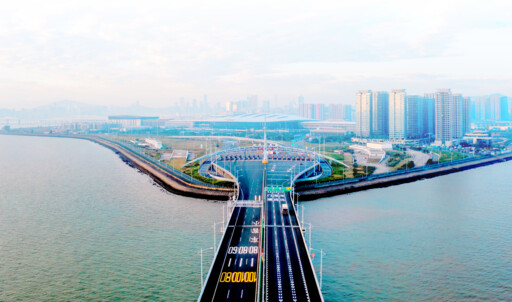
Efforts to further deepen infrastructure “hard connectivity” among Guangdong, Hong Kong, and Macao are underway to support the development of a world-class bay area. The Zhuhai entrance of the Hong Kong–Zhuhai–Macao Bridge forms a key part of this infrastructure network. Photo: IC PHOTO
The Central Urban Work Conference held in July 2025 came at a critical stage in China’s economic transition, as the country’s urbanization entered its “second half.” The conference explicitly called for “optimizing the modern urban system,” “promoting coordinated development among cities of different sizes and small towns,” and “fostering group-based and networked urban clusters and metropolitan areas.” It also set out clear development priorities for key agglomerations including the Beijing–Tianjin–Hebei region, the Yangtze River Delta, the Guangdong–Hong Kong–Macao Greater Bay Area, the Chengdu–Chongqing economic zone, and the Yangtze River middle reaches city cluster. The outline of the 15th Five-Year Plan (2026-2030) for national economic and social development likewise calls for “coordinated development of urban clusters.” Taken together, these directions point to a new “cluster” trend in China’s urban development. Yet significant obstacles remain in translating this approach into practice, and existing models of urban development still need to be further refined and upgraded.
Enhancing quality and efficiency
China’s urban development is shifting away from expansion based primarily on new growth and toward improving the quality of existing urban areas. At the end of 2011, the share of permanent residents living in urban areas in the Chinese mainland exceeded 50% for the first time; by 2025, it had risen to 67.89%. Behind these figures lies a deeper change: urban development is moving from a period of rapid growth into one of more stable expansion. Since the turn of the century, China’s urbanization rate has risen by more than one percentage point per year on average, with the largest annual increase—1.32 percentage points—recorded in 2011. Since 2021, however, annual growth has fallen below one percentage point. At the same time, the traditional model of urban growth, heavily dependent on land finance, has become increasingly difficult to sustain. Local government revenue from land-use rights transfers peaked at 8.7 trillion yuan in 2021 and has declined steadily since. The era of large-scale urban expansion is therefore drawing to a close, making improvements in quality and efficiency increasingly important.
The underlying logic of China’s urban development has likewise undergone a fundamental shift—from a “city-building spree” to a “people’s city” paradigm. More than two decades of rapid urbanization and outward expansion have, to some extent, strained available land and ecological capacity. Urban livability urgently needs to improve, large stocks of aging buildings and public facilities await renewal, and residents continue to demand a higher quality of life. All of this makes a shift toward improving existing urban areas unavoidable. The outline of the 15th Five-Year Plan (2026-2030) for national economic and social development, for example, exemplifies this ethos through its call for “continuously promoting the high-quality development of the Yangtze River Economic Belt, strengthening pollution control in key areas and the protection and management of important lakes, resolutely implementing the ten-year fishing ban on the Yangtze River, and orderly improving the collection and treatment level of domestic sewage in cities along the river.” These measures give concrete expression to the “people’s city” concept. More fundamentally, that concept marks a shift in how urban development is evaluated—from an overriding focus on GDP to one centered on people’s wellbeing. Equal access to public services, cities that are attractive places to live, work, and visit, and greater urban resilience and safety have all become central dimensions of intensive urban development.
Curbing ‘involution’ to advance intensive development
Driven jointly by technological and institutional change, China’s urban development model stands on the cusp of transformation. As AI develops rapidly, a range of future industries will reshape urban industrial structures and patterns of spatial organization, creating new opportunities for smart urban governance while challenging traditional urban functions and increasing the importance of city clusters and metropolitan areas.
In parallel, national policies aimed at building a unified national market, dismantling administrative barriers, and facilitating the free flow of production factors compel localities to abandon fragmented, self-contained strategies in favor of integrated, coordinated development. Consequently, a “cluster” trend is emerging as the dominant trajectory for China’s urban development. In the second half of the country’s urbanization process, developing city clusters and metropolitan areas offers a necessary route toward intensive development, enabling cities of different sizes to grow in coordination and helping prevent destructive competition among them.
Data released by the Ministry of Transport in June 2026 show that China’s 29 metropolitan areas account for roughly 45% of the country’s population and about 60% of its GDP while occupying only around 10% of its land area. Yet integration within city clusters and metropolitan areas remains inadequate. Effective mechanisms for specialization and collaboration are still lacking, interaction among cities remains limited, and administrative barriers can be formidable.
As a result, “involution” has instead become a widespread feature of urban competition. In February 2026, the State Administration for Market Regulation released 10 representative cases from a nationwide campaign to curb “involutionary” competition, covering such sectors as online freight services, portable power banks, new energy vehicles, and photovoltaics. Cities large and small are currently moving in lockstep to establish photovoltaic industrial parks and new energy vehicle production bases, fueling overcapacity.
The low-altitude economy, meanwhile, has become another fiercely contested growth sector as one of six emerging pillar industries prioritized during the 15th Five-Year Plan period. By the end of March 2026, all 31 provincial-level administrative regions had included the low-altitude economy in their local government work reports. According to the China Center for Information Industry Development, over 100 provincial and municipal governments have issued plans or implementation programs to promote the sector. Yet resource endowments vary dramatically across regions, and a blind rush by localities to develop the low-altitude economy runs counter to the comparative advantages of most cities. Such disorderly competition inevitably leads to redundant construction and wasted resources, hindering both intensive urban development and the realization of the “people’s city” vision.
‘Cluster’ synergistic development
The development of city clusters and metropolitan areas represents an irreversible “megatrend” in the future evolution of urbanization. While multiple central ministries have prioritized their development, translating policy intent into tangible quality- and efficiency-enhancing outcomes hinges on synchronized updates to local development philosophies and concerted collaborative action.
First, the development of a unified national market should serve as a lever for deepening coordination within urban groups. “Involutionary” competition involves the interests of local governments, enterprises, and workers alike. In their efforts to promote local economic growth, governments can easily fall into patterns of duplicative investment or rush to launch similar industrial projects. Reform of local government performance assessment is therefore essential. Excessive comparison of economic growth rates among localities should be discouraged—for example, by reducing the weight assigned to GDP alone and placing greater emphasis on indicators such as cross-regional cooperation, coordinated development, environmental pollution control, income disparities, and crime rates.
Top-down assessment of local governments could also be scaled back appropriately, giving the public greater weight in evaluating urban development and thereby encouraging localities to focus more closely on improving urban quality and efficiency. Residents’ ability to “vote with their feet” provides the most direct form of bottom-up feedback on how well a city is developing.
At the same time, in advancing city clusters and metropolitan areas, the respective roles of cities need to be clearly defined, and benefit-sharing and cost-sharing mechanisms should be established at the cluster level so that cooperation is rewarded and those who follow common rules benefit. Such arrangements can promote the freer movement and more efficient allocation of population, capital, technology, data, and other factors across urban clusters.
Second, cities should build differentiated core strengths and promote diverse, complementary development among cities of different sizes. The principle of “cultivating core competitiveness, achieving staggered development, and eschewing homogeneous competition” reflects the Party’s strategic vision for future urban development.
Research in urban economics has repeatedly demonstrated that cities, too, benefit from specialization and cooperation. Megacities and super-large cities can draw on the advantages of large and diverse talent pools to focus on innovation and creation, while small and medium-sized cities can specialize in turning new products into efficient, specialized production. Returns on innovation in Chinese cities display a pattern of “high-end concentration and tiered diffusion.” Rather than being evenly distributed, they are heavily concentrated in a small number of leading cities—Beijing, Shanghai, and Shenzhen—as well as “new tier-1” cities such as Hangzhou, Suzhou, Nanjing, Chengdu, and Wuhan.
Meanwhile, specialized manufacturing centers such as Kunshan, Mianyang, Jinjiang, Ningbo, and Jingdezhen have also built international reputations through distinctive development pathways. The essential task in developing city clusters and metropolitan areas, therefore, is to use the “cluster” model to allow cities of all sizes to play to their respective strengths, creating a more diverse and complementary spatial pattern of development.
Third, cities need to respond to emerging trends by pursuing more intensive and efficient development. International research has found that remote work is dispersing economic activity outward from urban centers, producing the so-called “donut effect”—where downtown business districts languish even as surrounding areas thrive—thus shifting cities from “centers of production” toward “centers of consumption.”
Simultaneously, digital technologies are breaking down cities’ physical boundaries and creating interconnected “digital hinterlands,” driving the transition of metropolitan areas from monocentric to polycentric, networked structures. These shifts demand that urban development embrace future trajectories: abandoning traditional extensive growth models, intensively utilizing finite resources, equitably allocating public services, and meeting residents’ increasingly diversified and decentralized living needs.
Sun Sanbai is a professor from the School of Applied Economics at Renmin University of China.
Editor:Yu Hui
Copyright©2026 CSSN All Rights Reserved