


Pursuit of ideal life in Jingdezhen’s porcelain scene
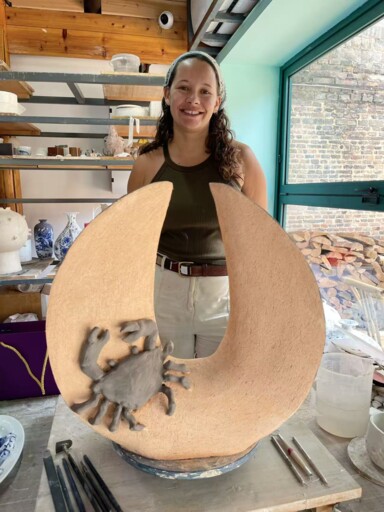
“Foreign Jingdezhen drifters” live and work in the dynamic “porcelain capital” of Jingdezhen. Photo: PROVIDED TO CSST
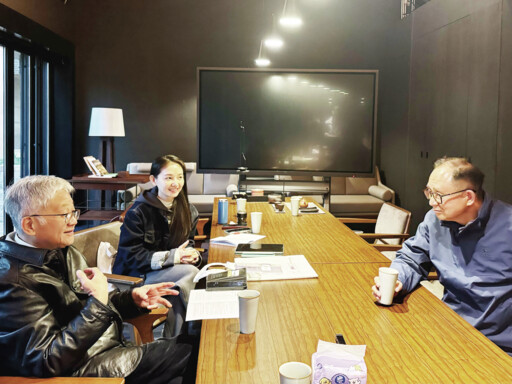
Face-to-face interview with a respondent Photo: PROVIDED TO CSST
In 1004, the small town of Changnan—already renowned for porcelain production since the Han Dynasty (206 BCE–25 CE)—was given a new name: Jingdezhen. In China, few cities have preserved the same name for a millennium, and fewer still have remained anchored to a single industry for so long. This historical continuity and economic structure have endowed Jingdezhen with a distinctive, internally dynamic spirit—one that emphasizes inheritance while constantly accommodating change.
In March 2025, the Institute of Contemporary China Studies at Nanjing University invited scholars from dozens of universities and research institutions to carry out an oral history investigation in the city. Centered on the life trajectories of those working in the ceramic industry, the project focused on three groups: veteran artisans whose families have lived and worked in Jingdezhen for generations; young people who have arrived over the past two decades to pursue their aspirations and are known locally as “Jingdezhen drifters”; and “foreign Jingdezhen drifters” who have come from abroad in search of cross-cultural experience. The resulting millions of words of oral history material not only reveal a richly textured, multicultural landscape, but also allow us—through the lens of a single city and industry—to register the pulse of a particular historical moment.
Inheritance over generations
Like more than 60% of today’s Jingdezhen residents, Niu Shuilong traces his ancestral roots to Duchang County in Jiangxi Province. For generations, the Niu family has been engaged in ceramic production: his grandfather was a master of glazing, his father specialized in shaping clay bodies, and his mother focused on painted decoration. At the age of eight, Niu began learning to paint porcelain blanks under his mother’s guidance. After just one month of training, he was already earning wages at a private workshop. He continued this work for six years.
Had history not taken a sharp turn, Niu might well have continued along this path for life. A single month of training was enough to sustain a lifetime of repetitive labor. With sufficient diligence, he could have made a living, but his career would have consisted largely of replicating techniques refined by generations of artisans over the past thousand years.
The 1950s brought unprecedented change. In 1956, Jingdezhen completed the socialist transformation of its ceramic industry, consolidating 17 public–private factories into 10 state-owned enterprises. That same year, at the age of 18, Niu entered the Hongqi Porcelain Factory as a mold-pressing worker, spending his days on the production line and his evenings in night school. For the first time, this young man from a traditional craft household gained systematic exposure to modern scientific knowledge related to ceramics.
From there, he began teaching himself subjects such as ceramic technology and mechanical drafting. Over time, he completed dozens of technical innovation projects, became a core technical specialist and production manager within the factory, and was awarded one of the first “Self-Taught Talent Awards” by the All-China Federation of Trade Unions. Today, the Niu family’s engagement with ceramics spans five generations and more than a century—and continues.
Li Wenyue, also born into a four-generation ceramic family, is 18 years younger than Niu. Although both men received early training and guidance from their elders, their life trajectories diverged sharply, shaped by very different historical circumstances. When Li was 20, the call of reform and opening up had just begun to reshape Chinese society. This shift enabled him to move from his position as a young factory worker into higher education, and after graduation, into the art research institute, where he focused on ceramic art research and creation. Over the years, Li exhibited internationally and, during the Shanghai World Expo, demonstrated the expressive power of Chinese ceramic art before a global audience.
Diverse ‘Jingdezhen drifters’
Over the past two decades, young people from across China have made their way to Jingdezhen, bringing with them diverse backgrounds, identities, and aspirations. This group, collectively known as “Jingdezhen drifters,” is reshaping the city’s demographic landscape. According to data, more than 70,000 such drifters now live and work in Jingdezhen, with young people accounting for over 85% of the total. Each “Jingdezhen drifter” carries a story marked by its own mix of hardship and hope. If a single phrase were to capture what unites these experiences, it might be this: starting life over.
Qin Tai, a native of Shanxi Province, came to Jingdezhen in 2014 after receiving disappointing results on the national college entrance examination. Hoping to acquire a practical skill with stable employment prospects and relatively limited competition, he chose ceramics and thus began his professional journey. From an initial state of near-total unfamiliarity with the field, he rented a room in an old factory compound, taught himself the basics, and practiced teapot-making alongside friends. For more than two years, he devoted himself to intensive, largely solitary training, reluctant even to set up a market stall. After gaining technical confidence, Qin joined a private ceramic cooperative, where high-intensity production gradually deepened his understanding of the craft and allowed him to accumulate hands-on experience. Not long after, he struck out on his own. A decade of drifting has transformed him from a socially withdrawn teenager into an artisan capable of standing on his own.
Tan Wenwei and Yu Changzhi, an artistic partnership from Guangzhou, work with clay and glaze as a means of articulating their understanding of the world. In late 2022, the two arrived in Jingdezhen after a 12-hour carpool journey—cat in tow—intending to stay for just two weeks. Instead, they found themselves drawn ever deeper into the dialogue between clay and fire.
Having studied art-related majors abroad, the pair returned eager to translate their academic experiences into tangible works. They began learning ceramic materials and production techniques, meticulously studying the details of the firing process, and gradually took on the routines of everyday studio work. Today, they spend most of their time in their Jingdezhen studio, creating and experimenting without pause. When inspiration strikes, they work around the clock; every so often, they also take breaks to explore new trends.
Beyond graduates of art academies, a considerable number of young people with no formal artistic background have also joined the ranks of the “Jingdezhen drifters,” drawn by a mix of life circumstances, personal ideals, and chance opportunities. Zang Yimin, a native of northeast China, studied Western cuisine in Australia and lived overseas for more than a decade. He later returned to China after a chance encounter involving porcelain appraisal led him to meet his wife, who was then working in Jingdezhen, and the couple ultimately chose to settle there. With his bilingual abilities and extensive experience abroad, Zang has naturally assumed the role of an intermediary between international artists and local residents, helping with translation, sourcing tools, and coordinating collaborative projects. In an increasingly diverse and international Jingdezhen, figures like him play a quiet but important role in lowering the costs of cross-cultural cooperation and helping foreign artists feel both welcomed and at ease.
The “Jingdezhen drifter” community is highly diverse in its composition. Despite their different backgrounds and motivations, those who gather in Jingdezhen’s creative milieu tend to share a strong sense of engagement and an open, outward-looking spirit. At the same time, the logic of the market economy exerts a decisive influence. Under the dual pressures of competition and collaboration, practitioners must continually learn, adapt, and innovate in order to gain a foothold. The interweaving of tradition and contemporary realities has given shape to Jingdezhen’s distinctive urban character, creating the conditions in which “Jingdezhen drifters” are able to grow and thrive.
Hub for ‘foreign Jingdezhen drifters’
Jingdezhen’s thousand-year history is also a history of cultural exchange, marked by inclusiveness and convergence. Since the late 20th century, these exchanges have intensified, as large numbers of international artists have crossed oceans to live and work here, taking on the identity of “foreign Jingdezhen drifters.”
Phil was among the earliest “foreign Jingdezhen drifters” to arrive in the city, and he later became a point of reference for many newcomers entering this international community. When the British artist first set foot in Jingdezhen in 1989, it was still a quiet, timeworn town. He could not then have imagined that he would remain for more than three decades, witnessing the city’s passage from relative obscurity to renewed vitality, or that he himself would evolve from a curious visitor into an integral part of Jingdezhen’s cultural ecology. In Phil’s view, the city’s appeal lies not only in its abundant raw materials and refined craftsmanship, but also in a rare condition in which everyday life and artistic practice are deeply intertwined.
Like Phil, Toto, an artist from Sweden, also regards Jingdezhen as his intellectual home. Although now in his seventies, he retains an energy and curiosity more often associated with much younger artists. When he first arrived in Jingdezhen in 2011, he was already an accomplished painter, sculptor, and designer, yet knew almost nothing about ceramics. Over time, he became closely connected with local artisans and began studying traditional mural techniques under the guidance of the young artist Pumu. The collaboration eventually gave rise to a body of work that combines Nordic abstraction with China’s traditional high-temperature color-glaze techniques. Recently, Toto and Pumu jointly mounted an exhibition in Stockholm featuring porcelain panel paintings and sculptural works completed in Jingdezhen.
International artists who have lived in Jingdezhen for extended periods often undergo a gradual shift in identity—from “observers,” to “participants,” and eventually to “co-builders.” No longer content to draw on local resources for short-term projects alone, they become deeply embedded in the social fabric of the city.
By contrast, most international artists currently working in Jingdezhen are “migratory” residents rather than long-term settlers like Phil and Toto. They typically arrive through residency programs organized by local institutions, staying for two or three months at a time. Many are at an early stage in their careers and require a low-cost, high-efficiency environment in which to experiment with new materials and techniques. Jingdezhen offers precisely such a platform. Inexpensive raw materials, a highly developed division of labor, and a dense network of technical support together make the city a place where artists can afford to experiment freely—and even to make mistakes.
Jingdezhen’s international art ecosystem is a complex formation shaped jointly by policy guidance, market forces, and spontaneous grassroots initiatives. At its core, however, lie the very human dynamics of trust, cooperation, and emotional connection. Within this system, “foreign Jingdezhen drifters” are no longer passive consumers of culture, but active producers of meaning; local artisans, in turn, are no longer merely guardians of inherited techniques, but open participants in the sharing of knowledge.
Through the shared medium of clay and fire, these different actors arrive at a form of mutual understanding, together contributing to a new narrative of local revitalization in an era of globalization.
Lu Yuan (associate professor) and You Yuhan are from the Institute of Contemporary China Studies at Nanjing University.
Editor:Yu Hui
Copyright©2023 CSSN All Rights Reserved