


Chinese perspective on Western classical reception studies
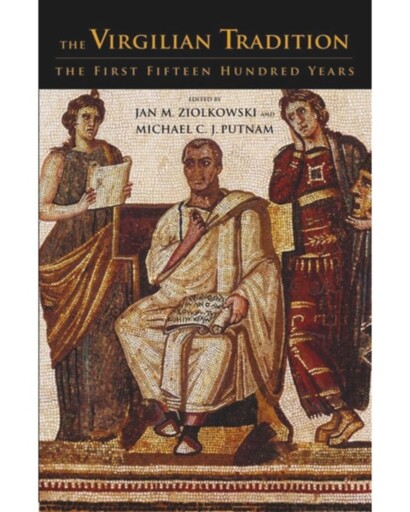
FILE PHOTO: The Virgilian Tradition: The First Fifteen Hundred Years, edited by Jan M. Ziolkowski and Michael C. J. Putnam
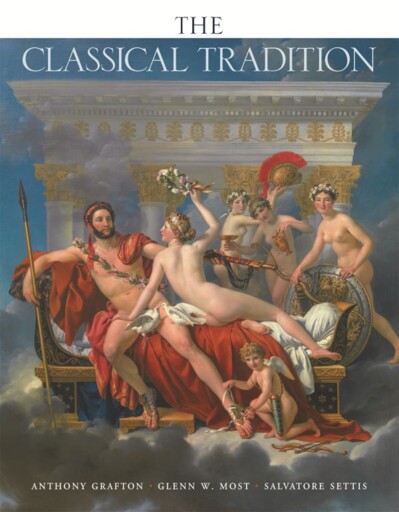
FILE PHOTO: The Classical Tradition, edited by Anthony Grafton et al.
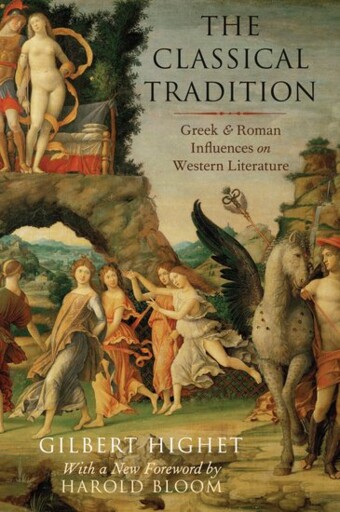
FILE PHOTO: The Classical Tradition: Greek and Roman Influences on Western Literature by Gilbert Highet
Since the late 1940s, classical reception studies has emerged as a major intellectual force within Western scholarship on ancient Greek and Roman culture, rapidly developing into one of the most dynamic, productive, and methodologically innovative subfields of Classics. The field examines how elements of Greco-Roman civilization have been appropriated, transformed, and repurposed within the intellectual and cultural history of the modern world since the Renaissance. Its central concerns include not only affirming the positive contributions of classical heritage to the formation of the modern world, but also moving beyond uncritical admiration for antiquity to expose the “burdens” that classical civilization has imposed on modern intellectual and cultural development.
By introducing a broader range of source materials, wider interpretive horizons, and opportunities for engagement with newer historiographical approaches such as postcolonialism, gender history, and global history into the comparatively traditional and conservative discipline of Classics, the field has generated a substantial body of influential monographs, source collections, and reference works. Representative examples include Gilbert Highet’s The Classical Tradition: Greek and Roman Influences on Western Literature; The Virgilian Tradition: The First Fifteen Hundred Years, edited by Jan M. Ziolkowski and Michael C. J. Putnam; and The Classical Tradition, edited by Anthony Grafton et al.
Western classical reception studies facing stagnation
Nevertheless, beneath this apparent vitality, the field of classical reception studies in the Western academy has entered a period of stagnation—a predicament closely related to certain inherent limitations of reception studies within the European cultural context. First, from the perspective of source materials, early modern European culture between the 15th and 18th centuries—the principal recipient of classical culture in Western Europe, the traditional heartland of Classics—often followed its ancient models so closely in intellectual orientation, literary allusion, and artistic technique that it failed to establish sufficient distance from them in intellectual attainment, literary achievement, or aesthetic innovation. Consequently, classical reception studies struggles to identify the differences and similarities, as well as the creative adaptations within the broader historical process through which classical exemplars were reinterpreted and recreated by later generations.
For this reason, broad discussions of Xenophon’s influence on Niccolò Machiavelli, Seneca the Younger’s influence on Michel de Montaigne, Plutarch’s influence on William Shakespeare, or the impact of Roman architecture on Baroque art can readily capture the interest of readers and audiences. Yet once such investigations move into detailed textual analysis and philological inquiry, the close resemblance between the objects of comparison and the relative lack of originality on the receiving side often make the research itself seem tedious, fragmented, and devoid of genuine novelty. As a result, the legitimacy and effectiveness of “reception studies” as both a field of inquiry and a methodological approach have increasingly been called into question.
Second, with regard to subject matter, the field in recent years has increasingly become rigidly confined to two sharply opposed agendas: demonstrating the positive influence of classical heritage on the modern world, and retrospectively criticizing the “burdens” of classical culture from the vantage point of contemporary notions of ethnicity, gender, science, and ethics. What was once a capacious and intellectually inclusive field has gradually become a battleground between competing ideological camps—one celebrating the classical tradition, the other seeking to dismantle it. Comparative inquiry, which ought to illuminate the fascinating processes of historical change and cultural transformation, has too often been reduced to abstract conceptual disputes—or even polemical confrontations—that disregard differences in socioeconomic context, historical stage, and cultural tradition.
Third, from a historiographical perspective, two tendencies ultimately reinforce and perpetuate Eurocentric assumptions: the tendency to overemphasize the formative role of Greco-Roman civilization in shaping modern Western Europe—a region that led the process of modernization through events such as the French Revolution and the Industrial Revolution, and the tendency to exaggerate the harmful effects of conservative and backward Orientalist ideas, patriarchal concepts, and authoritarian elements within classical culture on contemporary societies. Such approaches overlook the fundamental historical reality that Western civilization has long coexisted, interacted, and flourished alongside other civilizations, particularly since the early modern period.
Contribution of Chinese perspectives to Western classical reception studies
Particularly noteworthy is the growing attention that Chinese classicists have devoted to reception studies in recent years. As scholars of Chinese literature, Chinese history, and archaeology have continued to broaden their international horizons, an increasing number of Chinese researchers have engaged deeply with both Chinese- and foreign-language scholarship on Western classical reception. Their work has injected fresh vitality into a field now standing at a crossroads.
These studies include not only investigations into the direct and indirect influence of the Western classical tradition on Chinese intellectual and cultural history, but also reflections on how Chinese intellectuals have understood, evaluated, and critiqued elements of Western classical culture. They have also expanded the scope of reception studies to areas that previously received little scholarly attention, such as modern Greece in the 18th and 19th centuries, the archaeological sites of Turfan in Xinjiang, northwest China, as hubs of cross-cultural exchange, and contemporary South Korean popular culture.
Lin Lijuan has explored how Aristotelian philosophy, the archetype of Saint George, and Galenic medical writings from the classical world influenced the intellectual outlook of ancient Chinese elites through the mediation of Nestorian physicians and ancient Syriac-language texts. Chen Rongnyu has traced the history of Chinese translations of ancient Greek tragedy over the past century, with particular attention to how modern Chinese writers and theatrical practitioners have reinterpreted and transformed Greek dramatic traditions. Chen Yingxue’s monograph examines the complex influence of the ancient Greek historiographical tradition on historical writing and history education during the formative years of the modern Greek nation-state. He Yanxiao, meanwhile, has offered an extensive discussion of the inspiration that Hellenistic and Roman pantomime traditions have provided for modern and contemporary performing arts, including contemporary Korean K-pop culture.
Such innovative and intellectually stimulating studies have expanded both the breadth and depth of classical reception scholarship. They point to promising new directions for the future development of the field and have attracted attention and recognition from classicists in China, Japan, South Korea, Europe, and North America alike. The impact of these studies cannot be attributed solely to the talent and diligence of the scholars involved. More fundamentally, the Chinese perspective offers precisely the new sources, new standpoints, and new historiographical approaches that reception studies urgently requires.
First, Chinese scholars possess distinctive linguistic skills, educational backgrounds, and bodies of source material that provide exceptionally rich comparative evidence drawn from cultural traditions markedly different from those of ancient Greece and Rome. These cases, which reveal how classical elements survived, circulated, and evolved within fundamentally different cultural systems, not only help reconstruct the cultural histories of the Arab, Central Asian, and East Asian worlds under the influence of classical civilization, but also enable a deeper understanding of the nature and characteristics of classical civilization itself.
Second, when examining the relationship between classical civilization and the modern world through the lens of reception studies, most Chinese scholars are able to avoid the tendency to evaluate the historical legacy of ancient Greece and Rome in strictly binary terms. Instead, they often adopt a comparatively balanced perspective, seeking to observe, appreciate, and assess the complex interactions among different ancient civilizations, as well as between the classical and modern worlds.
Third, reception studies conducted from a Chinese perspective—drawing upon Chinese classical texts alongside ancient Syriac and Arabic sources—help incorporate multiple cultural viewpoints and overcome the inertia of Eurocentric frameworks. At the same time, by acknowledging the genuine global influence of Western classical civilization, such approaches avoid the opposite pitfall of replacing Eurocentrism with a narrow nationalist historiography. In this way, they provide a scholarly foundation for investigating the exchanges and mutual learning among diverse civilizations from antiquity to the present on the basis of equality and mutual respect.
Building platforms for international academic exchange
Building an equal, pluralistic, and mutually enriching international academic platform is of great significance for the healthy development of classical reception studies. It should be emphasized that the field of classical reception studies in China remains far from flawless. Beneath its many achievements lie a number of challenges and controversies, including inadequate comprehension of the spirit and artistic characteristics of original classical texts, insufficient exploration of valuable reception materials preserved in Chinese sources, and, in some cases, speculative arguments that risk overstretching the available evidence. Moreover, some Chinese scholarship remains insufficiently engaged with the international Classics community, limiting opportunities for scholarly exchange and making it difficult for scholars from different countries to deepen their understanding of classical reception studies through dialogue and debate—an obstacle to the field’s further development within China.
International academic platforms, such as the World Conference of Classics, can play a crucial role in facilitating extensive and meaningful exchanges among East Asian scholars, who bring innovative perspectives to reception studies; scholars from Western Europe and North America, who have long occupied leading positions within traditional Classical scholarship; and scholars in Greece, the historical homeland of classical civilization. At the same time, the rise of global history, postcolonial thought, and cross-cultural studies has provided powerful theoretical and methodological support for the continued advancement of classical reception studies.
There is every reason to believe that, in the near future, classical reception studies enriched by a Chinese perspective will attain unprecedented breadth and depth. By building bridges between the shared scholarly interests of Eastern and Western researchers, this emerging field can foster deeper mutual understanding among civilizations and make a significant cultural contribution to promoting dialogue, cooperation, and mutual respect among the diverse peoples, cultures, and regions of the contemporary world.
Lyu Houliang is a professor from the School of History at Beijing Normal University.
Editor:Yu Hui
Copyright©2023 CSSN All Rights Reserved