


Building disciplinary knowledge system of Chinese classical studies
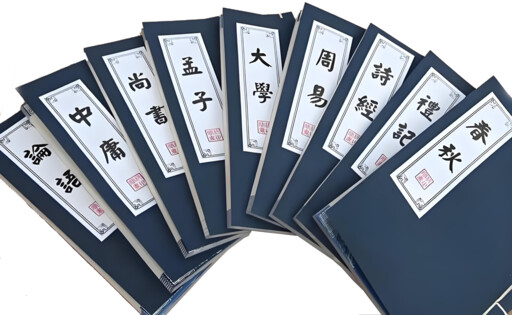
FILE PHOTO: Bound volumes of the Chinese classics
As one of the world’s most ancient civilizations, classical Chinese civilization has made significant contributions to humanity. In recent years, classical studies has become a major focus in academia. From the standpoint of conceptual nomenclature, if “classical studies” is understood as a highly abstract concept with broad applicability to different classical civilizations, then “Chinese classical studies,” as a more specific concept lower on that ladder of abstraction, can be used to articulate the distinctive connotations of research on ancient Chinese canonical texts. This not only highlights the indigenous attributes of China’s inherent intellectual framework and research methodologies, but also enables the modern transformation of tradition to bring forth the universal significance embedded in its national character. This provides the logical basis for adopting “Chinese classical studies” as a framework for modernizing the disciplinary construction of traditional Chinese scholarship, or guoxue (national studies).
Rationale for constructing ‘Chinese classical studies’
First, when confronting the impact of modern Western industrial civilization, China’s 5,000-year-old culture once found itself struggling to respond. Over the past century, efforts to accommodate traditional Chinese culture underwent periods of self-doubt, and concepts such as guoxue or guogu xue (national heritage studies) were often framed with a certain sense of historical pathos. From skepticism and critique to reform and transformation, China’s remarkable socioeconomic progress has strengthened cultural confidence. The construction of Chinese classical studies as a discipline today is a product of this renewed confidence.
Second, over the past two centuries, the trajectory of human civilization has been largely shaped by Western discourse, whose foundations lie in ancient Greek and Roman thought—a legacy that also contributed to the rise of modern science. While Western civilization has undoubtedly brought considerable benefits to humanity, its limitations have become increasingly apparent and difficult to overcome. Precisely at this juncture, the socialist culture with Chinese characteristics—rooted in classical Chinese civilization—offers new prospects for the future of humanity, heralding an era of mutual enlightenment between China and the West.
Third, China’s modern engagement with its own classical traditions spans just over a century, largely within Western disciplinary frameworks. While this reliance has broadened horizons and given the study of traditional Chinese scholarship new vitality, it has also artificially fragmented the holistic nature of China’s classical knowledge system. Moreover, scholarship grounded in modern disciplinary categories often employs Westernized modes of thinking to interpret and evaluate ancient Chinese knowledge and the values embedded within it. It is therefore necessary to develop Chinese classical studies as a new field of study capable of presenting China’s classical knowledge system in its entirety while also integrating new insights.
For these reasons, Chinese classical studies should be regarded as a new humanistic discipline responsive to the needs of the times.
Chinese classical studies as discipline
Chinese classical studies is a comprehensive discipline centered on ancient Chinese canonical texts and the civilizational content they embody. It focuses on traditional classics and employs methods such as philology, textual studies, ethnic philology, and classical hermeneutics to investigate the core intellectual, spiritual, and institutional dimensions of Chinese civilization, as well as their origins and historical evolution.
Disciplinary characteristics: Chinese classical studies is an interdisciplinary field. “Interdisciplinary” implies transcending or blurring conventional disciplinary boundaries in pursuit of a holistic grasp of the object of study. Yet as a formal discipline, it cannot become so diffuse that it resists implementation within standardized educational systems. Interdisciplinary work therefore operates primarily at the intersections of relevant fields and on the common foundations that connect them, seeking what is shared and connected across disciplines and returning, from there, to the root on which they all depend—the living source of Chinese civilization. Taking civilization as its object of study means that Chinese classical studies must adopt a disciplinary paradigm oriented toward holistic presentation.
Objects of study: Western classical studies has traditionally centered on ancient Greece and Rome—not only because their intellectual legacy forms the wellspring of Western civilization, but also because the transmission of Western culture has been marked by significant historical discontinuities. This also helps explain the Western emphasis on historical-linguistic analysis of parallel texts. By contrast, China’s writing system has evolved continuously, and the transmission and study of its texts have maintained an unbroken historical continuity. Chinese classical studies therefore exhibits distinctive subjectivity in both its object of study and methodology.
Its scope can be organized around three categories: first, the yuandian—or foundational canon—namely the Six Classics (The Book of Songs, The Book of Documents, The Book of Rites, The Book of Music, The Book of Changes, and The Spring and Autumn Annals), formed in the pre-philosophical era and regarded as the classics of classics; second, the classical traditions of the Axial Age derived from the yuandian, namely the teachings of the “Hundred Schools of Thought;” and third, the scholarly study of these canons and classics, termed “classicism.” The yuandian encodes the DNA of Chinese civilization; the classics established its genealogical framework and scholarly scale; and classicism, like an ever-flowing river, sustains the intellectual life of Chinese civilization. The task of Chinese classical studies is to return, through the study of past classicism, to the yuandian and the classics, and from there to generate new forms of classicism responsive to contemporary needs—achieving renewal by returning to the roots.
Knowledge system: Proceeding from its object of study, the knowledge system of Chinese classical studies can be outlined in terms of its conceptual apparatus, internal logic, and intellectual framework.
As a discipline, Chinese classical studies centers on several core concepts: the written script that records language; the documents produced through writing; the texts that emerge from documentary sources and acquire canonical significance; and the hermeneutics through which these texts are interpreted—namely, script, document, text, and interpretation. Here, the traditional connotations of “document” and “text” may be expanded to include any written or material artifact recognized by researchers as an object of understanding, thereby endowing such materials with documentary value. This consideration is especially important today, amid the flourishing development of archaeology.
Language is the most essential medium of communication and thought, while writing is the symbolic system through which language is recorded and transmitted. Human cultural and intellectual activities are preserved, disseminated, and interpreted through writing, which thus preserves the cipher of civilization. This is especially true of Chinese ideo-phonetic writing, which in its early, highly pictographic form constitutes a basic element for deciphering Chinese civilization. Deciphering this cipher requires moving, in the interpretation of documents, from character to phrase, from phrase to sentence, and from sentence to the whole text—proceeding from the parts to the whole, and then returning from the whole to reconsider the parts. This forms a hermeneutic circle through which texts and their elements can be thoroughly understood and continuously reinterpreted, thereby integrating new knowledge. The internal logic of Chinese classical studies thus proceeds from script as foundation, through documents as clues, to texts as objects, with interpretation as method.
From a disciplinary perspective, the knowledge framework of Chinese classical studies comprises several major areas.
The history of Chinese classical studies employs historical narrative and multidisciplinary approaches to elucidate the content of Chinese civilization, grounded in textual sources.
The foundations of Chinese classical studies primarily include philology, textual studies—including excavated texts—and ethnic philology.
Canonical studies focuses on pre-Qin (prior to 221 BCE) texts, while also engaging with later canonical works across the four traditional bibliographic categories of jing (classics), shi (history), zi (philosophy), and ji (literature), as well as the classical texts of ethnic minorities.
Hermeneutics and classical interpretation cover hermeneutic theory and traditional Chinese methods of canonical interpretation.
Research methodology: The research methodology of Chinese classics may be summarized as follows: “Entering through xiaoxue (traditionally “minor learning”), drawing on hanxue (Sinology), emerging into daxue (great learning), and culminating in the ‘second integration’ (integrating the basic tenets of Marxism with China’s fine traditional culture).”
Here, xiaoxue is construed more broadly than in its traditional sense, referring specifically to philology—including oracle bone and bronze inscriptions—ethnic philology, and textual studies. Within this framework, philology includes phonology and exegesis, while textual studies covers recensions, bibliographies, collation, the organization of excavated documents, and digital humanities related to AI technologies.
Hanxue encompasses the methods, concepts, and achievements of international Sinology, as well as insights and accomplishments drawn from Western classical studies. It also includes the absorption of cutting-edge theories from Western humanities research, enabling mutual learning between China and the West.
Daxue involves synthesizing two traditional Chinese approaches to classical interpretation—“I annotate the Six Classics” and “the Six Classics annotate me”—while incorporating insights from Western hermeneutics to interpret the thought and spirit embodied in Chinese canonical texts and their scholarly reception.
By employing philological methods, engaging with Western learning, and interpreting the classics, Chinese classical studies can map the genetic structure of Chinese culture and trace the origins and evolution of Chinese civilization.
Finally, “culminating in the ‘second integration’” signifies realizing the creative transformation and innovative development of China’s fine traditional culture at the level of integrating essence and application, thereby constructing an independent Chinese knowledge system.
Contemporary value
One of the fundamental tasks in establishing Chinese classical studies as a discipline is to provide a holistic body of systematic knowledge for general classical education—one which emphasizes moral and intellectual cultivation and seeks to transmit the traditions of human civilization while nurturing models of personality endowed with deep humanistic literacy. As such, classical education can serve as a foundational component of primary, secondary, and tertiary education, helping to strengthen quality-oriented education nationwide.
Establishing Chinese classical studies is not merely a matter of preserving cultural heritage; more importantly, it is a way of connecting to the future of human civilization. It enables China to contribute its voice to the global community of classical civilizations and to offer Chinese wisdom for building a community with a shared future for humanity and addressing common challenges through joint efforts.
Yang Qingzhong is a professor and dean of the School of Chinese Classics at Renmin University of China.
Editor:Yu Hui
Copyright©2023 CSSN All Rights Reserved