


Development synergy: New theory of international cooperation for Global South
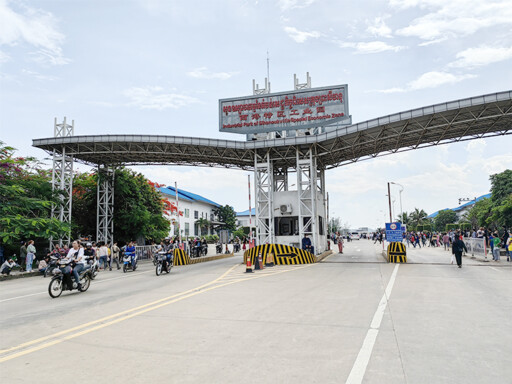
The Sihanoukville Special Economy Zone (SSEZ), jointly developed and constructed by Cambodian and Chinese companies, serves as an international investment platform. Photo: IC PHOTO
At present, profound transformations in global governance structures and development paradigms have placed increasingly diverse demands on international cooperation. A growing number of Global South countries are seeking forms of international collaboration grounded in equality, joint construction, collective rule-making, and shared outcomes. Compared with traditional cooperation models centered on resource transfers and the export of rules, emerging forms of cooperation place greater emphasis on the mutual embedding and alignment of institutional structures and practical experience. They also rely more heavily on the action-oriented knowledge and normative consensus accumulated through multilateral engagement. Against this backdrop, a central challenge for both the theory and practice of Global South cooperation is how to reconcile the developmental demands, policy objectives, and technological capacities of different states, while integrating diverse elements of cooperation into a coherent framework.
This article proposes the concept of “development synergy” as a theoretical framework grounded in process constructivism, relational theory, and practice theory. The concept explains the generative character of cooperation among Global South countries, the evolving nature of cooperative relationships, and the situated character of cooperative practice. On this basis, it develops an operational framework structured around “strategic synergy–demand synergy–technical synergy.” The article further examines cooperation between China and Cambodia under the Belt and Road Initiative (BRI) as a case study, testing the explanatory power and applicability of this theoretical model.
Theoretical characteristics
The theoretical core of “development synergy” can be understood as a dialectical unity of processuality, relationality, and practicality. Together, these three dimensions form the key theoretical components for understanding how the Global South is advancing transformations in international cooperation paradigms.
“Development synergy” conceptualizes cooperation as a socially constructed process embedded in specific historical contexts, exhibiting three defining characteristics. First, the process is non-prescriptive: Cooperative mechanisms do not arise from the application of predetermined templates, but are gradually constructed through agenda-setting and negotiated pathways within dynamic interactions. Second, it is temporally and spatially flexible: Cooperation mechanisms are continuously adjusted and optimized in response to the developmental stages and contextual conditions of participating actors, demonstrating a high degree of adaptability. Third, norms and rules are endogenous: They emerge from the accumulation of historical experience and the consolidation of shared understandings, transforming temporary and short-term behavioral consensus into sustainable expectations and normative systems.
The relational dimension of “development synergy” essentially represents a return to relational ontology. It emphasizes the construction of equality and mutual respect among actors through processes of “synergy” in concrete practice, while reshaping identities and role boundaries through interaction. Through sustained relational engagement, shared rules and consensus gradually take shape, forming a durable mode of coexistence characterized by equality and inclusiveness. This emphasis on relationality first seeks to reveal the deeper roots of unequal cooperative orders, namely the long-standing positioning of Global South countries as dependent actors within hierarchical systems. On this basis, “development synergy” identifies dynamic relationships as a central resource for addressing real-world complexity, highlighting both the heterogeneity of cooperative actors and the generative character of cooperative relations that emerge through continuous interaction.
The practical dimension of “development synergy” can be understood from both social and productive perspectives. As a form of social practice, “development synergy” follows the core propositions of practice theory in international relations, which regards practice as a source of background knowledge through which actors interpret the world and make decisions. Global South countries are therefore not merely recipients of knowledge, but also producers of situated knowledge. As a productive practice, “development synergy” shifts attention from abstract individuals back to concrete human activity, embedding the realities of survival, production, and everyday life within structures of cooperation. In the context of the Global South, “development synergy,” as a cooperative practice rooted in material production and social relations, represents both a reconstruction of localized development pathways based on indigenous material conditions and cultural experience, and an emancipatory effort to reclaim the authority to define development through the reproduction of local knowledge.
Operational framework
“Development synergy” is not merely an analytical approach, but a systematic operational mechanism. This mechanism unfolds through the three interconnected dimensions of strategy, demand, and technology, forming a coherent sequence that links consensus-building with practical implementation.
Strategic synergy refers to a “non-zero-sum” and “higher-order” form of international cooperation. It emphasizes the integration of ideas, objectives, and other dimensions of development processes, or the pursuit of shared goals based on convergences among different national development strategies. As the central pillar of “development synergy,” strategic synergy plays a guiding role by establishing cooperative intent and unifying developmental direction.
Demand synergy, as the intermediary component of “development synergy,” translates strategic intentions into project-based practice by addressing the question of “what can we cooperate on?” In a context where Global South countries differ in developmental priorities and governance traditions, demand synergy aims to achieve differentiated integration through demand identification, issue-oriented coordination, and multilateral institutional negotiation.
As the practical anchor of “development synergy,” technological synergy is responsible for translating cooperative intentions and issue-based consensus into concrete pathways for action and governance solutions. Through specific projects, technological synergy facilitates multilayered transformations: from institutional embedding to capacity coordination, from rule harmonization to knowledge co-production, and from cooperative intent to operational practice. In this process, activated local knowledge networks and accumulated capability assets continuously recalibrate priorities for demand synergy and optimize objectives for strategic synergy, thereby reinforcing the stability and sustainability of the broader development synergy process.
Case analysis
China–Cambodia cooperation offers a useful case for observing the operational mechanisms of “development synergy.” Strategic synergy between China and Cambodia has evolved gradually through negotiated interaction and institutional embedding in specific historical contexts. Through strategic instruments such as the Joint Statement by the People’s Republic of China and the Kingdom of Cambodia on the Framework of Their Bilateral Cooperation, the Outline of Bilateral Cooperation Plan to Jointly Build the Belt and Road Initiative, the Action Plan on Building a China–Cambodia Community with a Shared Future (2019–23), and the Action Plan on Building a China–Cambodia Community with a Shared Future in the New Era between the People’s Republic of China and the Kingdom of Cambodia (2024–28), fragmented forms of cooperation were gradually transformed into systematic and binding mechanisms. Throughout this process, mutual socialization not only mitigated frictions arising from institutional heterogeneity and asymmetries in developmental stages, but also enabled temporary consensus to crystallize into rules and norms. As a result, developmental objectives became increasingly embedded within a stable cooperative framework, providing durable and traceable strategic support for subsequent forms of demand synergy and technological alignment.
Within the framework of “development synergy,” demand synergy is not merely a process of matching interests, but also a relational practice through which multiple actors reconstruct identities and roles through interactive negotiation. Cambodia faces the dual vulnerabilities of weak infrastructure and limited geopolitical security, while China possesses comprehensive industrial chain capabilities and is simultaneously undergoing industrial upgrading and the orderly relocation of labor-intensive industries. These structural differences create highly complementary opportunities for cooperation. Yet structural complementarity alone is only the starting point of alignment; its continued evolution depends on the relational transformations fostered through demand synergy. Through sustained interaction, both sides have continuously adjusted their perceptions of each other’s roles, strengthened contractual credibility, and expanded the boundaries of mutual trust.
As a flagship BRI project, the Sihanoukville Special Economic Zone (SSEZ) has become a key site of institutionalized cooperation between China and Cambodia. Through sustained collaboration in policy coordination, investment facilitation, and skills training, the two sides have gradually established a cooperative rules system encompassing legal, financial, and labor dimensions. Since construction began in 2008, the SSEZ has attracted more than 200 enterprises from China, the United States, Europe, and Southeast Asia, created over 30,000 jobs, and by 2025 accounted for more than 7% of Cambodia’s total foreign trade volume. These achievements have strengthened the trust foundation of the synergy relationship while reshaping cooperative identities: Cambodia is no longer merely a passive recipient of aid, but an equal partner capable of collaborative co-construction. Likewise, China is no longer simply a provider of resources, but a member of a shared community that jointly creates and shares development opportunities and benefits.
Technological synergy in China–Cambodia cooperation demonstrates a practice-oriented logic of interaction by transforming external technologies, through localized practice, into endogenous capacities that serve the development of both sides. Cambodia’s first expressway, the Phnom Penh–Sihanoukville Expressway, adopted Chinese design and quality standards. Extending 187.05 kilometers, the highway has reduced travel time between Phnom Penh and Sihanoukville from more than five hours to less than two. Meanwhile, the Lower Sesan II hydropower station, primarily constructed by Chinese enterprises, is currently Cambodia’s largest clean energy project. It has an average annual electricity generation capacity of 1.97 billion kilowatt-hours, sufficient to meet the electricity needs of approximately 2.6 million people each year. These infrastructure projects have not only provided Cambodia with modern transportation and energy conditions, but also laid the foundation for subsequent technological cooperation and joint standards development.
In the Lower Sesan II hydropower station project, repeated communication among multiple stakeholders–including Chinese enterprises, the Cambodian government, and international consulting firms–enabled the comprehensive adoption of Chinese engineering design and equipment management standards throughout the construction process, thereby achieving full-chain synergy in “technology + equipment + standards + management.” This process not only enhanced the international recognition of Chinese standards in global infrastructure development, but also enabled Cambodia to accumulate operational experience and technological adaptation capabilities suited to local conditions through practical engagement. In this way, the project facilitated two-way integration in standards and capabilities. In its cooperation projects with Cambodia, China has also emphasized the simultaneous advancement of technology transfer and local capacity-building in order to activate local knowledge systems. To strengthen Cambodia’s autonomous development capacity, Chinese actors have implemented localized technical training programs during project construction and operation, including an apprenticeship model in which Chinese engineers provide one-on-one mentoring and skills transfer to Cambodian technicians.
It is worth noting that “development synergy” remains at an early stage of theoretical construction. Future research will need to address several key issues, including clarifying the operational boundaries of the concept, examining its applicability across countries with differing developmental endowments, tracing the evolutionary trajectories of synergy mechanisms in long-term cooperation, and conducting cross-contextual and cross-regional comparative studies based on systematic examination of localized practices in the Global South. These efforts will further refine the explanatory power of “development synergy” theory.
Guo Jiemo, Xu Xiuli (professor), and Wu Jin (professor) are from the College of Humanities and Development Studies at China Agricultural University. This article has been edited and excerpted from Journal of Contemporary Asia-Pacific Studies, Issue 6, 2025.
Editor:Yu Hui
Copyright©2023 CSSN All Rights Reserved