


Information honeycomb: Paradigm shift in internet information ecosystem
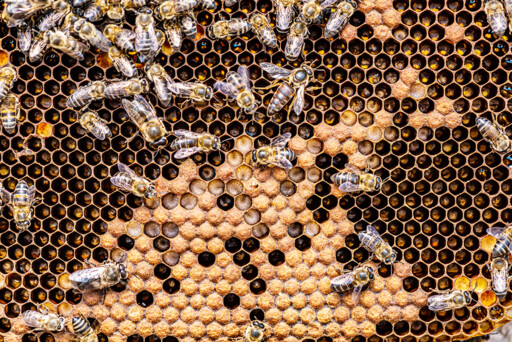
At present, the “information honeycomb” remains a heuristic metaphor, yet it suggests a more autonomous and empowering mode of thought within the broader context of information cocoons. Photo: TUCHONG
The concept of the “information cocoon,” introduced in 2006 by Harvard University Professor Cass R. Sunstein, describes a phenomenon in which individuals engage only with information that aligns with their interests or preexisting beliefs. Through active selection or algorithmically mediated aggregation, people gradually become enclosed in cocoon-like informational environments, limiting exposure to diverse viewpoints, narrowing cognitive horizons, and intensifying social polarization.
In response to this phenomenon, the Tencent Research Institute (a social science research institution established by Chinese internet and technology company Tencent) proposed the notion of the “information honeycomb” in its report Breaking the Cocoon 2025: From Information Cocoon to Information Honeycomb. This model envisions an open, pluralistic information ecosystem that encourages users to actively explore and acquire information across domains. By integrating platform design with user agency, the information honeycomb aims to counteract homogenization and algorithmic bias, creating a healthier and more reality-oriented informational environment.
Information honeycomb as metaphor
Information cocoons can be understood as a form of personalized digital environment, divided into two types: “selection cocoons,” formed through voluntary consumption of specific kinds of content, and “recommendation cocoons,” produced by platform algorithms that filter and recommend similar information. Together, these cocoons do not automatically produce diversity in the information encountered. Instead, under the dual forces of self-selection and algorithmic reinforcement, “cognitive islands” may be generated, exacerbating opinion fragmentation, weakening the comprehensiveness of public discussion, and hindering the formation of public space and social consensus.
As information cocoons increasingly become a significant social risk, a new information ecosystem is required. In this context, the information honeycomb can be understood as both an analytical and normative metaphor depicting an ideal ecosystem. In contrast to metaphors such as the information cocoon, which emphasize closure and self-reinforcement, the information honeycomb highlights openness, fluidity, collaboration, and the collective production of meaning.
Structurally, a honeycomb consists of multiple interconnected units, each retaining a degree of independence while remaining permeable, allowing information to circulate among different cells. Applied to information systems, this implies diversified pathways of information flow: Users are no longer confined to a single algorithmic track or social circle, but can move among different sources, perspectives, and interpretive frameworks. Informational diversity thus becomes not an accidental byproduct but a condition actively supported by system design.
At the behavioral level, the honeycomb metaphor emphasizes “active exploration.” Like bees moving continually between the honeycomb and the external environment, users are no longer passive recipients of algorithmic feeds, but agents capable of actively searching for, comparing, annotating, and recontextualizing information. Meaning is generated not through repetitive exposure, but through movement, selection, and reflection. In this sense, the honeycomb metaphor reestablishes users’ cognitive agency without undermining the importance of structure.
Socially, the honeycomb metaphor foregrounds collaborative construction. Within such a structure, individual actions accumulate and transform into collective value. In the context of information ecosystems, users are not merely consumers or disseminators of information but co-producers of knowledge, participating in meaning construction through commentary, correction, synthesis, and dialogue. Individual contributions, though limited, gain continuity and public significance once embedded within a shared informational structure.
Most importantly, the information honeycomb naturally results in a form of agency rooted in responsibility. Unlike unstructured openness, which may lead to arbitrariness, the honeycomb metaphor highlights coordination, interdependence, and accountability. Every act of exploration and expression shapes the informational environment of others, making cognitive activity inseparable from ethical and epistemological responsibility.
Accordingly, as a metaphor, the information honeycomb both possesses descriptive value and provides a directional framework for system design. It encourages researchers and practitioners to move beyond metrics of efficiency and engagement, and instead consider whether information systems can sustain pluralistic coexistence, activate responsible agency, and transform individual informational practices into shared public knowledge.
Positive effects
More specifically, the information honeycomb may generate several positive effects for internet users.
First, it promotes diversified sources of information. Users are no longer restricted to a single recommendation algorithm or social circle but can move—like bees—among multiple sources. Information acquisition no longer unfolds along a continuous, closed pathway; rather, it flows across platforms, contexts, and communities, continually reshaping individual cognitive boundaries. Within this process, cognition is understood not as possession of fixed answers, but as a revisable, extensible, and dialogical process of understanding. Tensions between competing positions, distinctions between facts and values, and the multiple causes of structural problems become apparent again, restoring the true complexity of the world.
Second, the information honeycomb offers a dynamically open mode of information organization. Its dynamic, traceable structure is hierarchical yet cross-connected; clear in outcomes yet rich in contextual depth; efficiency-oriented yet capable of accommodating multiple voices and perspectives. This achieves a structural transition from “homogeneous fixation” to “pluralistic coexistence,” enabling diverse voices to coexist within a single system rather than mutually exclude one another. The goal is not to eliminate difference, but to coexist with, utilize, and regulate it—a more realistic systemic response to contemporary social complexity.
Third, it establishes a balance of agency between humans and information. In the relationship between users and information, the honeycomb model enables a transition from passive consumption to active exploration. Users become not only consumers of information but also builders of the information ecosystem itself. This marks a shift from attention management to self-governance of cognition. Users are therefore required not only to exercise choice, but also to assume the cognitive and social responsibilities it entails, transforming informational practice from passive consumption into knowledge-based action with public significance.
Fourth, it fosters a more public and creative knowledge system. The information honeycomb moves information ecosystems from one-dimensional, individualized consumption toward multidimensional collaborative practice. In terms of participation, this means moving from individual isolation to collective cooperation in order to achieve systemic integration. Knowledge is no longer reduced to personal experience but, through collaborative practice, becomes shared knowledge, fostering public reasoning and collective action.
Information honeycomb–type products
Extracting the core elements of the information honeycomb—diversified circulation, active exploration, and collaborative co-construction—enables identification of existing internet products and services that approximate this metaphor. These may be termed “information honeycomb–type” products, and are characterized by diversified access points, strong user agency, collaborative co-construction mechanisms, and ecosystem interconnectedness. Together, these features point to promising paths for creating healthier information ecosystems.
Diversified access points: Rather than relying on a single recommendation algorithm, information should be accessible through multiple pathways. When information depends exclusively on a single recommendation system, users risk becoming trapped in information cocoons, weakening their critical thinking and comprehensive judgment. Diversified entry points disrupt one-way circulation and offer users broader possibilities.
Strong User Agency: Users should be able to explore autonomously rather than passively scroll through algorithmically curated feeds. Active exploration enables long-term knowledge accumulation according to individual interests rather than fragmented, instantaneous information pushes. Users are also more likely to engage in commentary, discussion, annotation, or content creation, transforming individual exploration into collective knowledge contributions. Platforms with effective navigation tools, recommendation logic, and multidimensional classification help users discover new knowledge pathways.
Collaborative co-construction mechanisms: These mechanisms break the logic of “individualized immersion,” enabling users to collectively shape the information ecosystem. Under traffic-driven content delivery logic, recommendation systems privilege content that rapidly garners clicks, likes, comments, and shares. While this may offer immediate gratification, it can produce social fragmentation, informational echo chambers, and weakened social trust. A healthy information ecosystem, by contrast, encourages collaboration within communities, allowing information to grow and interconnect through sharing, dialogue, and critique, countering the tendency of information ecosystems to prioritize short-term interaction metrics at the expense of long-term value, public discussion, and knowledge accumulation.
Ecosystem interconnectedness: Information should circulate freely rather than remain locked within isolated systems. Imagining information ecosystems as a vast honeycomb, ideal “interconnectedness” involves open channels among all honeycomb cells, allowing knowledge and viewpoints to circulate and exchange. Achieving this requires avoiding algorithmic “monocultures” through institutional and technical design that encourages production and circulation of diverse content, enabling different knowledge communities to communicate, interact, and mutually enrich one another.
Realizing this goal requires interventions at the levels of technology, institutional design, and user behavior. Technologically, open interfaces and data interoperability provide the basic precondition: Platforms should offer application programming interfaces or standardized data interfaces for sharing information and content across platforms, databases, and communities. Cross-platform search and aggregation tools are likewise essential, enabling users to move efficiently among informational nodes. Institutionally, platforms should encourage diverse forms of creation by ensuring a degree of visibility for original, in-depth, or cross-field content, reducing reliance on “viral-content algorithms.” Cross-group collaboration should also be encouraged through joint content production by creators and institutions, further facilitating exchange among knowledge nodes. Behaviorally, users should be educated and encouraged to obtain information from multiple sources, platforms, and communities, rather than relying on a single information stream.
At present, the concept of the information honeycomb remains a heuristic metaphor rather than a rigorously validated academic concept. It nonetheless points toward a more autonomous and empowering mode of thought within the broader context of information cocoons. As a vivid metaphor carrying the promise of a positive paradigm shift, it still requires further scholarly inquiry to deepen both its theoretical foundation and practical applicability.
Hu Yong is a professor from the School of Journalism and Communication at Peking University. This article has been edited and excerpted from Nanjing Journal of Social Sciences, Issue 1, 2026.
Editor:Yu Hui
Copyright©2023 CSSN All Rights Reserved