


Integrating historical perspectives in contemporary literary studies
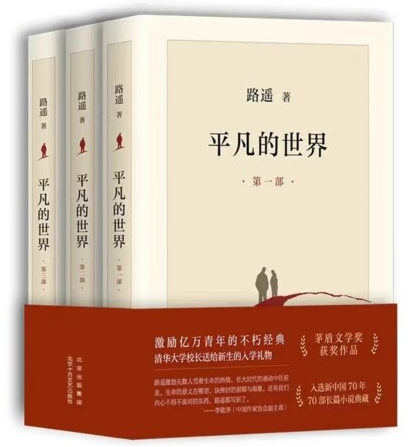
FILE PHOTO: Ordinary World, the most famous work of Lu Yao, a well-known contemporary Chinese writer
In recent years, as research on contemporary literature has deepened, it has become evident that merely sorting, collating, or correcting routine materials—or focusing too narrowly on textual minutiae—is no longer sufficient to advance more substantive analyses in literary historiography. The introduction of appropriate theoretical perspectives has proved effective in overcoming these limitations. For this reason, the incorporation of principles and methods drawn from classical philosophy of history, as well as from Chinese and foreign historiographical traditions, is becoming increasingly important in academia. Through a discussion of these approaches alongside concrete cases, this article seeks to construct a theoretical–historiographical perspective within contemporary literary studies.
Tact of handling materials
This notion—“the tact of handling materials”—is a habitual expression among researchers of contemporary literature. Broadly speaking, when an inchoate question arises, the instinctive response is to first “touch” the relevant materials. Over the long span of a researcher’s career, the mind is often filled with tentative questions. For instance, the image of a writer may solidify at certain times and be revised at others, because such an image is constructed through the comparison of evaluations across different historical periods—shaped by the relative merit ascribed in one era or another. These shifting comparisons give rise to literary history as something formed within the flow of time. More often than not, however, materials are handled without clear purpose.
Through juxtaposing materials, however, one gradually acquires discernment—a sense of tact. For example, while reading an old magazine, certain dates, figures, and events may at first seem to exist in isolation; but after several readings, delicate threads of connection begin to appear. Such fragile connections do not emerge readily—they arise from sustained contemplation, though patience with materials can also quickly collapse. At such moments, the reminder offered by historiographical theory becomes essential: Some materials contain hidden dimensions not easily perceived in haste.
Comparing materials, whether similar or not, thus demands a more finely attuned tact. A common example is the difference between reading newly discovered materials after forming a research conclusion and simply moving from source to source without preconception. The feeling that arises during comparison resembles a “firsthand experiment”—reading them over and over. Here, “firsthand” is not entirely different from what I refer to as a “tact in touching materials,” which requires a researcher to exercise a strange imagination—one that immerses oneself in history. Subjects within the materials may encounter misfortunes during certain periods, experience unexpected turns in life, or advance in ways that appear extraordinary yet follow underlying patterns. This inevitably touches upon how we understand “historical truth.”
Some literary histories are not entirely accurate in their perception and narration of intellectual trends or works. If a researcher has not sufficiently “touched” the materials—without repeated and careful reflection—they risk detaching interpretations from the circumstances in which the materials were originally produced. This is why some scholars advocate for the study of “original archives,” emphasizing the need to reconstruct a document’s original context and to examine the identity, disposition, and circumstances of its source.
Conditional selection
When researchers of contemporary literature engage in the conditional selection of materials, the tasks of textual compilation and critical reflection must proceed in tandem. The systematic collection and organization of documentary materials is, of course, indispensable. In pursuing a research question, a scholar must first sift through all relevant materials—a labor-intensive task akin to searching for a needle in a haystack or surveying a vast wilderness. Yet this seemingly unrewarding, broad-net approach often yields unexpected results: Amid a cluster of near-identical documents, a discerning researcher may perceive the singularity of one; in sources that merely echo prevailing judgments without original insight, a sensitive reader may detect hints of a muted milieu, recognize a peculiar symptom, and be prompted to investigate further, to explore, and to hypothesize. To be specific, why one period remains so quiet while another becomes intellectually dynamic—the information embedded within such contrasts must have comparative value and warrant deeper reflection.
Conditional selection involves fully absorbing and utilizing documents so as to undertake in-depth research on new questions. From hundreds of thousands of words of archival material, the truly valuable questions extracted may be few, yet each may open pathways for further inquiry. From a single piece of evidence, a researcher may suddenly glimpse a flash of insight that illuminates that vast corpus and resurrects traces of previously obscured problems. Reflective selection both honors existing research and resists uncritical acceptance of received conclusions; every source utilized must be subjected to careful selection, discrimination, and analytical reasoning.
Conditional selection, through the accumulation, supplementation, and expansion of materials, allows documents to reveal “the whole of their facts”—even when accounts are ambiguous or contradictory. These contradictions, in turn, create space for independent scholarly judgment. Conditional selection also places more rigorous professional demands on the reader: It requires painstaking effort in combing and probing large corpora, along with sustained attention to the “connections” among sources. Conditional selection cannot be suspended outside the documentary record, nor can it be reduced to objectless abstraction.
Possibilities and limits of research
When placing the dialogue between contemporary literary studies and historiographical theory at the core of inquiry, one must recognize that its interpretive potential is constrained by invisible limits. One condition of researching contemporary literature is that the first three generations of researchers are still alive; they once lived through contemporary history and remain closely connected to it. This condition offers both advantages and disadvantages, as the latter can constrain their perspective and understanding. Some scholars therefore argue that the validity of interpretation has boundaries: Factors such as the author’s intended meaning, the actual significance of the text, its historical context, the interpretive traditions of the nation, and current thematic trends collectively determine both the effectiveness and the limits of interpretation.
These possibilities and limits, though real and salient, do not constitute absolute barriers. Pioneering exploration can sometimes turn the impossible into the possible. According to the patterns of literary history, discussions of key issues in contemporary literary studies emerge once conditions are ripe—when historical evaluations stabilize and social consensus reaches unprecedented levels; when large-scale archival compilations and document collections have been completed, providing researchers with reliable reference works; or when past life has genuinely become “the past,” allowing for greater rational distance and a relatively stable research environment. Under such circumstances, the historical character, features, and knowledge structure of contemporary literary studies—grounded in archival richness—begin to take shape, at which point previous boundaries and limitations can be actively overcome.
Literary research as integrative endeavor
A long-circulated recommendation based on a scholar’s age and experience states: “In young adulthood, focus on small questions, but treat them in a grand manner; in middle age, tackle major questions and approach with ambition and boldness; in later years, concentrate on major questions, but if necessary, treat them in a focused and precise fashion.” This can be regarded as practical wisdom. In literature and history, some individuals become poets or novelists in their 20s or 30s, whereas scholars may struggle to be recognized as competent literary historians even by 40. Unlike literary creation, literary research requires artistic imagination but does not rely on it alone. An integrative approach involves how to utilize sources and present history to construct new historical perspectives, reflecting the stringent demands on a researcher’s ability to synthesize vast, complex materials and demonstrate historical literacy. While this phenomenon may appear in specialized studies, even these must retain the broad vision characteristic of general literary history research.
Contemporary literary studies demand both concrete research targeting specific phenomena and comprehensive research encompassing all phenomena. They also require the refinement of time, the deepening of experience, and a historical vision that is rigorous, compassionate, and tempered—ultimately producing papers and books that make significant contributions to understanding the essence and causes of social evolution. A dialectical perspective is essential for pursuing integrative research. For example, “treating a small question in a grand manner” presupposes that the small question contains a larger issue, reflects a broader problem, or bears significant relevance to a major question. Similarly, tackling major questions must be grounded in attention to smaller details—large-scale studies that ignore the minutiae risk being hollow and may devolve into pseudo-problems.
A review of past Chinese literary research reveals numerous instructive scholarly practices, such as the sole extant collection of essays by Fan Jun or Yan Jiayan’s study of Liang Shengbao. Despite differences in subject matter and analytical approach, these works share a common feature: They are the products of years of accumulation. Yan Jiayan’s study of Liang Shengbao (the central character in Liu Qing’s novel History of Entrepreneurship) was not swayed by transient fashions but extracted genuine insights from the era’s currents. Fan Jun’s collection compiles years of research, with some articles revised, refined, and perfected multiple times. Both scholars were keenly aware that developing contemporary perspectives without a sense of history inevitably risks arbitrarily altering and distorting the past, portraying it inaccurately. As the historical subjects we study recede further into the past and their contexts grow increasingly opaque, it becomes harder to interpret events by today’s standards—a trend already emerging in modern literary studies. Enhancing one’s historical sensibility thus becomes an increasingly formidable task. The two scholars’ integrative studies arose from deep historical experience, scholarly literacy, holistic observation, and general perception, representing a historically dialectical understanding of literary phenomena.
Cheng Guangwei is a professor from the School of Liberal Arts at Renmin University of China. This article has been edited and excerpted from Literary Review, Issue 4, 2025.
Editor:Yu Hui
Copyright©2026 CSSN All Rights Reserved