


Revisting diverse understandings of Haipai culture
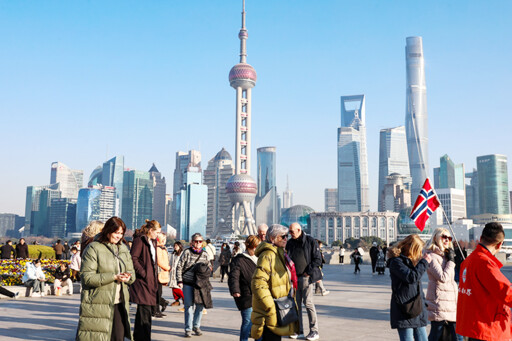
Holiday crowds gathering along the Bund in Shanghai during the 2026 New Year celebrations Photo: IC PHOTO
Among the many debates surrounding urban culture in the context of China’s rise, Haipai culture has undoubtedly drawn the greatest attention, generated the most abundant scholarship, and achieved the highest level of public visibility. Since the mid-1980s, when the term “Haipai culture” reentered academic and public discourse, it has triggered years of sustained inquiry and interpretive exploration. Yet despite its frequent invocation, a persistent gap remains between speakers and listeners, between the term itself and what it is taken to represent. At the root of this paradox lies the striking diversity—and inconsistency—of definitions of Haipai culture, which stems from indeterminacy in research objects, the ambiguity of analytical boundaries, a lack of substantive theoretical breakthroughs, and a tendency to privilege narration over analysis.
Conceptual gap between Haipai and Haipai culture
Is Haipai synonymous with Haipai culture? Although the term “Haipai” was coined more than a century ago, there is still no agreement on when it first appeared or to whom it originally referred. When scholarly interest in Haipai culture began to take shape in the 1980s, some early researchers argued that the term originated in the field of modern Shanghai painting, where it functioned as either a self-designation or an external label for a particular artistic community. In this view, Haipai was a simplified appellation derived from expressions such as the “Shanghai School of Painting” or simply the “Shanghai School.” Others, however, have maintained that the term instead derives from Haipai Peking opera, conceived in contrast to Jingpai, or the Beijing style.
A third perspective attempts to reconcile these views by setting aside questions of chronological priority and instead treating Haipai as a dynamically unfolding process. Chinese historian Chen Xulu, for example, argued that Haipai emerged simultaneously in both painting and Peking opera. Although Peking opera had long circulated in the Jiangnan region and was once referred to as “southern-style Peking opera,” by the late Qing (1644-1911) and early Republican periods (1912-1949), the transformations undergone by painting—and especially by Peking opera—in Shanghai could no longer be adequately captured by the traditional north–south dichotomy. It was under these conditions that the term Haipai came into being.
Yet a clear logical gap exists between the historical usage of Haipai and the conceptual content of Haipai culture. Haipai culture is a construct that emerged in the 1980s in contemporary China—particularly in Shanghai—used by historians and cultural scholars to describe a specific cultural type from the perspective of cultural studies. Strictly speaking, it does not refer to the same object as the “Shanghai School” of painting or Peking opera of more than a century ago, nor to the notion of Haipai that circulated in literary circles in the 1930s. In the late Qing and Republican periods, Haipai primarily denoted a specific artistic school or literary style; Haipai culture, by contrast, is defined far more broadly. Although the academic community has yet to reach full agreement, the temporal and spatial scope, as well as the substantive content, of Haipai culture differ markedly from what Haipai signified in earlier popular usage.
Haipai culture is not Shanghai culture
Is Haipai culture synonymous with Shanghai culture? In existing scholarship, the two are rarely treated as synonymous. Chen Xulu, in particular, was careful to draw a distinction, emphasizing that Haipai refers to a new artistic and cultural style. First, although Shanghai serves as the representative locus of Haipai, not all scholars or artists active in Shanghai can be classified as Haipai; the designation applies only to those who embody its distinctive style. Second, because Haipai is defined in terms of artistic and cultural style, anyone who possesses this style may be considered Haipai, regardless of whether they are active in Shanghai. Chen further criticized attempts to territorialize Haipai, stressing its high degree of mobility.
Chinese historian Xiong Yuezhi similarly argued that Haipai culture admits both broader and narrower definitions, as well as earlier and later manifestations. In its broader sense, Haipai represents an expansion and extension beyond its narrower meaning, becoming an exceptionally inclusive cultural type and style. In this broader understanding, Haipai entails not only an expansion of cultural content but also a spatial scope no longer confined to Shanghai alone. Yet in the process through which social communication shapes popular understanding, Haipai culture continues to be casually equated with Shanghai culture—an equation that diverges sharply from the scholarly consensus formed in the 1980s.
Haipai culture is not equivalent to Western culture
Is Haipai culture Western culture? Not only is “culture” itself notoriously difficult to define, but the notion of the “city” is likewise a seemingly self-evident yet deeply ambiguous spatial category. The wave of Chinese urban history research that emerged in the 1980s initially focused on four cities—Shanghai, Chongqing, Tianjin, and Wuhan. In Urban Study of Modern Shanghai, edited by Chinese economist Zhang Zhongli, Haipai culture was accorded a dedicated chapter. The volume explicitly identified the “encounter between East and West” as a constitutive element in its internal logic.
From the late Ming (1368-1644) and early Qing periods onward, Eastern and Western civilizations had already begun to meet, interact, and intermingle along the banks of the Huangpu River, eventually giving rise to a form of modern urban civilization with distinct Chinese characteristics. As a mode of urban culture that emerged organically on Chinese soil, Haipai culture took shape most intensively in Shanghai—a development closely tied to the city’s distinctive urbanization trajectory, whereby a peripheral locale was transformed into a center through sustained exchanges among multiple civilizations. Cultural elements from across the world first converged in this space before spreading across China. When emphasizing the global dimensions of Haipai culture, contemporary scholarship should therefore avoid framing it solely through paradigms of “impact and response” centered on external forces. Instead, it is essential to recognize that Haipai culture also represents a distinctly Chinese exploration of urban cultural development.
In short, Haipai culture is neither equivalent to Western culture nor a simple transplant of colonial culture. Old Shanghai was not defined solely by foreign elites. The city’s history was shaped jointly by local residents and successive generations of newcomers who settled there over time. As a port city situated at the confluence of great rivers and oceans, Shanghai continuously confronted change, pursued reform, and absorbed diverse cultural influences. Through these processes, it forged an urban character defined by openness, innovation, and inclusiveness. Although the history of the foreign concessions forms an indispensable part of Shanghai’s urban memory, the primary forces that shaped Haipai culture were generations of Chinese people rather than colonial actors alone.
Role of Jiangnan culture
The ancient civilizations of the lower Yangtze River basin—where the Jiangnan region is located—are of great antiquity and splendor, constituting one of the principal cradles of Chinese civilization. Jiangnan culture took shape during the Sui (581-618), Tang (618-907), Song (960-1279), and Yuan (1271-1368) dynasties and, accompanied by successive waves of north-to-south migration, developed distinctive regional characteristics while consciously sustaining the continuity of Chinese civilization as a whole, thereby exhibiting an early openness that transcended narrow localism.
Jiangnan culture reached its zenith during the Ming and Qing periods, when the region occupied a prominent political, military, economic, and cultural position nationwide. Over more than a millennium of historical evolution, “Jiangnan” has come to signify not merely a geographical space but a richly layered cultural concept. Shanghai constitutes one part of this region. The core urban area of present-day Shanghai largely corresponds to Shanghai Town, established in 1074, and Shanghai County, elevated in 1292. City walls were constructed in 1553, and after the lifting of maritime prohibitions in 1729, commercial shipping expanded dramatically. Between 1796 and 1820, the population of Shanghai County reached 528,442, and the urban street network expanded to more than 60 streets and lanes. With merchant vessels crowding the banks of the Huangpu River, Shanghai emerged as a densely populated commercial city with thriving trade and lively urban activity.
That Jiangnan culture provided a major cultural matrix for the emergence of Haipai culture is widely acknowledged. Today, Haipai culture is often treated as a modern variant of Jiangnan culture, with the boundary between the two becoming increasingly blurred. However, unlike China’s traditional regional cultures, which formed over long historical periods, Haipai culture is an urban culture shaped by modern conditions. Addressing the tension between the urban culture represented by Haipai and the regional culture embodied by Jiangnan has therefore become a central task of contemporary Haipai studies.
Haipai culture is not merely a label, but a constellation of cultural meanings and practices that offers a distinctive way of imagining Shanghai. Yet contemporary discussions too often reduce it to questions of locality, while its broader cultural symbolism remains underexamined. Stripped of this symbolic dimension, Haipai culture risks being confined to the administrative boundaries of Shanghai, or the specific groups associated with it, limiting its wider resonance and influence. As Chinese cities assume a more prominent position on the global stage, the need for serious reflection on modern Chinese urban culture has become increasingly urgent. Revisiting debates that emerged in the 1980s, this article seeks to move beyond city-bound interpretations of Haipai culture and to encourage a more expansive, historically grounded, and conceptually open approach to understanding and disseminating Chinese urban culture—particularly in its modern form.
Xu Tao is a research fellow from the Institute of History at Shanghai Academy of Social Sciences. This article has been edited and excerpted from Social Science Research, Issue 5, 2025.
Editor:Yu Hui
Copyright©2026 CSSN All Rights Reserved