


New popular literature and art in age of AI
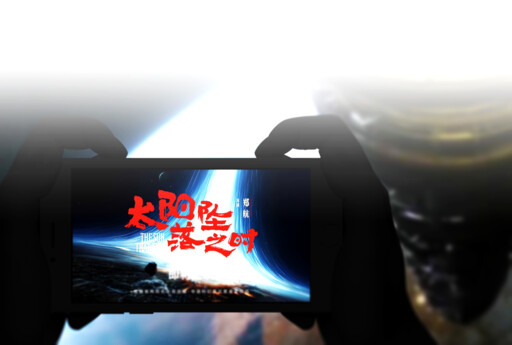
“The Sun That Fell,” an AI-generated science fiction micro drama, has drawn significant attention from viewers and industry insiders. Photo: IC PHOTO
In recent years, “new forms of literature and art for the general public” or “new popular literature and art” have drawn increasing attention from both industry and academia, and a growing body of research has begun to emerge. Yet there is still no consensus on how these new forms should be defined. Despite the diversity of scholarly views, the “newness” of this concept is invariably tied to rapid social transformation, technological advancement, and the continual evolution of media. Among the many cultural forms flourishing today, internet literature, short videos, and livestream performances—each thriving through new media—have become representative examples of these new forms. As artificial intelligence (AI) accelerates the pace of technological change, the question of what exactly constitutes “new” becomes increasingly worthy of discussion.
Historical context: Popularization by literati
It is commonly believed that the concept of popular literature and art originated with the 1928 journal Literature and Art for the General Public edited by Yu Dafu. Some scholars, however, trace its origins back to the vernacular literature movement of the May Fourth Movement, or even further to ancient folk arts. Whether folk arts can truly be regarded as popular literature and art therefore remains an open question.
If we situate the concept of “popular literature and art” within its historical context—much as we do when interpreting “vernacular literature”—it becomes clear that it does not fully correspond to folk arts. First, in terms of creative subjects, the advocates of popular literature and art did not regard ordinary people as the primary creators. Second, many scholars maintain that today’s new forms of popular literature and art derive from ancient folk arts, forming a continuous lineage from folk arts to popular literature and art and finally to new popular literature and art. In practice, however, ancient folk arts differ markedly from modern popular literature and art. Although ancient folk arts were created by folk artists and transmitted largely through oral traditions—seemingly aligning with the identity of “the people”—their historical conditions set them apart from the modern notion of popular literature and art.
Ancient folk arts possessed characteristics that cannot easily be equated with the modern concept of folk arts. Despite being produced by folk artists, their circulation was limited. Because of constraints imposed by transportation, geography, and language in premodern times, very few forms of folk arts achieved widespread popularity across large regions, let alone nationwide dissemination. In terms of circulation and reach, they were often less widely transmitted than works created by literati.
For this reason, the regional and relatively niche character of ancient folk arts ironically became an obstacle to classifying them as popular literature and art. In modern contexts, the term “the public” is broad, yet it still implies scale and wide participation. Regional limitation and niche circulation therefore sit uneasily with this understanding. In this sense, ancient folk arts might more accurately be described as niche cultural forms rather than popular literature and art.
Marriage of media and grassroots in internet era
Many scholars argue that new popular literature and art possess two defining features: a people-centered orientation and technological empowerment. Some also divide the evolution of such cultural forms into three stages: traditional popular literature and art before the emergence of mass media, modern popular literature and art after the rise of mass media, and new popular literature and art following the advent of the internet. Technological and media transformations have directly shaped the evolution of new popular literature and art. Yet these factors alone cannot fully explain its distinctive characteristics today. What, then, makes these forms truly “new”? One answer may lie in the development of online literature.
The first dimension of this newness lies in the identity of creative subjects. Compared with popular literature and art promoted during the 1920s–1940s, contemporary forms have undergone a fundamental shift in who creates them. Earlier forms were largely produced by literati rather than by the public itself. In new popular literature and art, literati writers still participate in creation, but they are no longer the sole—or even the dominant—creative force. The locus of creation has shifted from literati to ordinary people, a transformation vividly illustrated by the rise of online literature. In its early stages, many creators did not even think of themselves as “writers” or “authors.” This change reflects broader shifts in media and technology.
The internet has given ordinary people unprecedented opportunities for self-expression. In the age of print media and broadcasting, the public largely remained passive recipients—readers, viewers, and listeners—with limited opportunities to express themselves. The internet dissolved this barrier. Early online spaces functioned as virtual communities in which individuals were largely anonymous. Identities were concealed, and everyone participated on relatively equal footing. As long as one could type and connect to the internet, one could express oneself freely. Under such conditions, many early online literature creators lacked the professional self-identity traditionally associated with writers. If traditional literature can be understood as elite culture, online literature represents a distinctly grassroots form of creativity. Motivated by curiosity, interest, or coincidence, countless amateur creators entered fields such as online literature, livestreaming, and short video production. The public thus became a central force in artistic creation, marking a fundamental distinction between new and “old” popular literature and art.
The second dimension of newness concerns the composition of the public itself. The defining feature of new popular literature and art is precisely its broad social inclusiveness. Compared with earlier forms, the meaning of “the public” has expanded dramatically. It can no longer be confined to categories such as workers, farmers, intellectuals, or merchants. Digital media has significantly reduced barriers related to occupation, class, and education, enabling wider participation in cultural creation. In the field of online literature, for example, creators now include not only professional writers but also workers, farmers, students, and civil servants.
Data from the 2021 Online Writer Portrait released by China Literature Group illustrates this diversity. More than 75% of its platinum-tier and top authors hold university degrees, with over 60% coming from STEM backgrounds. Online fiction features characters representing more than 188 professions, while the writers themselves come from an equally diverse range of occupations, including students, forensic doctors, teachers, lawyers, factory workers, salespeople, physicians, police officers, accountants, civil servants, researchers, and engineers. Authors range widely in age as well. The oldest writer on the China Literature platform, Zhu Xingfu, is a 78-year-old retired veteran, while the platform’s youngest well-known author, Mo Yan, belongs to the post-2000 generation and is only 21 years old. Faced with such a vast range of professions and age groups among creators, earlier distinctions about who constitutes “the public” in modern Chinese literature no longer seem adequate.
A third dimension of newness lies in style and form. As the scope of participation expands, so too does the diversity of artistic expression. After elite literature associated with print media gradually moved to the margins, market-oriented popular literature and art rose to prominence. Cultural forms favored by mass audiences—such as pop music, commercial films, and popular television dramas from Hong Kong and Taiwan—once dominated the cultural landscape. In the digital era, however, the stylistic possibilities of new popular literature and art have become even more varied and dynamic.
Online literature again provides a useful example. In its early stages, the forms of online writing largely followed traditional literary genres such as poetry, prose, and fiction, typically published on BBS forums and early literary websites. Soon, however, distinctly internet-native forms began to proliferate rapidly, including chat-style narratives, hyperlink structures, and collaborative chain writing, which differed markedly from conventional novelistic styles. As media technologies continued to evolve, blog literature and SMS literature appeared. Further advances in digital technology gave rise to livestream performances, short videos, and short dramas. More recently, the rapid development of AI has generated new forms of AI-assisted artistic creation. Rooted in the public’s boundless creativity and the rapid evolution of media technologies, each new medium or technological breakthrough carries the potential to produce new artistic forms.
A final dimension of newness lies in literature and art itself. Today the term “popular culture” is often used more frequently than “popular literature and art,” and the concept of popular culture is itself highly complex. British scholar John Storey once summarized six common definitions: popular culture as that which is widely liked; as all culture outside “high culture”; as commercially produced for mass consumption; as culture originating from the people; as a site of ideological struggle between dominant and subordinate groups; and as postmodern culture. These diverse interpretations among Western scholars suggest that the concept is far from purely academic, since each definition is entangled with ideological considerations.
From its emergence onward, new popular literature and art have displayed characteristics that differ fundamentally from earlier forms. Early online literature, early livestreaming, and early short video creation all possessed this distinctive quality. The convergence of new media technologies with grassroots participation has given rise to a fresh vitality, allowing artistic creativity to flourish in unexpected ways.
Peng Minquan is a research fellow from Jiangxi Academy of Social Sciences. The article has been edited and excerpted from Journal of Hebei University, Issue 6, 2025.
Editor:Yu Hui
Copyright©2026 CSSN All Rights Reserved