


Aesthetic features of Chinese literature in the new era
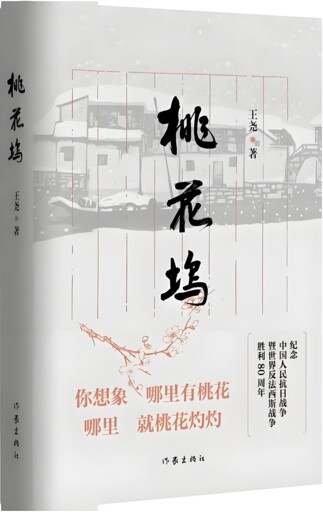
FILE PHOTO: Wang Yao’s Taohuawu depicts the historical trajectory of the Chinese People’s War of Resistance Against Japanese Aggression.
Amid the intersecting forces of globalization, digitalization, and localization, literature in the new era strives to construct an aesthetic subjectivity for Chinese literature. Its aesthetic profile displays an unprecedented richness and complexity. Realism evolves through assimilation, the lyrical tradition is reborn through transformation, and avant-garde art continues in a more subdued yet enduring form. These three are not clearly demarcated, but rather interpenetrate and coexist in a pluralistic symbiosis. The emergence of this aesthetic configuration stems not only from the abundant materials and intellectual challenges brought about by profound social transformations in China, but also from writers’ creative transformations of both Chinese and foreign literary traditions.
Formation and deepening of complex realism
Since the advent of the new era, a prominent feature of literary development has been the strengthening of realist themes and the deepening of people-oriented literature. From the perspective of literary genealogy, this represents a renewed mobilization of realist aesthetic resources following the decline of avant-garde literature. At the same time, realist writers have not remained stagnant. Through dialogue and integration with diverse aesthetic resources, they have developed a more inclusive and expressive new form—complex realism. This complexity has become both widespread and deeply rooted, manifesting in the integration of various elements from past literary traditions.
One manifestation of this complexity is the combination of grand narrative and meticulous depiction. Traditional realism often sought to reflect the long duration of national history, typically spanning vast temporal and spatial dimensions, with grand structures and numerous characters. In the new era, writers retain the framework of grand narrative but employ more summary and elliptical narration, leaving greater space for fine-grained depictions of scenes and details, or for seemingly incidental touches that infuse works with the vivid pulse of life. Liu Qingbang’s Flower Lantern Tune tells the story of Xiang Jiaming, a female “first Party secretary” stationed in a village, who leads villagers in achieving poverty alleviation goals. While it responds to national strategies of the new era, the author enriches the narrative with depictions of romantic relationships and local customs, drawing on firsthand materials gathered through immersive field experience. Vivid scenes—such as apricot blossoms and bamboo landscapes, and a delivery rider getting lost while bringing mutton—demonstrate the texture of everyday life through detailed description.
A second manifestation lies in the integration of epic aspiration and humanistic reflection. Epic ambition and grand narrative are closely intertwined, both concerned with reflecting the spirit of the times and revealing historical essence. In the new era, this epic impulse has softened, as writers combine insight into historical essence with attention to human nature, merging people-oriented literature with literature centered on the individual. Zhao Defa’s Hurricane over the sea recounts the story of fishermen devoted to strengthening the nation through industry, while sketching the history of northern China’s fisheries in the 1920s and 1930s. The romantic union between the male protagonist and a poor girl, Suozi, breaks completely with traditional class constraints. This lends realist works greater flexibility and richness, enabling literature to transcend its function as a mere social mirror and attain a more enduring aesthetic appeal.
A third manifestation appears in the fusion of realist art and non-realist techniques. Traditional realism, inheriting the legacy of Balzac, aspired to substitute for historical writing. In the new era, however, realism is no longer the sole principle of realist creation; rather, it complements other non-realist techniques, reflecting a modern aesthetic attuned to the times. Chen Yan’s Human Mansion offers a realistic portrayal of the “last welfare-oriented housing distribution” during a period of social transformation, yet the physical house simultaneously represents social symbols and intellectual homelands.
Modern transformation and historicization of lyrical tradition
Since the advent of the new era, the deep lyrical tradition of Chinese literature has undergone creative transformation and innovative development. In the face of the complex experiences of modern society, writers have both inherited the traditional Chinese literary emphasis on the expression of inner feelings, pastoral retreat, and literati elegance, and endowed it with new forms of expression and contemporary connotations, thus shaping a distinctive modern poetic aesthetics.
One shift is from pastoral and landscape poetics to ecological aesthetics. In the new era, Xi Jinping Thought on Ecological Civilization has exerted a deep influence on literary creation, giving rise to an ecological aesthetics attuned to the times. This marks a transition from the classical mode of contemplative observation of nature as an external object to a vision of harmonious coexistence between humanity and nature, along with active engagement with society and public space. Li Juan’s Distant Sunflower Fields records the pristine grassland landscape and the details of nomadic life, demonstrating a free-spirited style, keen intelligence, and acute sensibility. Liu Liangcheng’s Bearing Word constructs a dialogic relationship between humans and nature, as well as among different civilizations, through poetic depictions of the customs and legends of Xiyu (Western Regions). Li Shaojun’s The Spring Breeze Once Again Refreshes the World establishes a connective relationship among natural imagery, social reality, and humanistic concern.
Another development is the rendering of the lyrical tradition in epic and historicized terms. In ancient China, literati often roamed landscapes, composing poetry and prose, with lyrical subjectivity frequently tinged with sorrow. In the new era, however, individual emotional experience is situated within “profound changes unseen in a century,” allowing personal trajectories to resonate with the development of the times and thereby acquire richer layers of meaning. Wang Yuewen’s Home Village narrates the transformations of a small hometown village in the first half of the 20th century, while constructing a literary homeland through geographical space. Lin Bai’s Beiliu incorporates extensive geographical and cultural elements, expanding a personal life history and intellectual history into a form resembling local chronicles. Qiao Ye’s Baoshui Village situates female individuals within the context of the new era, maximizing the richness of life and displaying individual subjectivity while preserving the presence of history. Wang Yao’s Taohuawu reconstructs the historical trajectory of the Chinese People’s War of Resistance Against Japanese Aggression, while recounting history in the gentle, refined style of Jiangnan (south of the Yangtze River) literati.
Writers in the new era also further explore the poetic qualities of literary language—its musicality, imagery, and polysemy—reflecting a heightened awareness of art for its own sake. Ge Fei’s Looking Forward to the Spring Breeze repeatedly employs dream imagery, which not only connects with traditional Chinese culture and carries metaphorical implications of fate, but also exhibits the flexibility and ambiguity of avant-garde narrative language. In this way, beyond its narrative function, literature of the new era reveals the aesthetic dimension and poetic character of the Chinese language.
Local rebirth and cross-disciplinary integration of avant-garde spirit
In China, avant-garde literature was, to some extent, a Western import. Since the advent of the new era, a group of avant-garde writers who rose to prominence in the 1980s have consciously practiced strategies of localization, grounding their works in the realities of their homeland. They strive to achieve a balance among avant-garde experimentation, local rootedness, and the realist tradition—a balance that has enabled a form of local rebirth. More recently, a younger generation of writers has actively incorporated elements from new media art, game aesthetics, and artificial intelligence, expanding the boundaries of serious literature.
One manifestation is the implicit continuation of narrative experimentation alongside the transformation toward new forms of literature and art for the general public. In the new era, some avant-garde writers have turned toward realist themes, yet their avant-garde sensibilities continue to shape their work. Dong Xi’s Echo adopts the framework of a detective novel to probe deeply into characters’ psychology and construct a kind of intellectual allegory, achieving a synthesis of readability and literary quality. Sun Ganlu’s A Thousand Miles of Rivers and Mountains situates revolutionary historical themes within the structure of a spy novel, narrating a suspenseful red story while expressing a solemn theme. These works retain an avant-garde sensitivity to form while avoiding a tendency toward mere technicalism, reflecting the localization and further development of the avant-garde spirit.
Another hallmark of this younger generation is cross-media integration and the expansion of artistic boundaries. Young writers actively respond to the arrival of the image age and the digital-intelligent era, promoting a shift from traditional writing to creative writing. With an open attitude, they absorb technological elements and new forms of expression, engaging in in-depth dialogue with other art forms. Huo Xiangjie’s Corona invents a device capable of editing memory, embedding a century of modern Chinese history within the grandmother’s memory, interwoven with elements of modern medicine and futurism. Han Song’s “Hospital” trilogy juxtaposes literary narrative with heterogeneous elements such as medical imaging, digital symbols, and life ethics. The continued flourishing of online literature and its global dissemination have also prompted traditional literature to rethink fundamental issues such as narrative rhythm and interactivity.
Ongoing exploration of formal possibilities and the pursuit of intellectual breakthroughs also remain important. Some writers, unsatisfied with established models, continually challenge the boundaries of literary expression and seek to trace the origins of human consciousness. Huo Xiangjie’s The Chronicle of the Spirit: a Journey of Secret Knowledge and The Complete Works of the Copper Seat pioneer non-linear writing paradigms, incorporating the mysterious diagrammatic structures of the Hetu (Yellow River Chart) and Luoshu (Luoshui River Script) and the conventions of ancient local chronicles, thereby embedding the cultural codes of classical Chinese texts into modern fiction.
If one were to summarize literature of the new era with a single overarching phrase, perhaps high-spirited and vigorous would be appropriate. Within the context of Chinese modernization, literature of the new era is beginning to construct an aesthetic subjectivity that is both distinctly Chinese and globally meaningful. This subjectivity is not a closed form of self-repetition, but a unique voice formed through open dialogue; not a simple return to tradition, but a creative transformation of traditional culture from the perspective of modernity.
Yan Jiexiong is a professor from the School of Humanities at Central South University.
Editor:Yu Hui
Copyright©2026 CSSN All Rights Reserved