


Literature shifts from writing the people to the people writing
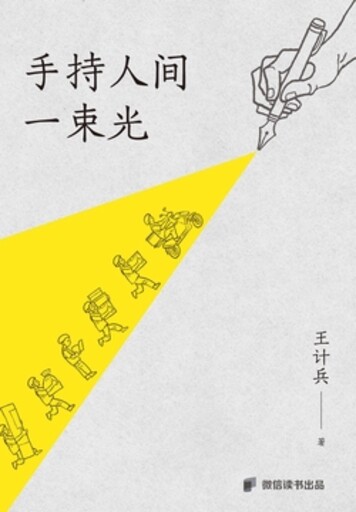
File Photo: the poetry and prose by Wang Jibing, a food-delivery worker
Just as the rise of the modern press helped propel the revolution in modern Chinese literature, the transformation of internet media is now fueling the flourishing of new popular literature and art. Examining its distinctive characteristics in the age of internet media can shed light on the creative innovations and historical breakthroughs it represents.
Creative innovation gathers momentum
Guided by Xi Jinping Thought on Culture, removing barriers to participation in literary and artistic creation and enriching the forms of creative expression are both public expectations for new popular literature and art and central priorities in its development. Creative innovation is thus gaining momentum, primarily in two areas.
First, a new era of mass participation in literary and artistic creation has emerged. The rapid development of internet media technologies and the rise of official social-media accounts, short videos, literary websites, and livestreaming platforms have thoroughly dismantled traditional barriers to literary and artistic creation. This surge in mass creativity can be understood through the classical fourfold classification of literary and artistic forms.
The novel is an important literary form for recording human life. Wang Yuzhen, a septuagenarian from Hebei Province, has drawn on new media to record her everyday thoughts and reflections. Her writing, filled with genuine emotion, was compiled and published as I Love Grain Fields, making her representative of older people who have found renewed literary creativity through new media. Poetry and prose are powerful vehicles for expressing emotion. Wang Jibing, a food-delivery worker, moves through the city’s streets and alleys each day, distilling his experiences on the road into poetry and prose. His representative work, Holding a Ray of Light in the World, vividly captures the lived realities of working people, and his poetry collections have sold more than 100,000 copies. Drama can offer solace. When the Panlong Bangzi Opera Troupe in Jinan, Shandong Province faced dissolution, a group of farmers helped revive it; the short-form dramas they produced have received more than 400 million views. The widening of access to literary and artistic creation has enabled ordinary workers, including delivery workers and farmers, to move from audiences to creators and take their place on the cultural stage. In this sense, anyone can become an artist.
Particularly noteworthy is the fact that professional writers have also actively embraced the wave. Their deliberate choice to engage more closely with grassroots life allows professional literary expertise to intersect with the everyday experiences of ordinary people, helping to produce literary and artistic works more attuned to the times and imbued with the warmth of lived experience. The people have been granted greater autonomy in literary and artistic creation, representing a far-reaching transformation in Chinese literary and artistic production. Geography, educational background, and occupation are no longer barriers to creative expression, and literature and art have truly returned to the people.
Second, a growing enthusiasm for documenting everyday life has taken hold. When ordinary people become the principal creators of literature and art, their most direct form of expression is to record their genuine perceptions and experiences, allowing the Chinese spirit to emerge through depictions of everyday life.
Documenting the texture and vitality of everyday life gives voice to people’s genuine aspirations for a better life. Countless creators use new media to bring the details of daily life vividly to the fore, capturing the distinctive character of everyday life in China. Sanitation workers use cameras to record the city as it awakens; construction workers use short videos to show high-rises taking shape from the ground up; emergency-room doctors use writing to document their commitment to saving lives and caring for the injured. New popular literature and art have enabled the people to shift from being “written about” to expressing themselves in their own voices, while also deepening understanding and empathy among different social groups. Through the people’s creative endeavors, ordinary life itself has become worthy of artistic representation. Attention to and documentation of everyday life has thus become a defining feature and major focus.
In new popular literature and art, the Chinese spirit is embedded in the everyday stories people record. Its expression can be understood from two perspectives.
Domestic dissemination is one perspective. In rural areas, villagers use their mobile phones to record daily life alongside first Party secretaries stationed in their communities, including the experience of eating and living together. Through new media, they convey the joy of emerging from poverty and achieving moderate prosperity. These authentic words and images have allowed the Chinese spirit to take root and flourish in the soil of the times.
Overseas dissemination is another perspective. Through new media, the Chinese spirit has reached international audiences with unprecedented success, a trend reflected in the growing overseas circulation of Chinese online literature. Translated and shared by international fans, these works have gained an increasingly global readership. The participation of overseas creators has become an important bridge for the cross-cultural dissemination of new popular literature and art, presenting the Chinese spirit, Chinese values, and Chinese strength from multiple angles and generating deeper cultural resonance internationally.
Changes in the literary and artistic ecosystem
People today are participating in literary and artistic creation on an unprecedented scale and with unprecedented depth, generating far-reaching social influence and profoundly reshaping the literary and artistic ecosystem.
First, new popular literature and art offer a literary and artistic response to profound changes unseen in a century. In the age of internet media, the surge of mass participation in documenting and depicting everyday life embodied in new popular literature and art represents an unprecedented form of innovation in the history of Chinese literary and artistic development. Understanding and advancing new popular literature and art in this era requires breaking free from conventional modes of thought and situating its historical significance and contributions within the broader context of the new era’s historical mission, innovations in content, and technological transformation.
Across the sweep of history, no previous era has witnessed literary and artistic creation on such a scale by the population as a whole, nor has any period in Chinese history offered comparable technological conditions for mass participation in creative production. New popular literature and art in the age of internet media can therefore be seen as a fundamental renewal of literary and artistic creation. The challenges and opportunities it faces come with no ready-made “answers” to follow; instead, its content and forms must be continually renewed through the wisdom and creativity of the Chinese people. A full recognition of this point is essential to meeting the new challenges and seizing the valuable opportunities that profound changes unseen in a century present for literature and art in the new era.
Second, new popular literature and art represent a paradigm shift from “writing the people” to “the people writing.” Throughout the history of Chinese literature, whether in “new literature,” “left-wing literature,” or “wartime literature,” writers emphasized “writing the people” and advocated literary and artistic creation that served the people and gave voice to them. Yet these movements did not fundamentally alter the enlightenment-oriented relationship between creators and audiences. With the emergence of new popular literature and art in the age of internet media, “the people writing” has become an increasingly pressing demand among the people themselves. Xi Jinping Thought on Culture responds to this demand, providing cultural leadership and theoretical guidance for people to become creators in their own right.
Today, amid the digital wave, ordinary people are truly taking up the pen and becoming the “playwrights” of their own creative expression. They now have access to an unprecedented range of tools and forms of expression, allowing their creative talents, perceptions of everyday life, emotional experiences, and attachments to family and country to be expressed with unprecedented richness. A new era of “the people writing” has arrived.
Under the guidance of Xi Jinping Thought on Culture, new popular literature and art in the age of internet media have seized new historical opportunities and reshaped the literary and artistic ecosystem. This represents both a literary and artistic response to profound changes unseen in a century and a paradigm shift from “writing the people” to “the people writing.” From ideological guidance to creative content, new popular literature and art remain firmly anchored in a people-centered orientation across both creation and production.
Riding the wave of new media, ordinary people have become the “playwrights” of literature and art, ushering in an unprecedented era of mass participation in creative expression. Through a variety of media, people transform their feelings about everyday life and their attachments to family and country into literary and artistic creation. New popular literature and art are advancing rapidly, with unprecedented forms and content flourishing across China.
Mei Lin is a professor from the School of Chinese Language and Literature at Southwest University.
Editor:Yu Hui
Copyright©2023 CSSN All Rights Reserved