


Large-scale survey maps mental health of Chinese K-12 students
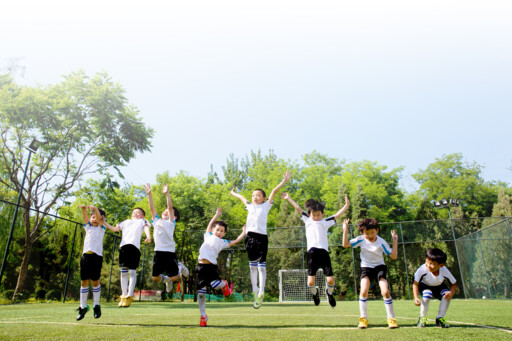
Positive emotion plays an important role in broadening cognitive resources, building psychological strengths, and buffering the effects of stress. Photo: VCG
In recent years, the environments in which primary and secondary school students grow and develop have changed profoundly, while mental health concerns have become increasingly prominent. To provide a comprehensive and precise picture of mental health among Chinese primary and secondary school students, a research team led by the author at the Kaiming Mental Health Education Institute conducted a large-scale nationwide questionnaire survey spanning 31 provinces, autonomous regions, and municipalities directly under the central government. The survey involved over 400 primary and secondary schools and yielded 112,840 valid responses. Using professional psychological assessment tools, the researchers also collected demographic data on factors including gender, school stage, and ethnicity, providing a robust empirical basis for profiling the mental health of primary and secondary school students in the new era.
Overall landscape
A comprehensive picture of mental health among primary and secondary school students in China requires attention to key dimensions such as changes across school stages and gender differences, as well as the strengths, challenges, and emerging trends seen among different student groups.
Based on the survey’s overall assessment of mental health, 40.30% of primary and secondary school students were classified as having good or better mental health, 48.70% as average, and 11.00% as poor or worse. Four distinct latent mental health profiles emerged. The most prevalent was the “moderate-balanced” type (moderate scores in learning, self, interpersonal relationships, and adaptation; 37.18%), followed by the “all-round development” type (high scores in all four domains; 36.27%), “overall vulnerable” type (low scores in all four domains; 21.97%), and “high-ability–low-adaptation” type (high scores in learning and self but low scores in interpersonal relationships and adaptation; 4.58%).
Students tended to have better mental health if their parents had higher levels of education, their families were better off economically, they did not board at school, and they knew how to contact a mental health teacher. Higher levels of positive emotion, life satisfaction, and psychological resilience predicted better mental health, whereas higher levels of depression, anxiety, academic stress, short-video addiction, online game addiction, and alienation predicted poorer mental health. Positive psychological factors emerged as particularly important predictors, with explanatory power far exceeding that of demographic background and negative psychological factors. Students with an “all-round development” profile also showed more positive psychological states and fewer psychological and behavioral problems, while those with an “overall vulnerable” profile showed the reverse pattern.
More specifically, for each unit increase in positive emotion, life satisfaction, and psychological resilience, the odds of belonging to the “all-round development” rather than the “moderate-balanced” type were 1.67, 1.29, and 1.99 times higher, respectively. Conversely, for each unit increase in depression, anxiety, short-video addiction, online game addiction, and alienation, the odds of belonging to the “overall vulnerable” rather than the “moderate-balanced” type were 3.41, 1.40, 1.49, 1.52, and 1.40 times higher, respectively.
The findings point to the importance of helping students take greater responsibility for their own mental health, while shifting the focus of mental health education from screening and intervention toward fostering positive psychological development. They also underscore the need for a coordinated support system involving schools, families, and communities.
Protective factors
Positive psychological qualities such as positive emotion, psychological resilience, and life satisfaction can serve as important protective factors as students grow and develop. Understanding and fostering these qualities can help support their mental and physical well-being and overall development.
First, positive emotion plays an important role in broadening cognitive resources, building psychological strengths, and buffering the effects of stress. Overall, students reported positive emotion in the upper-middle range, with boys scoring higher than girls. Levels declined as students progressed through school, with the sharpest drops occurring during the transitions from primary to junior secondary school and from junior to senior secondary school. Positive emotion was negatively associated with internalizing problems such as depression and anxiety, as well as with academic stress, short-video addiction, and gaming addiction. A range of demographic, family, school, and individual factors were associated with students’ positive emotion, with the family environment emerging as the strongest group of predictors and independently explaining 14.7% of the variance.
Second, psychological resilience helps students cope with challenges such as academic pressure, interpersonal conflict, and setbacks, with important implications for their physical and mental health and future development. Overall, students’ psychological resilience fell within the upper-middle range, although significant differences emerged among groups. Boys, primary school students, only children, and students from families with higher socioeconomic status reported higher levels of resilience. Sleep quality and positive psychological qualities such as positive emotion and life satisfaction emerged as key protective factors, while academic stress, interpersonal alienation, and internet addiction were the main risk factors. Of the factors examined, individual-level factors were the strongest predictors of psychological resilience.
Third, as students navigate challenges in their studies, daily lives, and interpersonal relationships, life satisfaction provides an important measure of their mental health and overall development. Students’ life satisfaction fell within the upper-middle range overall, although girls scored significantly lower than boys. Life satisfaction declined as students progressed through school, while higher levels of parental education, better family economic conditions, and more harmonious relationships between parents and between parents and children predicted greater life satisfaction. Psychological resilience and positive emotion were positive predictors of life satisfaction, while academic stress, depression, anxiety, interpersonal alienation, and online game addiction were negative predictors.
Risk factors
Anxiety, depression, sleep disorders, and academic stress represent some of the major challenges to students’ mental health. Examining these problems can help identify the risk factors that may affect their well-being and development.
First, anxiety among primary and secondary school students is characterized by an increasingly early age of onset, subtype variation, and comorbidity with other conditions. The survey identified anxiety problems in 13.5% of students, although symptoms were mild in most cases. Anxiety levels rose significantly as students progressed through school and remained relatively high after they entered secondary school. Gender differences also varied by stage of development: during compulsory education, girls reported higher levels of anxiety than boys, but the gap narrowed by senior secondary school. Anxiety also had a U-shaped relationship with family socioeconomic status. Psychological and behavioral factors were much stronger predictors of anxiety than demographic characteristics, with depression emerging as the strongest predictor—underscoring the extent to which emotional problems can occur together.
Second, depression among primary and secondary school students is relatively common, can emerge at an early age, and may have serious consequences. About one-quarter of students were found to be at some level of risk for depression, including 5.7% at moderate to severe risk. Emotional distress and low mood were the most common symptoms, while sleep problems and lack of energy were also prevalent, suggesting that depression may manifest through physical symptoms in some students. Girls reported significantly higher levels of depression than boys, as did boarding students compared with day students. Depression also increased progressively across school stages. Anxiety and academic stress emerged as important factors associated with depression. Sleep problems, internet addiction, and interpersonal alienation were also significantly and positively correlated with depression, while positive emotion, psychological resilience, and life satisfaction were significantly and negatively correlated with it.
Third, sleep problems were also widespread among primary and secondary school students. About 20.7% showed significant sleep disturbances, while the proportion getting the recommended amount of sleep was low across all school stages. The situation was particularly pronounced among senior secondary school students, only 17.2% of whom met the recommended standard. Sleep problems also varied significantly among groups: girls, secondary school students, students with siblings, and boarding students reported more serious problems, with sleep generally worsening as students progressed through school. Depression, anxiety, academic stress, interpersonal alienation, and internet addiction emerged as important risk factors for sleep problems, while positive emotion, psychological resilience, and life satisfaction served as important protective factors.
Fourth, academic stress is a major factor affecting students’ physical and mental health and overall development. Academic stress was in the middle range overall, although significant differences emerged among groups: girls, secondary school students, students with siblings, and boarding students reported higher levels of stress. Short-video addiction and interpersonal alienation were the two major risk factors predicting academic stress, while emotional support within the family—including parental confidence and the parent–child relationship—along with family economic conditions and students’ own psychological resilience helped buffer its effects. The survey also found that students tended to report greater academic stress as their parents’ level of education increased, pointing to a pattern of “high expectations–high pressure.”
As technology continues to reshape students’ lives, mobile phone addiction and interpersonal alienation have emerged as increasingly intertwined concerns. Understanding the relationship between them is essential to addressing new challenges facing education in the digital age.
Future mental health education should shift from treating problems to building resilience, and from isolated efforts to coordinated support across families, schools, and communities. These findings can provide a strong empirical basis and practical guidance for education policy, school-based mental health initiatives, and improvements in family education.
Yu Guoliang is a professor from the School of Education at Renmin University of China.
Editor:Yu Hui
Copyright©2026 CSSN All Rights Reserved