


Defending food: From the standpoint of the body
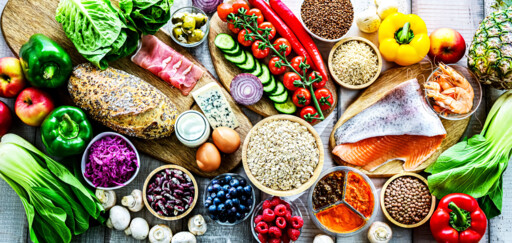
Food represents one of the most fundamental ways in which humans engage with things. Photo: TUCHONG
In Greek mythology, the Titan Prometheus is best known for stealing fire from the gods. Yet another version of the story recounts his role in defining the relationship between Zeus and humankind. When Zeus ascended to sovereignty over the heavens and sought to “distinguish and apportion the kinds” between gods and mortals, Prometheus undertook the task. As one account tells it, in the presence of the assembled gods and humans, Prometheus brought forth a great ox, slew it, and divided the carcass into two portions. Intending to deceive Zeus for the benefit of humankind, he arranged each portion as a deliberate stratagem. One share concealed only bare bones beneath a thin layer of fragrant fat; the other hid the edible meat beneath the animal’s hide and stomach, disguising what was truly valuable.
Prometheus’ ruse did not, however, deceive Zeus, who knowingly accepted the division. The fragrant smoke of burning fat was reserved for the gods, symbolically associated with immortality; humankind, by contrast, consumed the meat and thus became beings dependent upon continual nourishment, subject from that point onward to aging, illness, and death. Through the institution of sacrificial consumption, Greek myth effected its own version of a “separation between heaven and earth.” In ancient Greek narrative, eating—both the acquisition and enjoyment of food—signifies the separation of humans from gods, that is, from eternity and deathlessness. For Aristotle, all living beings—plants, animals, and humans—require nourishment and therefore possess the dual characteristics of growth and decay. A comparable view appears in early Chinese thought. The Book of Rites of the Elder Dai, in the chapter “Yi Benming,” states:
“Those who feed on water are good swimmers and can endure cold; those who feed on earth are without mind yet unceasing; those who feed on wood are strong yet inflexible; those who feed on grass run swiftly yet are dull; those who feed on mulberry produce silk and become moths; those who feed on meat are brave and fierce; those who feed on grain are intelligent and skillful; those who feed on qi are numinous and long-lived; those who do not feed do not die and become spirit.”
Ordinary people belong to the category of “those who feed on grain.” Though superior to many animals, they remain inferior in longevity and wisdom to those who “feed on qi,” namely Taoist adepts. Even such practitioners, however, remain finite insofar as they still “feed.” Only complete abstention from nourishment promises “not dying and becoming immortal.”
Food and life’s finitude
This formulation reflects an acute recognition among early thinkers of life’s finitude. They linked this finitude to food because embodied existence makes clear that survival is impossible without nourishment. Food is thus both cherished and resented: it sustains us, yet it marks us as mortal; it grants intelligence that gestures toward eternity, yet it establishes an insurmountable boundary between humanity and the eternal. The Dionysian tradition, in which finite humans temporarily partake of the infinite, raises a related but distinct question and will not be pursued here.
Confucianism accepts the finitude of embodied life and therefore affirms the legitimacy of eating. Yet within the Confucian framework, food does more than sustain finite existence; it is incorporated into the civilization of rites and music, thereby conferring meaning upon human life. The chapter “Liyun” in the Book of Rites states: “At the first use of ceremonies, they began with meat and drink.”
Human eating differs fundamentally from the way plants absorb nutrients or animals prey upon one another. In Confucian thought, dietary practice marks a crucial distinction between humans and other living beings. The Analects, in the chapter “Xiangdang,” meticulously records Confucius’ dietary regulations: “He did not dislike to have his rice finely cleaned, nor to have his minced meat cut quite small. He did not eat rice which had been injured by heat or damp and turned sour, nor fish or flesh which was gone. He did not eat what was discolored, or what was of a bad flavor…”
These prescriptions may seem minute, even severe. Yet the purpose of the “Xiangdang” chapter is precisely to show how Confucius embodied a highly self-aware humanistic rationality—an enactment of the ideal articulated elsewhere in The Analects: “At seventy, I could follow what my heart desired, without transgressing what was right.”
Food as bridge between the human body and things
“Food” represents one of the most fundamental ways in which humans engage with things. In the symbolic narrative of Genesis, after humanity is created, its first encounter with the world of things is expressed through nourishment: “Behold, I have given you every herb bearing seed, which is upon the face of all the earth, and every tree, in the which is the fruit of a tree yielding seed; to you it shall be for meat.”
Human beings exist within the world and immediately confront the manifold of things. As the “Xuguazhuan,” a traditional commentary appended to the Book of Changes, states: “When there were heaven and earth, then afterwards all things were produced. What fills up (the space) between heaven and earth are (those) all things.”
We encounter the world through our senses of sight, hearing, touch, and smell, and this gives rise to modes of apprehension and engagement such as gewu (investigating things), liwu (enumerating or tracing things), and guanwu (contemplating things). Yet these modes of engagement preserve a certain distance. Seeing color, hearing sound, smelling odor, or feeling texture retains an objectifying stance toward what is encountered. As Gong Huanan observes: “Compared with visual activity, whose basic characteristic is distance, gustatory activity is characterized by the elimination of distance and the fusion of subject and object.”
From a practical standpoint, among all our modes of engagement, eating most radically abolishes objectification. Although the term shiwu (food) appears in the Han Dynasty (202 BCE—220 CE) to mean “edible things,” earlier constructions such as “eating qi” or “eating meat” reveal that “food” may also be understood as a verb-object structure— “to eat–things.” Through eating, what is external is transmuted into bodily substance. Even Taoist immortals who “ingest qi” or consume elixirs must assimilate them through eating. According to traditional Chinese medicine, the qi of water and grain enters the body, is transformed, and circulates as nutritive and defensive qi; their balance governs health. In ancient understanding, to eat is to incorporate the properties of things into oneself, shaping both body and spirit. Confucianism—particularly Neo-Confucianism—advocates restraint in desire, but never total prohibition.
Things are intrinsically diverse; difference is their most fundamental feature. Paleographers note that the original meaning of wu (thing) referred to a variegated ox, already expressing multiplicity. Difference, in this sense, is the precondition of order. The Zuozhuan, a classical chronicle and commentary on the Spring and Autumn Annals, speaks of “regulating things”: “That is why offering instruction in the great affairs so as to fix the right paths and measures is called ‘establishing the path.’ And selecting materials so as to display the color of objects is called ‘establishing the proper use of objects.’ Failing to establish right paths and the proper usage of objects is called ‘disorderly government.’”
Likewise, the “Xicizhuan,” another commentarial appendix to the Book of Changes, states: “The Way has changes and movements. Therefore the lines are called changing lines. The lines have gradations, therefore they represent things.”
Reclaiming the meaning of food
When humans “eat–things,” they integrate human order with material diversity, incorporating differences of flavor, texture, and form into the body and expressing them in ritual practice. The materiality and spatial extension of things are crucial. When one eats a bowl of porridge, the qi of water and grain truly enters the organs; it is not merely a series of sensory signals fed into a “brain in a vat.” Materiality and extension are essential to re-centering ourselves in embodied existence.
Imagine a person wholly immersed in virtual reality, whose bodily awareness is reduced to the biological rhythms that sustain life and whose only contact with the external world is food delivery. If this person minimizes bodily needs through automated feeding devices or nutrient injections, engagement with things effectively ceases. Homogenized paste or nutrient solution, like abstract data, lacks the concrete spatiotemporal qualities of things—the diversity of sound, color, odor, flavor, and texture. The more casually we treat our bodies, the more estranged from them we become. The cyber “self” in virtual space and the nutrient-sustained body in physical space grow increasingly indistinguishable in their tenuous claim to reality.
Mencius writes: “The bodily organs with their functions belong to our Heaven-conferred nature. But a man must be a sage before he can satisfy the design of his bodily organization.” Human beings cannot abandon their embodied “form and color.” In our own age, the renewed task of “realizing form” may well begin with taking our food seriously.
Gu Jiming is a professor from the School of Humanities at Tongji University.
Editor:Yu Hui
Copyright©2026 CSSN All Rights Reserved