


Modern evolution and scholarly characteristics of Chinese classical studies
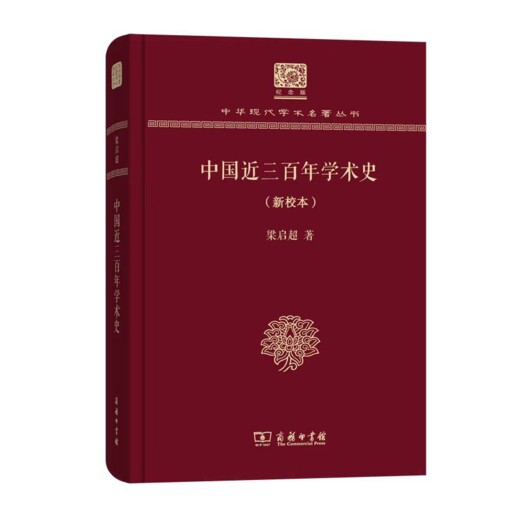
FILE PHOTO: In 1923, Liang Qichao used the term “gudianxue” (classical studies) in Intellectual History of China in the Last Three Hundred Years—one of the concept’s earliest appearances in modern Chinese academic discourse.
Since the first World Conference of Classics convened in November 2024, classical scholarship has become a prominent topic in academia, opening space for deeper theoretical reflection. We contend that, for the next stage of research in Chinese classical studies, theoretical clarification is indispensable. It requires a historical account of how classical studies emerged as a modern discipline, alongside an internal recognition of the scholarly features of the classical as the foundation of Chinese civilization. Clarifying this process and these features is essential to advancing the field.
Emergence of Chinese classical studies in modern academia
Traditional Chinese scholarship did not possess a discipline explicitly called “classical studies.” Chinese classical studies is a product of the modernization of traditional learning, and its formation may be divided broadly into three stages.
In 1923, Chinese historian and educator Liang Qichao used the term “gudianxue” (classical studies) in Intellectual History of China in the Three Hundred Years to describe evidential scholarship on institutions, nomenclature, and material culture during the Qianlong–Jiaqing period (1736–1820) of the Qing Dynasty. This was among the concept’s earliest appearances in modern Chinese academic discourse. Yet Liang’s specialized definition narrowed its scope, and the term appeared only sporadically. At the time, guoxue (national learning) remained the accepted designation for traditional scholarship.
Chinese classical studies did not truly enter the horizon of modern academic inquiry until the late 20th century. In the mid-1990s, Chinese world historians proposed advancing Chinese and Western classical studies together within comparative civilizational research. Their proposal won support from other scholars, leading to the formal articulation of the concept of “Chinese classical studies.” Research in this period was marked by comparative perspectives and approaches rooted mainly in literature and history. Scholars gave particular attention to excavated texts in reconstructing the classical tradition, identifying the period from pre-Qin (before 221 BCE) to the Han Dynasty (202 BCE–220 CE) as the field’s primary focus. This constituted the second stage in the field’s modern development.
In the 21st century, particularly over the past 15 years, Chinese classical studies has flourished and taken on new characteristics. It has become more centered on indigenous intellectual traditions, as research in literature, history, and philosophy has affirmed Chinese cultural heritage, with Confucian classics becoming a major focus. It has also become more systematic, expanding beyond textual and historical studies of the pre-Qin to Han eras toward fundamental questions of traditional Chinese civilization. It has grown more institutionalized, as disciplines including philology have actively adopted or embraced the designation “Chinese classical studies” and national scholarly associations have deepened the field’s integration into the academic system. Finally, it has become more interactive, with Western classical studies in China providing useful reference and resources for the field’s advancement.
Compared with the first stage, this period exhibits a markedly heightened self-consciousness regarding the “classical.” Compared with the second stage, its center of gravity has shifted toward transmitted texts, and the “classic” has become more prominent as the field’s principal vehicle. At the same time, the participation of multiple disciplines and methods has made the landscape more complex, raising questions over what should, and should not, count as classical studies.
As a modernized form of traditional scholarship, the century-long trajectory of Chinese classical studies, from absence to establishment, reflects an increasingly urgent search for civilization’s foundational values. It also reveals the complexity of adapting and transforming traditional learning between the ancient and the modern.
Classics, canonical texts, and political canons
Within the vast body of traditional Chinese scholarship, what exactly qualifies as classical studies? Should it simply be equated with traditional scholarship as a whole? We argue that Chinese classical studies has its own theoretical focus: the fundamental principles, values, history, and textual heritage of classical China. Its core textual corpus is canonical, and canonicity is one of the field’s defining theoretical features.
In the Chinese tradition, jing (classics) first refers to the Confucian Classics section in the traditional bibliographic classification of Confucian Classics, Histories, Masters and Philosophers, and Belles-lettres. Confucian classical learning formed the backbone of traditional scholarship. The Six Classics—Shi (The Book of Songs), Shu (The Book of Documents), Li (The Book of Rites), Yue (The Book of Music), Yi (The Book of Changes), and Chun Qiu (The Spring and Autumn Annals)—together embodied classical China’s cultural core: emotion and aspiration, sagely rulership, normative conduct, harmonization, philosophical transformation, and moral-political legitimacy. In this sense, the study of the Confucian classics, their philosophical meanings, and their historical evolution naturally forms an essential component of classical studies.
More broadly, however, the classic is not limited to Confucian scriptures or classical learning but carries a wider significance that transcends schools of thought and historical periods. The “Tianxia” Chapter in the Zhuangzi situates the Confucian classics within an all-encompassing order where “all felt their presence and operation,” arguing that Shi, Shu, Li, and Yue represent only one aspect of the Dao (Way) and must be integrated with transmitted records of antiquity and “the writings of the different schools.” Similarly, the “Treatise on Literature” in the Book of Han advanced the theory that “the various philosophical schools emerged from official institutions,” maintaining that major traditions, including Confucianism and Taoism, were offshoots of ancient governmental and ritual structures whose deeper source lay in the Zhou Dynasty (11th century–256 BCE) institutional order.
Together, the Zhuangzi and the Book of Han suggest that the principles and values underlying classical China possessed an inherent wholeness that surpassed any single school, text, or tradition. Consequently, contemporary Chinese classical studies, insofar as it seeks to elucidate these principles and values, cannot be confined to one discipline or intellectual lineage. Instead, it should bring the Confucian Classics, the Masters and Philosophers, and the Hundred Schools into a unified field of vision, mobilizing the full intellectual resources of classical China. In this sense, all classical texts that help clarify Chinese principles and values may be regarded as classics within classical studies—“texts that carry the Way” and embody the foundational principles and values of Chinese civilization.
The Shuowen Jiezi (Analytical Dictionary of Characters) defines dian (canon or classic) as “the writings of the Five Emperors.” In its original sense, a dian was not merely a book but the crystallization of an era’s political and educational order. The opening chapters of Shu, the “Canon of Yao” and the “Canon of Shun,” record the way of governance exemplified by these sage rulers. The well-known assertion in General Principles of History that “all Six Classics are history” likewise emphasizes that the Classics distilled the principles of ancient rulership. Accordingly, classical studies that synthesizes the Confucian Classics, the Masters and Philosophers, and the Hundred Schools is neither a miscellaneous encyclopedia nor a sectarian doctrine. Its central concern is the principles of order that underpinned classical China. Classical studies thus highlights a defining feature of Chinese civilization—its emphasis on the inseparability of political order and cultural cultivation—and may be understood as learning concerned with the foundations of civilization.
Canonical transformation and civilizational renewal
Classics emerge with the maturation of a civilization and evolve with its renewal. From the pre-Qin period through the Ming (1368–1644) and Qing (1644–1911) Dynasties, the Chinese canon underwent historically distinctive expansion and transformation.In his History of Classical Learning, the late Qing scholar Pi Xirui divided the evolution of Confucian scholarship into 10 eras, a scheme that concerns the fortunes of Confucian classical learning. If we focus on the classics themselves, the canonical system of classical China may be said to have undergone at least three major transformations.
The first occurred during the Western Han (202 BCE–8 CE), when the Confucian canon was formally established. Beginning with Emperor Wu, Shi, Shu, Li, Yi, and Chun Qiu entered the state educational system, with the system of erudite officials serving as their institutional vehicle of transmission. Known as “The Five Classics,” these works served both scholarship and administration, giving classical China its first stable canonical system.
The second transformation took place during the Tang (618–907) and Song (960–1279) periods. After the Han and Wei (220–266) eras, Buddhism entered China; from the Northern Song (960–1127) onward, Neo-Confucianism emerged. These profound intellectual changes, which carried China from the mid-ancient times to the early modern period, were reflected in the canonical order itself. Portions of the Five Classics increasingly became objects of specialized study, while more philosophical texts came to articulate the spirit of the age. Qian Mu famously proposed the notion of the “New Seven Classics,” consisting of The Analects, Mencius, Tao Te Ching, Zhuangzi, Near Thoughts, Instructions for Practical Living, and Platform Sutra of the Sixth Patriarch. Together, he argued, these works formed the basic canon of Chinese culture from the Tang-Song period onward, showing the extent to which Confucianism, Buddhism, and Taoism—represented by Neo-Confucianism and Chan Buddhism—collectively established a new canonical order and intellectual landscape in the early modern era.
The third transformation began in the late Qing Dynasty, when the canonical system was radically reconfigured. Educational reforms in the late Qing and early Republican (1912-49) periods abolished the privileged position of classical learning, while new intellectual resources fundamentally reshaped Chinese understandings of the world. Beginning in the 20th century, classical China’s canonical system largely lost its institutional foundations as it faced reinterpretation under new historical conditions. Yet traditional classics still participate actively in contemporary history and retain their power to move readers, testifying to the enduring vitality of classical China’s fundamental principles and to the deep connection between contemporary China and its historical traditions.
Notably, each major restructuring of the Chinese canonical system coincided with a turning point in Chinese history. The rise and decline of Han classical learning marked the transition from antiquity to the mid-ancient age; the Tang-Song transformation marked the passage from the mid-ancient to the early modern period; and the deconstruction of classical learning in the late Qing occurred at the threshold of modernity. This is no coincidence—it points to a fundamental fact: Only the spirit of an age capable of guiding history toward a higher stage can become a new canon. The emergence of new classics signals that a civilization has entered a new phase of its historical journey.
This also implies that although a canonical system may be established at the inception of a classical civilization, it can preserve its canonical status only through continuous self-renewal. The enduring value of Chinese classical civilization lies not simply in the antiquity of its classics, but in the fact that the principles and values embedded within them remain open to history and capable of renewal. The vitality of classical studies lies not only in recovering and verifying the past. More importantly, it seeks to uncover intellectual resources within the classical tradition for answering the questions of the times and explores how civilizational agency may be realized through successive historical opportunities. Cultivating such historical consciousness and recovering this agency constitute the true significance of classical studies in mediating between past and present.
Li Zhen is an associate research fellow from the Institute of Philosophy at the Chinese Academy of Social Sciences.
Editor:Yu Hui
Copyright©2023 CSSN All Rights Reserved