


Ring structure of population distribution across metropolitan areas
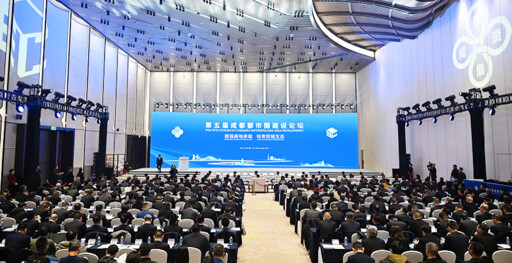
The Fifth Forum of Chengdu Metropolitan Area Development was held in Chengdu, Sichuan Province on Dec. 19, 2025. Photo: IC PHOTO
The spatial structure of population distribution constitutes a fundamental support for the development of metropolitan areas. A clear understanding of how populations are distributed within China’s metropolitan areas—and how these patterns are changing—is essential to promoting metropolitan integration and advancing regional coordination. Grounded in the advancement of a people-centered new-type urbanization strategy, this study moves beyond the spatial constraints of traditional administrative boundaries. Through international comparison, it summarizes the ring structure of population distribution and indigenous characteristics of Chinese metropolitan areas, distills their stage-specific features and representative models, and offers population-based insights relevant to Chinese modernization and metropolitan integration.
This study draws on three main data sources. These include township- and subdistrict-level population data from China’s national population censuses conducted in 2000, 2010, and 2020; district- and county-level economic and population data from successive editions of the China Statistical Yearbook as well as provincial and prefectural statistical yearbooks; and WorldPop global gridded population data. The Chinese metropolitan areas examined are Beijing, Shanghai, Guangzhou, Chongqing, Chengdu, Wuhan, Zhengzhou, and Xi’an. For international comparison, the study selects six well-known metropolitan areas: Washington, D.C., New York, London, Paris, Seoul, and Tokyo. The study finds that between 2000 and 2020, population dynamics in the sampled Chinese and international metropolitan areas demonstrated the following characteristics.
Ring-structure population density distributions more concentrated
Ring-structure population density distributions have contracted from relatively “bell-shaped” forms toward steeper “cone-shaped” forms. In both domestic and international cases, population density is generally highest at the center and declines progressively toward the periphery. The core ring, defined as the area within 0–10 km of the center, is typically a zone of intense population concentration, accounting for roughly 10% of the total metropolitan population. Over the study period, population density in the core rings of Chinese metropolitan areas continued to rise, while the “full width at half maximum” (FWHM)—used here to measure the rate of population density decline, defined as the full width of the distribution curve at half the peak height—narrowed overall. From 2000 to 2020, the average FWHM was 30.01 km in international metropolitan areas, compared with 22.26 km in Chinese areas. Consequently, the population density curves of Chinese metropolitan areas have gradually shifted from their earlier bell-shaped profiles—akin to those of their international counterparts—to markedly steeper cone-shaped forms.
Clear differences also emerge in the ratio of population density between the core ring and the 10–20 km ring. In international metropolitan areas, this ratio generally falls between 2 and 4. In China, Beijing, Shanghai, and Guangzhou exhibit ratios broadly comparable to those of international cases, while other metropolitan areas generally range from 4 to 9. This indicates a more pronounced pattern of “high central concentration with steep peripheral decline” in Chinese metropolitan areas. In terms of population share by ring, the area within 30 km remains a key zone of population agglomeration. In 2020, five of the six international metropolitan areas had between 35% and 60% of their populations within the 0–30 km ring, whereas seven of China’s eight metropolitan areas recorded corresponding shares of only 10% to 35%. Regarding growth trends, between 2000 and 2020 the population share within the 0–30 km ring declined or grew only modestly in international metropolitan areas, with rates ranging from 10.28% to 5.60%. In contrast, apart from Beijing and Shanghai—which more closely align with international patterns—Chinese metropolitan areas recorded an average growth rate as high as 54.04%, reflecting the broader trajectory of rapid urbanization since the beginning of the 21st century.
Outward population diffusion from inner rings toward periphery
Based on empirical analysis, four typical patterns of ring-structure population evolution can be identified.
Single-core concentration in the central ring: From 2000 to 2020, some metropolitan areas, including Chengdu, Wuhan, Xi’an, Zhengzhou, and Chongqing, displayed a gradient pattern, with rapid population growth in the central ring and a pronounced decline toward peripheral rings.
Population diffusion toward intermediate rings: Similar to Washington, D.C. and Seoul, population growth in the core rings of Beijing, Shanghai, and Guangzhou slowed during the study period, while new and more prominent growth peaks emerged in the intermediate 30–50 km rings, where growth rates could peak at more than 1.4 times that of the core areas. This pattern signals the expansion of a “multi-node supported” spatial population structure.
Synchronous growth across rings: New York, Paris, and London exhibit synchronous population growth across all rings, reflecting balanced development and a rebalancing of spatial structure shaped by the decentralization of jobs and housing.
Re-concentration in the core ring: The Tokyo metropolitan area, after experiencing intense monocentric concentration, suburbanization, policy-driven dispersion, and a subsequent period of stagnation accompanied by structural change, saw renewed population concentration within its core ring.
Population centers of gravity tending toward stability
Using the spatial mean center method to calculate centroid coordinates, this study examines the relationship between population and economic centers of gravity. In international metropolitan areas, population centers of gravity are more concentrated, with all six international cases located within their respective 0–30 km rings between 2000 and 2020. In China, population centers of gravity are more dispersed and display differentiated patterns. In metropolitan areas such as Wuhan, Xi’an, and Zhengzhou, population centers of gravity remain stably within their 20 km rings, reflecting typical monocentric concentration structures. Chengdu and Chongqing are also predominantly monocentric, though geographic constraints place their population centers of gravity within the 20–40 km rings. In Beijing, Shanghai, and Guangzhou, the influence of surrounding secondary population clusters shifts the population centers of gravity outward to the 20–50 km range.
Population centers of gravity in international metropolitan areas are also, on average, closer to their respective central points. Between 2000 and 2020, the average distance was 14.18 km, compared with 24.87 km in Chinese metropolitan areas. Moreover, the magnitude of centroid migration has declined over time in China, with the average movement of population centers of gravity falling from 2.78 km in 2000–2010 to 2.61 km in 2010–2020. Over the same period, international metropolitan areas maintained a relatively stable average movement distance of about 1.06 km, indicating greater spatial stability.
Notably, population and economic centers of gravity in Chinese metropolitan areas tend to be closely aligned, often located within the same or adjacent rings, with an average deviation between the two of only about 10 km. This underscores the strong spatial coupling between population agglomeration and economic activity. A corresponding decline in the population–economy spatial differentiation coefficient—from 5.28% in 2000 to 5.03% in 2020—reflects improved alignment between industrial structure, public service provision, and population distribution, as well as more effective planning guidance.
Population agglomeration patterns shifting toward polycentricity
Ring-structure population agglomeration patterns have shifted from monocentric “point-like” forms toward more polycentric, “cluster-like” configurations. Using spatial autocorrelation analysis, this study measures the degree of concentric population agglomeration and identifies major population clusters and surrounding secondary hotspots. Overall, both domestic and international metropolitan areas exhibit significant positive spatial autocorrelation in population distribution, with a “core–periphery” structure as a common feature. Moran’s I values, a measure of spatial autocorrelation, for all areas remained significantly positive throughout the study period, confirming the general tendency toward spatial population agglomeration. In 2020, in most metropolitan areas (excluding Chongqing and Zhengzhou), more than 35% of high–high clusters—areas with high values surrounded by similarly high-value areas—were located within the 0–30 km core ring, validating the broad applicability of the “core–periphery” structure at the concentric-ring scale.
Differences among metropolitan areas are nevertheless evident. Chengdu, Zhengzhou, Chongqing, Xi’an, and Wuhan exhibit numerous small, dispersed population hotspots across their metropolitan regions, forming a “point-like” pattern of development. Beijing and Tokyo, while highly concentrated in their cores, also display multiple localized clusters in the 90–120 km peripheral range, giving rise to a more polycentric “areal” development pattern. Although Moran’s I values declined in Shanghai and Guangzhou, the proportion of high–high clusters within a 150 km range exceeded 10%, higher than average levels observed in other Chinese and international metropolitan areas. Similar to Washington, D.C., New York, and Seoul, both Shanghai and Guangzhou have formed contiguous, integrated development zones around the central city, with population distributions characterized by a “clustered” spatial structure. Such patterns are typically observed in metropolitan areas located in economically developed coastal regions, where intercity linkages and clustering are more readily formed.
Policy implications
Overall, Chinese metropolitan areas remain in a stage of limited agglomeration. The 10–30 km ring is likely to emerge as a key zone for future population absorption, while coordinated development among peripheral node cities will further enhance metropolitan balance and sustainability. Whether Chinese metropolitan areas will eventually experience a repopulation of their core rings, as observed in some international cases, remains an open question. What is clear is that the 10–40 km ring is expected to be the principal zone of future population growth, a trend conducive to advancing metropolitan integration. Accordingly, future industrial layout and public service provision should adapt to align more closely with the spatiotemporal characteristics of population mobility and adopt people-centered resource allocation strategies. At the same time, planners should remain attentive to potential population growth peaks in outer rings around 90 km, ensuring timely coordination and optimization of infrastructure, industrial functions, and public services to effectively support the process of metropolitan integration.
Yin Deting (professor) and Ji Fangzhou are from the Beijing Administration Institute. Liang Chen is a senior engineer at the Beijing Institute of Surveying and Mapping. This article has been edited and excerpted from Chinese Journal of Population Science, Issue 5, 2025.
Editor:Yu Hui
Copyright©2023 CSSN All Rights Reserved