


Evolution of contemporary Chinese youth’s attitudes toward consumption
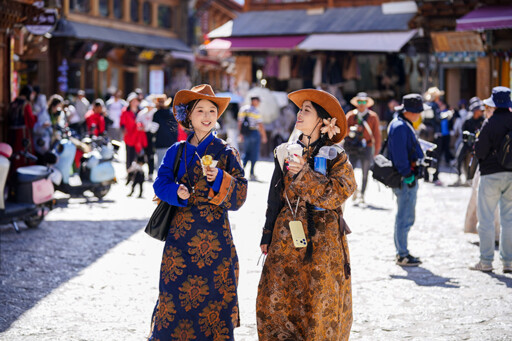
Tourists in ethnic costumes visit the old town of Dukezong in Shangri-La, Yunnan Province. Photo: IC PHOTO
Young people’s attitudes toward consumption are a concrete expression of their values in the consumption domain. Examining these attitudes offers a precise portrait of the intellectual outlook, value orientations, and socialization trajectories of contemporary youth, while also helping to build support systems for youth development and guide the upgrading of consumer culture. In the context of Chinese modernization and the coordinated development of material and cultural-ethical advancement, young people now enjoy broader scope for consumer choice, exercise significantly greater agency in consumption decision-making, and display clear intergenerational shifts in their consumer values. The deep integration of digital and intelligent technologies, the continuous emergence of new consumption scenarios, and the steady growth of cultural confidence among young people have all driven changes in their consumption motivations, demands, and choices. These changes reflect the positive intellectual outlook and value pursuits of contemporary youth, while injecting youthful momentum into the upgrading of consumption structures, the revitalization and preservation of China’s fine traditional culture, and the formation of green, low-carbon modes of production and life.
A rational transition from symbolic consumption to value-oriented consumption
Youth consumption motivations are undergoing a rational transformation guided by values. Among contemporary young people, the motivations behind consumption are shifting from outward functional satisfaction toward an inward search for meaning. Since the reform and opening up, under the influence of consumerist trends and commercial logic, some young people have treated consumption as an instrument for displaying social status and achieving social distinction, often overlooking the essential value of consumption and their own actual needs. This has led to an excessive pursuit of brand premiums and trend labels, giving rise to irrational consumption habits such as blind imitation and impulse buying. With the deepening guidance of mainstream values in the new era, youth consumption has become increasingly grounded in real needs, while its core demands have shifted toward experiential meaning-making.
Contemporary youth demonstrate rational and prudent tendencies in consumption decision-making. The establishment of rational and cautious value principles in consumer choice has interacted with the rational transformation of consumption motivations, reflecting a deeper shift in youth values from outward conspicuousness to internally grounded subjectivity. Guided by principles that prioritize utility and align quality with need, young people place greater emphasis on the functional value, experiential value, and long-term utility of consumer goods. Practices such as price comparison, product reviews, alternative consumption, and second-hand circulation have become common among young consumers, demonstrating both mature consumer judgment and a rational approach to managing wealth.
Young people’s subjectivity in consumption continues to rise. From a psychological perspective, youth consumption behavior is no longer defined by blind adherence to trends or the desire to satisfy group expectations. Instead, young people have formed a subjective consumer awareness centered on independent decision-making and individual expression, with choices more closely aligned with their own needs and value preferences. The rise of new consumption models such as rental and shared consumption has further broken with the traditional notion that “possession equals consumption.” By meeting diverse life needs through lighter, lower-cost forms of consumption, young people are reducing financial pressure while enabling the efficient reuse of idle resources. This represents an intergenerational extension of rational consumption and lays a solid foundation for cultivating a healthy consumer culture.
A hierarchical transition from material consumption to intellectual consumption
The consumption demands of contemporary youth show an intergenerational shift toward richer forms of meaning. According to Maslow’s hierarchy of needs, the evolution of individual consumption demands generally corresponds to the ascent of one’s own hierarchy of needs. Once lower-level physiological and safety-related material needs are met, the focus of consumption gradually shifts toward higher-level cultural, intellectual, and value-based needs, such as belonging, esteem, and self-actualization. At present, with the steady rise of per capita disposable income in China, young people’s survival-oriented material needs have been adequately secured. The structure of their consumption demands is moving from material needs toward cultural and intellectual needs, achieving an expansion from “functional satisfaction” to “value alignment.” This shift is not only an inevitable result of young people’s demand upgrading, pursuit of a better life, and self-development, but also an important manifestation of the optimization and upgrading of social consumption structures.
Contemporary youth consumption in the cultural and intellectual sphere is becoming more diversified and higher in quality. The content of young people’s cultural and intellectual consumption continues to expand, while consumption scenarios are also broadening, forming a pattern that combines subjectivity with sociality. In terms of composition, paid knowledge services, skills training, cultural tourism experiences, and cultural and creative products have become core components of youth cultural and intellectual consumption. Young people are willing to invest in human capital appreciation, emotional resonance, and cultural experience, enriching their inner world, enhancing their overall literacy, and realizing self-worth through diverse consumption practices. Their strong demand for cultural and intellectual consumption has directly driven the expansion of the paid knowledge industry, innovation in the supply of cultural and creative products, and the development of niche interest communities. This consumption orientation is both a concrete expression of young people’s aspirations for a better life and a reflection of their developmental logic of pursuing self-improvement and self-realization, making it an important pathway for the substantive growth of contemporary youth.
Youth cultural and intellectual consumption fulfills the dual functions of value empowerment and cultural immersion. Through consumption practices, young people inherit China’s fine traditional culture and engage with diverse cultural achievements, undergoing a cognitive transformation that moves from aesthetic cultivation and the reinforcement of cultural identity to the elevation of their inner world. In this process, they effectively accumulate cultural capital. In the new era, young people integrate cultural and intellectual consumption with personal growth and cultural inheritance, participating in cultural innovation through their consumption practices. By leveraging digital and intelligent technologies as well as creative design, they infuse traditional culture into everyday consumption scenarios, promoting the creative transformation and innovative development of China’s fine traditional culture.
A value-based transition from individual consumption to responsible consumption
Consumption choices reflect a responsibility-oriented value orientation. Responsible consumption has emerged as an important trend in the consumption behavior of contemporary youth, as consumers link the satisfaction of individual utility with social responsibility and actively incorporate public value considerations into their consumption decisions. While meeting their own consumption needs, they also take into account public interests such as ecological and social well-being. Under the combined influence of ecological civilization construction, the cultivation of cultural confidence, and social progress, contemporary youth attitudes toward consumption have undergone a value-based elevation—from individual consumption guided by a focus on utility to responsible consumption that balances personal needs with public interests. Young people are actively integrating their personal consumption practices with national development, social progress, and ecological protection, fully demonstrating their sense of social responsibility and their role in the times.
The practice of cultural responsibility constitutes a core dimension of responsible consumption. With the enhancement of China’s comprehensive national strength and the advancement of the strategy to strengthen China’s cultural sector, young people’s cultural confidence has increased significantly. They have moved away from blind admiration for overseas brands and have instead begun actively choosing guochao (China-chic) products, intangible cultural heritage innovations, and local brands. Through the value expressions embedded in consumer choice, they practice cultural identity and promote the dissemination and development of local culture. In this sense, young people are both participants in the guochao consumption wave and driving forces behind cultural innovation.
The practice of ecological responsibility is a vital manifestation of responsible consumption among young people. Young people increasingly embrace green and low-carbon consumer values, a shift that contributes to ecological and environmental protection while also supporting the realization of the “dual carbon” goals. Guided by the principles of ecological civilization and immersed in a social atmosphere that encourages green consumption, contemporary youth actively internalize green and low-carbon values as part of their consumer awareness and externalize them through consumer behavior. In daily life, they prioritize eco-friendly materials, energy-efficient products, and minimal packaging; participate in the circulation of idle items, upcycling, and waste sorting; reject excessive consumption and extravagance; and practice a simple, moderate, green, and low-carbon lifestyle.
The positive evolution of youth attitudes toward consumption in the direction of rationality, cultural and intellectual enrichment, and responsibility embodies a renewed understanding of the essence of consumption and life. Rooted in internalized values, oriented toward intellectual growth, and reflective of social commitment, contemporary youth consumption is driven by more sustainable momentum. The evolution of youth attitudes toward consumption is a realistic expression of consumption returning to the fulfillment of genuine needs, the strengthening of interpersonal connections, and the promotion of people’s all-round development. It also stands as a distinct marker of the synergy between consumption structure upgrading and the realization of a better life during the stage of high-quality development. Providing positive guidance for youth attitudes toward consumption can help young people live with greater composure in an age of material abundance, while supporting the upgrading of consumer culture, ecological civilization construction, and the advancement of the strategy to build China into a culturally strong nation.
He Mu is a research fellow from the School of Marxism at the Chongqing University of Technology.
Editor:Yu Hui
Copyright©2023 CSSN All Rights Reserved