


Behind the ‘fall’: A field investigation of steroid abuse in bodybuilding
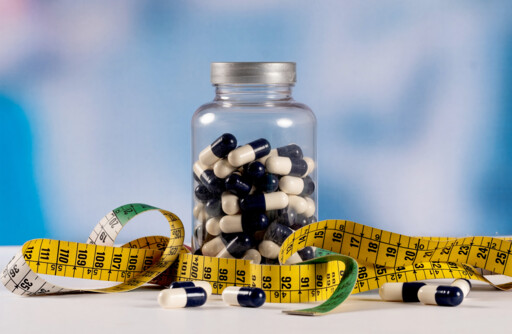
The pursuit of a perfect physique invites reflection on what constitutes a good life. Photo: VCG
“Another rising bodybuilding star has passed away.”
In recent years, reports of the premature deaths of promising bodybuilders have repeatedly appeared on short-video platforms, social media accounts, and even in official news outlets. Such reports typically prompt a brief outpouring of grief before public attention quickly fades. In the comment sections, familiar explanations emerge: “They were too disciplined,” or “Their training was so intense that their bodies simply could not cope.” Within fitness communities, however, the discussion often takes a different turn: Were the drugs counterfeit? Were the dosages recklessly high? The eventual verdict is frequently the same—the deceased was simply “reckless.”
Over the past 18 months, our fieldwork has taken us to commercial gyms and hardcore bodybuilding facilities across China, while we have also followed several online communities. Our research explores the everyday practices surrounding anabolic-androgenic steroid (AAS) use in urban fitness communities and the underlying logic that shapes them. The evidence consistently points to one central element: anabolic steroids, exogenous hormones capable of dramatically accelerating muscle growth. Steroid use is often described as a “deal with the devil,” driven by individual greed. Yet what we encountered was an elaborate form of “body engineering” sustained by supply chains, technical protocols, and moral hierarchies, rather than a series of isolated, reckless experiments. Through steroid use, individuals transform their bodies into ongoing projects, while systemic risks ultimately become personal misfortunes.
This raises several pressing questions. At a time when public awareness of health and fitness is rapidly expanding, why do so many people willingly expose themselves to such risks? How do users obtain, understand, and administer substances that exist at the margins of regulatory frameworks? And how do they justify their practices, manage the associated risks, and respond to public moral scrutiny?
The body as an experimental site
Inside the refrigerator of a man revered within the steroid-using community as a “grandmaster,” we found numerous glass vials bearing labels in different languages, rather than conventional sports supplements. The substances in these vials can often be traced to chemical manufacturers around the world, with India playing a particularly significant role. Underground laboratories also form part of this network and may be concealed in industrial parks or suburban residential buildings. Those responsible for preparing the drugs are known as “brewers.” Through relatively simple processing techniques, raw materials are esterified, dissolved in sterilized carrier oils, and eventually bottled and labeled. The countries printed on the labels—Germany, the United States, or Turkey—often bear little relation to the actual places of production. Uncertain drug concentrations, possible bacterial contamination, and the presence of heavy metals therefore pose substantial risks to users.
These substances, which have not been approved or verified by regulatory authorities, are subjected to countless informal pharmacological experiments within underground communities, where practices are continually revised and refined. Particularly influential are the “experimental reports” uploaded by thousands of ordinary users. These records document drug cycles, subjective experiences, side effects, and blood-test results, collectively forming a vast and constantly evolving repository of pharmacological knowledge. Yet the driving principle behind these experiments has shifted away from medicine’s ethical commitment to “safety first” toward a utilitarian pursuit of physiological limits. The central question becomes: How high can doses go, and how much benefit can they deliver, before the body breaks down? Every apparently successful cycle reinforces the perceived credibility of this experiential knowledge and encourages further, often more aggressive experimentation.
The fatal weakness of this form of “empirical science” is that it rests on countless experiments conducted on individual bodies without genuine medical supervision.
Redefining natural bodybuilding
For competitive bodybuilders and fitness coaches, placing highly in bodybuilding competitions can be critically important. Even at amateur events, however, participants must contend with anti-doping tests, usually urine tests. In practice, the effectiveness of these tests is constrained by detection windows, creating opportunities for strategic drug use. For those aspiring to compete in natural bodybuilding events, steroid use can therefore become a complicated exercise in planning backward from anticipated testing dates.
In this context, the meaning of “natural” undergoes a fundamental transformation. Rather than referring to an authentic body untouched by technological intervention, it is redefined in technical terms as a physiological state in which particular exogenous substances cannot be detected at the sensitivity thresholds of current testing methods.
Moral hierarchies and the transfer of risk
For steroid users, these complex practices must ultimately be incorporated into a narrative that provides meaning, alleviates anxiety, and counters social stigma. Our fieldwork revealed a highly developed set of narratives within steroid-using communities, organized around two central principles: the individualization of responsibility and the moralization of technical expertise.
Steroid use offers a revealing lens through which to examine the complexities of individual life in a performance-oriented society. In a social environment that celebrates competition, visible achievements, and continuous self-optimization, the body is increasingly perceived as one of the last domains over which individuals can exercise direct control. Participants therefore develop elaborate techniques of “risk governance” in an attempt to establish a sense of control in an uncertain world. Yet in seeking to transcend the limitations of “nature,” users become more deeply embedded in opaque networks marked by uncertainty and even fraud. While claiming to manage risk through “rational science,” they subject their bodies to forms of self-experimentation lacking fundamental ethical safeguards. The “scientific knowledge” on which they rely offers a sense of empowerment and community belonging, yet also sets an intricate trap: Even as it appears to illuminate the path forward, it binds individuals ever more tightly to systemic risks.
When tragedy strikes, the community’s established discourse quickly attributes the outcome to individual “operational errors.” This explanation obscures the structural conditions that make such tragedies possible, including the unmanageable nature of global gray-market supply chains, the drugs’ inherent toxicity, and society’s celebration of particular bodily ideals.
Body anxiety among urban youth
Such tragedies are increasingly occurring beyond professional bodybuilding circles.
“This is a big city. Everyone has an idea of what a man should look like.” A muscular physique is often associated with discipline, reliability, and the ability to get things done. By contrast, excess body fat or visible exhaustion may be interpreted as signs of laziness, a lack of self-control, or an unappealing appearance. During interviews, when we raised the issue of weight gain associated with overwork, respondents frequently insisted: “Overwork may be unavoidable, but weight gain can still be controlled.” Ironically, this conviction is sometimes sustained through steroid use. What was once primarily a specialized tool within bodybuilding circles is increasingly becoming a way for some young urban residents to shape their professional image and gain a competitive edge at work.
Our field investigation of steroid use suggests that moral condemnation of supposedly “ignorant” individuals is insufficient. What demands closer scrutiny is the configuration of power that drives individuals to transform their bodies into projects of endless optimization. In an era dominated by the worship of efficiency and visible results, have we forgotten the vulnerability, complexity, and intrinsic value of the human body in our pursuit of becoming “stronger” and “more attractive”? The demand generated by the idealization of the “perfect physique” is sustained through opaque global networks of capital and chemical production, yet the heaviest risks and costs are ultimately borne by individual bodies, which become objects of active self-transformation, investment, and optimization. As the slogan “discipline brings freedom” echoes through gyms, the body increasingly serves as a visible measure of individual willpower, character, and even personal worth. Steroid use represents an extreme technological manifestation of this logic. The chemical storm quietly gathering within the temple of the human body warns of risks that extend beyond individual users’ health, raising fundamental questions about how we should coexist with technology, what constitutes a good life, and ultimately how human beings ought to live together.
Gao Jiacheng is secretary-general of the Applied Anthropology Committee of the Shanghai Society of Anthropology; Pan Tianshu is a professor from the School of Social Development and Public Policy at Fudan University.
Editor:Yu Hui
Copyright©2026 CSSN All Rights Reserved