
. > TOP STORIES
Experts seek new engines for Beijing’s development
Author : WEI SIYU Source : Chinese Social Sciences Today 2021-03-05
The 14th Five-Year Plan (2021–2025) period marks an important turning point in China’s social and economic development. As the capital, concepts and actions which drive Beijing’s development will be exemplary throughout the country.
Shen Tiyan, deputy director of the Beijing Development Institute at Peking University, said that the capital’s economic development should focus on the following four points in the future. First, under the premise of decentralizing Beijing’s non-capital functions, the city needs to further enhance its economic competitiveness and build a world-class industrial cluster. It is essential to achieve high-quality development while reducing volume. In addition, it is urgent for China to pioneer science and technology innovation against the background of a relatively shrinking and aging population. Moreover, it is necessary to achieve a balance between financing and taxation in the city.
The driving force of a city’s development is ultimately the economy, said Wang Kai, president of the China Academy of Urban Planning and Design. As such, in the process of converting driving forces, Beijing must first of all foster multiple functional centers, develop new suburban areas that integrate industries and urban functions, and strengthen new driving forces in the central city.
In addition, it is necessary to increase investment in innovation to form a diversified and rich innovation ecosystem. Moreover, Wang suggested designing and constructing a national science and technology innovation center in the larger Beijing-Tianjin-Hebei region, and gathering development momentum in Beijing, Tianjin, and Hebei to cultivate national science and technology innovation.
As the technological innovation centers, cities play an important role in the global innovation network, affecting the flow and allocation of global innovation elements. Li Junkai, director of the international cooperation department at Beijing Academy of Science and Technology, said that China has elevated technological innovation to an important strategic position, and is now home to the most complete industrial chain and the largest domestic market in the world.
Looking to the future, it is imperative to prioritize basic and scientific research on key core technologies, while focusing on reform of the scientific and technological system, Li said. Central cities need to deliver in terms of influencing and leading scientific innovation, and cultivating innovation and entrepreneurship ecology to open up the innovation chain, industrial chain, and value chain. In addition, enterprises need to embrace their role as the main players in scientific and technological innovation. It is necessary to strengthen the government’s support for enterprises’ R&D innovation, so as to provide policy guarantees and infrastructure for optimizing the enterprise innovation environment, thus establishing a mechanism to create synergy through the joint efforts of enterprises, universities, and research institutes.
“Moreover, we need to focus on optimizing the environment for the import and growth of scientific research talent, and foster innovation-friendly circumstances for them,” Li continued. He suggested strengthening cooperation with top international scientific research institutions, and optimizing talent import plans. It is also important to establish a platform for schools and enterprises to exchange information and cooperate, improve communication efficiency, and determine equity after the application of scientific research.
Beijing has always prioritized fostering high-grade, precise, and advanced industries as an important strategy for the capital’s economic development. Among them, “high-grade” entails industries that can achieve rapid growth and bring strong development potential, “precise” cultivates top enterprises with core competitiveness and important intellectual property rights, and “advanced” industries undertake major national strategic projects and develop cutting-edge science and technology according to international standards.
In the future, Shen said that it is necessary to further realize strategies targeting industrial clusters and co-existence, and create a high-quality business environment and first-class industrial clusters. It is important to focus on the modernization of the industrial chain, while striving to enhance the capital’s core competitiveness.


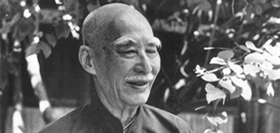
Ye Shengtao made Chinese fairy tales from a wilderness
Ye Shengtao (1894–1988) created the first collection of fairy tales in the history of Chinese children’s literature...
>> Read More




-
How northern ethnicities integrated into Chinese nation
2023-09-18
-
Mogao caves
2023-09-12
-
Mogao Grottoes as ‘a place of pilgrimage’
2023-09-12
-
Time-honored architectural traditions in China
2023-08-29
-
Disentangling the civilizational evolution of China
2023-08-28
-
AI ethics in science fiction
2023-08-23
 2011-2013 by www.cssn.cn. All Rights Reserved