
. > TOP STORIES
China targets GDP growth at over 6% in 2021
Author : ZHONG ZHE Source : Chinese Social Sciences Today 2021-03-15
China aims to expand its economy by over 6% in 2021, building on strong tailwinds from success in containing COVID-19, as lawmakers gather in Beijing to map out priorities for high-quality development.
The gross domestic product (GDP) target is one of the many key goals laid out in a government work report delivered by Premier Li Keqiang to the national legislature, which began its annual session on Mar. 5.
This year, the country aims to create more than 11 million new urban jobs, lower the deficit-to-GDP ratio to 3.2%, and expand domestic demand and effective investment, which are expected to restore the economy firmly back to pre-pandemic vibrancy—China's GDP growth rate was 6% in 2019.
China set no specific GDP target for 2020 due to huge uncertainties caused by COVID-19. Instead, the country zeroed in on the elimination of absolute poverty and building a moderately prosperous society in all respects.
Setting a growth target of more than 6% reflects the Chinese government's confidence in the development of 2021 and the near future, said Zhang Yuyan, a member of the National Committee of the Chinese People's Political Consultative Conference and director of the Institute of World Economics and Politics at the Chinese Academy of Social Sciences (CASS).
Economic growth is closely linked with macroeconomic indicators such as employment, prices, and foreign trade. Each percentage point of China's economic growth can drive nearly two million jobs, and a growth rate of 6% can help achieve the goal of creating more than 11 million new urban jobs. Taking into account factors such as the ongoing global pandemic, the rise of trade protectionism, rising inflation expectations in the United States and its international transmission, the target of over 6% is set based on scientific considerations, Zhang said, noting that it is a practical and feasible growth target.
The government work report mentions maintaining the continuity, stability and sustainability of macroeconomic policies. Zheng Gongcheng, a member of the Standing Committee of the National People's Congress (NPC) and president of the China Association of Social Security, said that the fundamentals for supporting China's economic development have not changed, although the impact of the pandemic continues, and there are increasing uncertainties in the international situation. Maintaining macro-policies in 2021 is a rational choice. At the same time, it should be noted that this is not a simple continuation of previous policies, but emphasizes the stability of macroeconomic policies. Specific policies still need to be adjusted with time, to more accurately promote the healthy and sustained progress of the entire economy and society toward the predetermined goals.
The report makes arrangements for the comprehensive implementation of the rural vitalization strategy in 2021, and puts forward specific measures for consolidating and expanding poverty alleviation achievements to effectively align with rural vitalization, improving the ability to guarantee the supply of food and important agricultural products, and solidly advancing rural reform and rural construction.
Wei Houkai, an NPC deputy and director of the Rural Development Institute at CASS, said that with absolute poverty eradicated, the focus of the work relating to agriculture, rural areas, and rural people has undergone a historic shift, from poverty alleviation to comprehensive promotion of rural vitalization. In this process, we must facilitate the transformation of development concepts, poverty reduction strategies, work systems, development momentum, and government policies.
The report proposes to accelerate the development of rural industries. In Wei's view, rural industries’ development cannot copy the ideas of urban development. This growth must be based on agriculture, rural areas, and follow the laws of industrial development. Wei specifically mentioned that the development of rural industries must be tailored to local conditions, and policies need to be implemented in accordance with specific villages.
Zheng said that the series of work arrangements made in the report around people's livelihood issues reflect the development orientation of further improving people's quality of life and promoting a fairer and more inclusive social security system. Regarding the report’s proposal to develop an action plan for promoting shared prosperity, he said that after eliminating absolute poverty and overall regional poverty, “we are standing at a new starting point for building a moderately prosperous society in all respects, striding forward towards shared prosperity.”


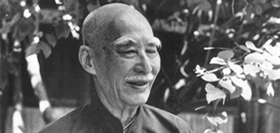
Ye Shengtao made Chinese fairy tales from a wilderness
Ye Shengtao (1894–1988) created the first collection of fairy tales in the history of Chinese children’s literature...
>> Read More






-
How northern ethnicities integrated into Chinese nation
2023-09-18
-
Mogao caves
2023-09-12
-
Mogao Grottoes as ‘a place of pilgrimage’
2023-09-12
-
Time-honored architectural traditions in China
2023-08-29
-
Disentangling the civilizational evolution of China
2023-08-28
-
AI ethics in science fiction
2023-08-23
 2011-2013 by www.cssn.cn. All Rights Reserved