


15th FYP to cement basis for socialist modernization
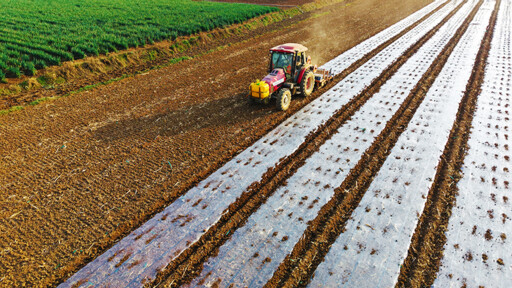
A smart tractor performs multiple tasks in one pass, including ridging, trenching, and covering with plastic film, at a village in Henan Province, on Dec. 7, exemplifying modern agriculture. Photo: IC PHOTO
The Recommendations of the CPC Central Committee for Formulating the 15th Five-Year Plan for National Economic and Social Development, adopted at the recently concluded Fourth Plenary Session of the 20th CPC Central Committee, set out a blueprint for China’s development during the 15th Five-Year Plan period (FYP, 2026–30). Michael Dunford, an expert long devoted to China studies, emeritus professor at the University of Sussex in the United Kingdom, and visiting professor at the Institute of Geographical Sciences and Natural Resources Research under the Chinese Academy of Sciences, recently told CSST that the 14th FYP (2021–25), together with the earlier 13th FYP (2016–20), witnessed the takeoff of indigenous “Made-in-China” innovation and industrial development. This process has enabled China to emerge as a world leader in new energy, lithium batteries, electric vehicles, robotics, and artificial intelligence, while also modernizing traditional industries and making them greener and more digital. These two plans, along with the 15th FYP, will, in his view, make important contributions to China’s goal of basically achieving socialist modernization by 2035.
Pursuing high-quality development
During the fourth CPC plenum, more than 300 reform tasks were laid out for the 15th FYP. Dunford noted that, in light of a turbulent international context and profound changes unseen in a century, the 15th FYP dialectically combines several key aspects.
The first, he explained, is to enhance economic, scientific, and technological capabilities and self-reliance, with an emphasis on the real economy across the board, including the development of new quality productive forces; the continued transformation of traditional industries such as chemicals, machinery, and shipbuilding; modern agriculture and modern infrastructure; and the fourth industrial revolution involving new energy, new materials, aerospace and drone technologies, and more. Second, it aims to develop a larger, more robust, and more integrated domestic market while further advancing opening up and strengthening relations with the Global South. Third, efforts will be made to secure equitable increases in real incomes and improve the material, ecological, and spiritual quality of life in both rural and urban areas, including through rural revitalization, urban-rural integration, new-type urbanization, and better public services including health and education.
According to Dunford, agriculture, energy, and infrastructure—together with critical services such as health, education, and culture—are the core drivers of people’s livelihoods and quality of life, as reflected in rural revitalization, new-type urbanization, and ecological modernization. Activities such as distribution, finance, insurance, and law would also support the provision of real goods and services, where they play vital supportive roles.
High rates of investment contribute significantly to improving people’s livelihoods, he added. The rate of economic growth is closely associated with the share of net investment in GDP, as net investment increases productive capacity and the diffusion of ideas, technologies, goods, and services.
“In China, the ability to pursue long-term plans, to advance patient, long-term finance and ensure high rates of investment along with the consequent development of a strong and increasingly integrated national (and international) market are among the most important drivers of the growth of GDP, productivity, and the quality of the productive forces, and are the main drivers of strong increases in real incomes, consumption, and living standards,” Dunford said.
Distinctive FYP system
In Dunford’s view, the system of five-year and other plans is one of the major drivers of China’s remarkable progress and one of the main characteristics of the socialist market economy.
He drew a distinction between market-rational and developmental- or plan-rational states. The former concerns itself with rules and procedures but not with substantive matters—what is done or provided and what is not—so that resources are allocated almost solely according to ability to pay and private returns on investment. The latter engages in extensive consultation to identify substantive, strategic economic and social development goals and targets that improve people’s livelihoods, and employs market, financial, and regulatory instruments to allocate resources and investments in ways that ensure key targets related to economic and social modernization are achieved.
In setting medium-term targets, Dunford continued, China’s FYPs also reduce uncertainty about the future and provide clearer goals and the steps needed to ensure greater self-reliance.
He pointed out that other countries such as France and South Korea also prepare five-year plans. China’s model differs in that it emerges out of widespread consultation, involves extensive coordination, and is not confined to narrowly economic goals.
“China has adopted a responsible path,” Dunford stated. “For developing countries there is an energy dilemma: Drastic reductions in carbon emissions must be reconciled with energy security and their development needs. China recognizes this dilemma, advocates a mitigation-adaptation strategy, and explores multi-level plan-rational ecological modernization paths. As such there is much for other countries to learn.”
Editor:Yu Hui
Copyright©2023 CSSN All Rights Reserved