


Top 10 keywords in overseas China studies for 2025
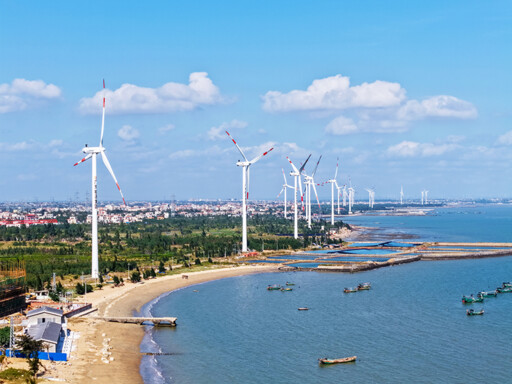
An offshore wind farm in Xuwen County, Zhanjiang City, Guangdong Province, Dec. 24, 2025 Photo: IC PHOTO
In 2025, changes unseen in a century continued to accelerate worldwide, becoming ever more closely intertwined with China’s steady development and positioning China studies as a key nexus of international interdisciplinary dialogue. To capture this academic panorama, CSST examined highly cited humanities and social science papers published in 2025 in the Web of Science Core Collection, using “China” as the author keyword. Word frequency analysis of 615 articles identified 10 core themes: green development, the platform economy, global governance, corporate social responsibility (CSR), soft power, the Belt and Road Initiative (BRI), intergenerational relationships, the labor market, urban development, and financial markets.
Behind these keywords lies an extensive international network of academic collaboration. Researchers from the United States, Australia, the United Kingdom, Canada, Russia, South Korea, Germany, France, Spain, the Netherlands, Oman, Saudi Arabia, Malaysia, and other regions contribute intersecting perspectives. In terms of disciplinary distribution, economics occupies a central position, reflecting sustained international scholarly attention to China’s economic issues. The participation of sociology, political science, management studies, and related fields has further shaped an analytical framework that integrates macro- and micro-level approaches. With regard to collaborative structure, the network exhibits broad openness and low concentration: Transnational cooperation has become the norm, with no single institution or individual exercising dominance. This indicates that China studies has transcended geographic and disciplinary boundaries, evolving into an open academic dialogue space that links the Global South with diverse civilizations.
Green development
The international academic community widely recognizes that China’s green development reflects the policy implementation capacity of a “developmental state,” offering valuable referential experience for other countries grappling with climate challenges. It also serves as a critical point of departure for understanding China’s broader transition toward sustainable development. Empirical research based on provincial panel data from 2013 to 2022 shows that environmental protection tax reform has significantly improved green total factor productivity in pilot areas, with policy effects strengthening over time. Another study highlights the “greening” of the People’s Bank of China, noting that it is the first among major global central banks to systematically integrate green finance into its policy framework, demonstrating forward-looking leadership.
Platform economy
The platform economy has become a core pillar of China’s digital economy, distinguished by its vast scale, technological innovation, and distinctive governance model. In 2025, overseas scholars examined the underlying logic of China’s platform economy from a political-economic perspective, viewing platforms not only as critical commercial infrastructure but also as vehicles for the country’s modernization drive. While adopting technological paradigms from the global digital economy, China has also reshaped its developmental trajectory through regulatory frameworks. Empirical research shows that platform companies regard platforms as integral to their daily lives, while simultaneously acknowledging their “replaceability.” This dual perception captures both the dynamism of the digital economy and the adaptive strategies of individuals operating within a digital paradigm jointly shaped by the state and capital.
Global governance
As China’s composite national strength continues to rise, the pathways and roles of its participation in global governance have become a central concern in international scholarship. Overseas research published in 2025 indicates that the Chinese academic community has developed an interdisciplinary analytical framework in the field of ocean governance, moving beyond traditional sea power–centered perspectives. This work highlights the structural limitations of the existing maritime order in adequately incorporating the interests of developing countries. Another study notes that China is systematically reshaping the landscape of international development cooperation through initiatives such as BRICS expansion, the BRI, and the Global Development Initiative. These efforts aim to expand the voice of Global South countries and promote a paradigm shift in global development from unipolar dominance toward pluralistic coexistence.
CSR
International academia has observed that Chinese enterprises have developed a distinct “parallel overseas CSR governance system.” This system adopts differentiated strategies according to the degree of alignment between specific issues and domestic or international norms, as well as the legitimacy of international institutions, and other factors, reflecting a balance between principled commitments and practical flexibility. Research indicates that internal corporate governance centered on CSR strategies is a key mechanism driving the environmental, social, and governance performance of Chinese enterprises, with state-owned equity characteristics and environmental regulatory policies exerting significant moderating effects. In addition, some research suggests that proactive corporate environmental engagement can generate a clear “risk-mitigating” effect, effectively reducing the likelihood of environmental litigation.
Soft power
In 2025, overseas scholars observed that China’s soft power development has shifted from traditional cultural exports toward a more multifaceted “digital + grassroots” approach. Emerging carriers such as e-sports and short videos have made cultural dissemination more immersive. By supporting games such as Honor of Kings and Black Myth: Wukong, which incorporate traditional cultural elements, the Chinese government has leveraged their appeal, durability, and broad reach to advance immersive and popular forms of cultural diplomacy. At the same time, foreign content creators sharing their travel experiences in China have presented the country’s modern outlook, traditional culture, and everyday life, effectively enhancing overseas audiences’ multidimensional understanding of China. This has opened new avenues for people-to-people diplomacy and produced notable cross-cultural communication outcomes.
BRI
Guided by the principles of extensive consultation, joint contribution, and shared benefits, the BRI offers significant analytical value for research on innovative models of global development cooperation. Overseas research published in 2025 indicates that BRI-related investments, by strengthening trade connectivity and regional production linkages, have not only propelled Chinese industries toward higher value-added segments of the global value chain but also facilitated industrial upgrading in partner countries. Regions including Southeast Asia and Africa, in particular, have seen infrastructure connectivity significantly reduce trade costs and promote regional industrial agglomeration. Moreover, third-party market cooperation models have opened new pathways for non-Chinese enterprises to participate in projects; through intergovernmental policy coordination and project alignment, these arrangements facilitate collaboration between such enterprises and their Chinese counterparts in third-party markets.
Intergenerational relationships
In the context of concurrent urbanization, low birth rates, and population aging, intergenerational relationships in Chinese families exhibit distinctive characteristics. Overseas research reveals that the close intergenerational collaboration observed in China represents an adaptive strategy through which families exercise agency in social contexts marked by low fertility and high female labor force participation. Some scholars have proposed the concept of “paradoxical integration,” whereby grandparents, through cross-regional caregiving for grandchildren, integrate rural and urban settings, work and caregiving responsibilities, and complex emotional dynamics. This form of family collaboration combines structural stability with practical adaptability.
Labor market
The vast scale and ongoing structural transformation of China’s labor market remain a central lens through which overseas scholars examine the country’s economic and social changes. In 2025, international research paid particular attention to policy effects and gender disparities within China’s labor market. One simulation study on social security policy constructs a dynamic model incorporating human capital accumulation and intergenerational care, finding that raising the social security eligibility age for urban women—while encouraging labor supply among older women—could reduce the availability of grandparental care and, in turn, constrain employment opportunities for younger, less-skilled mothers. This finding highlights the complex cross-generational effects of labor market policy and offers empirical support for the coordinated design of more gender-equal and family-friendly social policies.
Urban development
China’s urbanization process has shifted from scale expansion toward quality enhancement, with practices in refined governance, policy experimentation, and spatial restructuring offering distinctive case studies for global urban research. In 2025, overseas academics examined Beijing’s community planner system as an innovative governance model, concluding that community planners primarily serve governmental objectives by facilitating policy implementation, mediating resident conflicts, and alleviating governance pressures. A study on carbon reduction policy experiments in five Chinese cities from 2010 to 2015 reveals that political leadership and policy consistency are critical to sustaining long-term attention to, and resource allocation for, decarbonization efforts.
Financial markets
China’s financial governance combines market-oriented principles with distinctive institutional features, offering unique insights into global financial stability and sustainable development. In 2025, international academia focused on the complex interactions among market mechanisms, corporate behavior, and macroeconomic policies in China, with environmental, social, and governance (ESG) issues emerging as a central concern. Empirical research indicates that robust ESG practices can effectively reduce corporate stock price crash risk and financing costs, although this effect is significantly moderated by the intensity of financial regulation and divergence in ESG ratings. Another study indicates that corporate digital transformation significantly lowers stock price crash risk, an effect particularly pronounced in labor- and capital-intensive industries and further amplified within the new quality productive forces framework.
Conclusion
Overseas studies on China in 2025 offer new perspectives and case studies on globally relevant issues such as modernization, sustainable development, and global governance. Many scholars have sought to distill concepts and construct analytical frameworks from China’s experiences in order to promote greater diversity within the global humanities and social sciences knowledge system. These efforts not only lay academic foundations for the international community’s understanding of China but also help build bridges for dialogue between Chinese and overseas academia. In interpreting China, overseas scholars are also reexamining their own assumptions; and in responding to questions about China, the global academic community is rekindling its imagination.
Editor:Yu Hui
Copyright©2023 CSSN All Rights Reserved