


Academics envision cultural development for 15th FYP
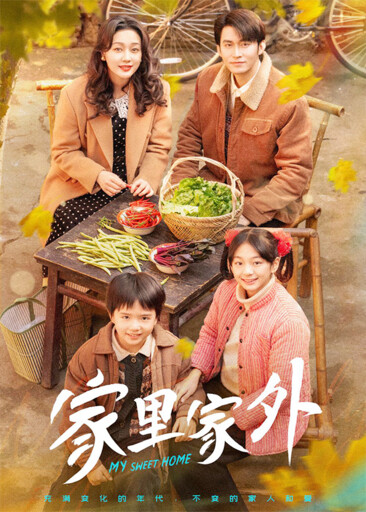
FILE PHOTO: The micro-drama My Sweet Home, which premiered on March 14, 2025, was selected for the Outstanding Micro-Drama Creation Support Program by the Publicity Department of the Communist Party of China in October 2025.
The draft outline of the 15th Five-Year Plan (FYP, 2026–30) for national economic and social development, released during the 2026 National People’s Congress (NPC) and the Chinese People’s Political Consultative Conference (CPPCC)—collectively known as the “Two Sessions”—devotes a full chapter to “inspiring the cultural creativity of the entire nation and fostering a thriving socialist culture.” The emphasis underscores the growing centrality of cultural development within the Chinese modernization drive, prompting extensive resonance and reflection among NPC deputies and CPPCC members from the social sciences community, and other scholars.
In interviews with CSST, many academics stressed that on the new journey toward building a modern socialist country in all respects, culture functions not only as a spiritual pillar but also as a profound driving force for national rejuvenation. To foster a thriving socialist culture, they noted, it is essential to uphold fundamental principles and break new ground, continually energizing the nation’s creative vitality under the guidance of Xi Jinping Thought on Culture.
Culture underpinning Chinese modernization
NPC deputies and CPPCC members from the social sciences community and other scholars widely agree that cultural development during the 15th FYP period will provide multifaceted support for advancing Chinese modernization. Ouyang Qiansen, an NPC deputy and chairman of the Guizhou Provincial Federation of Literary and Art Circles, said that cultural innovation is deeply rooted in a thorough understanding of one’s own cultural traditions and their creative transformation.
“The essence of cultural development lies in shaping the national spiritual character for the new era,” said Shao Li, an NPC deputy and chairwoman of the Henan Writers Association. Cultural development, Shao added, offers a crucial pathway for the well-rounded development of individuals and serves as a fundamental guarantee for establishing the subjectivity of Chinese culture and strengthening the nation’s cultural soft power.
Zhang Jijiao, a CPPCC member and research fellow from the Institute of Ethnology and Anthropology at the Chinese Academy of Social Sciences (CASS), observed that the draft’s arrangements focus on the creative transformation and innovative development of China’s fine traditional culture, with the aim of making culture a stronger spiritual foundation for Chinese modernization.
In the view of Zhang Yiwu, a CPPCC member and professor at Peking University, culture is not only a vital component of Chinese modernization but also a catalyst for technological advancement to foster new forms of cultural industries, and thereby serves as a new engine for economic growth and social development.
Jiang Yajun, a CPPCC member and former vice president of Xi’an International Studies University, emphasized that fostering a thriving socialist culture requires drawing lessons from history while constructing a narrative system that reflects Chinese characteristics and engaging in dialogue with the wider world. In his view, this approach can organically integrate the Chinese concept of Hehe (harmony and unity) with the shared values of humanity.
Zheng Chongxuan, deputy director of the Institute of Literature at the Shanghai Academy of Social Sciences, further noted that inspiring cultural creativity ultimately aims to provide Chinese modernization with a deeper spiritual impetus and a distinct cultural identity.
The draft also calls for extending the reach and appeal of Chinese civilization. Chen Xia, a CPPCC member and research fellow from the Institute of Philosophy at CASS, explained that the word “extending” signals a pivotal transition in cultural communication—from quantitative expansion to qualitative improvement—with greater emphasis on the depth, breadth, and effectiveness of outreach.
Drawing on her professional experience, Li Mei, a CPPCC member and president of the Shaanxi Opera Research Institute, suggested tapping into the profound heritage of Chinese civilization while pooling strength from the vibrant practices of the people so that culture can truly serve as a pillar supporting the steady progress of Chinese modernization.
Remarkable achievements during 14th FYP
The historic achievements and transformative changes in China’s cultural development during the 14th FYP period (2021–25) have laid a solid material foundation, provided institutional safeguards, and built broad social consensus for further cultural prosperity under the 15th FYP.
According to Zheng, the 14th FYP period saw the initial establishment of a policy and regulatory framework for culture with Chinese characteristics, the basic completion of a modern public cultural service system, and steady progress in the integrated preservation of historical and cultural heritage. Together, these developments have provided a stronger institutional and service foundation for the next stage of cultural development.
Shao pointed to national-level cultural initiatives such as the project for the preservation and development of ancient Chinese characters and Chinese civilization, which have breathed new life into rare and endangered fields of study. The model of “scene empowerment and experiential education,” she added, has proven effective in practice, helping accumulate both academic resources and a broad audience for cultural initiatives under the 15th FYP.
The 14th FYP period also witnessed the emergence of a large number of outstanding cultural works marked by profound ideas, artistic excellence, and high production quality. The cultural “new trio”—online literature, online games, and online film and television productions—has become a new driver of industry growth. In the micro-drama sector alone, the total output value exceeded 100 billion yuan (about $14.54 billion) in 2025. Zhang Yiwu attributed this success to strong national policy support, the precise identification of new growth areas in culture, sustained efforts to promote the creative transformation and innovative development of traditional culture, as well as the deep integration of culture with the internet and capital markets.
Li Junhu, a CPPCC member and chairman of the Shanxi Writers Association, noted that writers and artists in the new era have actively embraced a people-centered approach to cultural creation. The successful international expansion of the cultural “new trio,” he said, signals a new phase of high-quality development for China’s digital and intelligent cultural sector.
Zhang Jijiao also observed that during the 14th FYP period, the construction of public cultural facilities—including museums, libraries, and cultural centers—accelerated markedly across the country, with service capacity improving notably.
Chen Xia added that the forms and content through which Chinese culture is disseminated have become increasingly diverse and enriched. The Tao Te Ching, for instance, has now been translated into 97 languages and exists in 2,119 different editions.
Building new system for cultural development
The draft outlines four major tasks for cultural development during the 15th FYP period: promoting and practicing core socialist values, boosting cultural programs, accelerating the development of cultural industries, and extending the reach and appeal of Chinese civilization. In interpreting these priorities, interviewed scholars also discussed the internal logic linking them.
According to Shao, core socialist values ensure that cultural development remains firmly oriented in the right direction; cultural programs nurture the national spirit and elevated civic literacy; cultural industries stimulate market vitality and meet diverse needs; and extending the reach and appeal of Chinese civilization encourages exchanges and mutual learning among civilizations worldwide.
Zhang Jijiao emphasized that core socialist values constitute the spiritual foundation for building a shared cultural consensus across society. Meanwhile, boosting cultural programs and accelerating the development of cultural industries represent the two key drivers of cultural development, while extending the reach and appeal of Chinese civilization stands as a crucial marker of a culturally strong nation.
Zheng described core socialist values as the “fundamental logic” guiding all cultural initiatives. Cultural programs and cultural industries, he said, function as “one body with two wings,” jointly promoting cultural prosperity and development, while extending the reach and appeal of Chinese civilization is a strategic task for strengthening the nation’s cultural soft power, reflecting the effectiveness of cultural development efforts.
Driving cultural development to new heights
As China enters the new stage of the 15th FYP, the question of how to continuously stimulate the cultural creativity of the entire nation has become a key issue for scholars and policymakers alike. Zheng suggested that scholars in philosophy and the social sciences should remain attentive to the evolving practice of Chinese modernization, drawing from it new concepts, categories, and forms of expression.
Chen also observed that in an era when digital and intelligent technologies are profoundly reshaping social structures, it is especially important to recognize the unique role of the humanities, allowing humanistic values to guide technological progress and cultural development.
Shao advocated for building a dynamic ecosystem linking scholarship, public cultural initiatives, and industry so that the academic community can serve not only as a “think tank” for cultural development but also as a “resource pool” for cultural innovation.
Hao Ping, vice president of Shanxi University, urged academics to draw governance wisdom from the depths of history, break down disciplinary barriers through interdisciplinary approaches, and identify points of convergence between academic theory and national strategic needs.
Zhang Jijiao proposed three priorities for academic research to better support cultural development: strengthening independent knowledge production, deepening interdisciplinary integration, and focusing on the contemporary issue of culture-empowered development.
Literary and artistic creation, along with the evolution of cultural industries, remains one of the most dynamic dimensions of cultural development. Li Junhu stressed that the development of new popular literature and art must consistently remain people-oriented and accessible to broad audiences, while also guarding against the homogenization risks that may arise from emerging technologies such as artificial intelligence.
Zhou Zhixiong, director of the Online Literature Research Center at Anhui University, argued that developing literary and artistic criticism suited to the contemporary era requires grounding theory in today’s rich and vibrant creative practices. He suggested establishing a new, diversified evaluation system that organically integrates artistic quality, intellectual depth, entertainment value, technical sophistication, and communication effectiveness. Such efforts, he added, should also examine audience interaction mechanisms and communication patterns in greater depth, allowing public criticism to function as both a “real-time sensor” and an “equal dialogue partner” for professional criticism.
Enhancing the reach and appeal of Chinese civilization also requires a shift in cultural outreach from simple quantitative expansion toward parallel improvements in both scale and quality. Zhang Yiwu recommended exploring innovative models such as “platforms going global to drive the international expansion of works,” thereby broadening both the scale and impact of cultural exports. Multi-stakeholder collaboration, he believes, is essential for fostering cultural vitality.
From the perspective of cultural heritage practice on the front lines, Li Shengneng, an NPC deputy and director of the Shenyang Cultural and Museum Center, said museums, as vital public cultural institutions, play a central role not only in protecting and preserving China’s fine traditional culture but also in providing society with higher-quality cultural products and services through innovative exhibitions, public activities, and cultural creative development.
Hao added that deeper integration among industry, academia, research, and application is needed. To this end, establishing high-level collaborative platforms would allow scholars to conduct in-depth frontline research in cultural heritage institutions and cultural tourism enterprises while encouraging businesses to share real-world challenges with academia, creating a mutually reinforcing cycle between theory and practice.
Lu Hang, Zha Jianguo, Chen Lian, and Zhao Xuzhou contributed to this story.
Editor:Yu Hui
Copyright©2023 CSSN All Rights Reserved