


Archaeologists decipher evolutionary tree of East Asian domesticated cattle
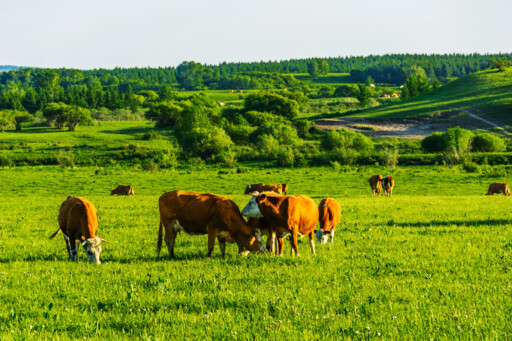
Animal movement carries the imprint of human activity. Photo: TUCHONG
On Dec. 19, 2025, Science published a groundbreaking study on the origins and migration history of domesticated cattle in East Asia, conducted by a research team led by Cai Dawei, a professor at Jilin University, in collaboration with other archaeological research institutions. The findings highlight the enormous potential of modern scientific technologies to empower research in the humanities and social sciences.
In an interview with CSST, Cai noted that the study is the first to systematically reconstruct a complete genetic evolutionary map of domesticated cattle in East Asia spanning nearly 10,000 years. It not only reshapes academic understanding of livestock domestication and spread, but also offers dynamic genetic evidence for reconstructing the complex patterns of East–West cultural exchange and interaction along the prehistoric Silk Road.
Paradigm revolution
Traditionally, archaeologists have relied on the morphology, quantity, and processing marks of animal bones to reconstruct the history of ancient domesticated animals and their coexistence with humans. “From skeletal morphology alone, we can only determine that cattle appeared during a certain period,” Cai admitted. “Where did they come from? Were they related to cattle populations from distant regions? Traditional methods have struggled to answer these questions.”
The major project of the National Social Science Fund, “Research on Silk Road Cultural Exchanges from the Perspective of Ancient Animal DNA,” was established precisely to penetrate this historical fog. Cai noted that “the movement of animals essentially reflects human activities.” As key means of production, symbols of wealth, and carriers of culture in ancient societies, the migration trajectories of domesticated animals directly map population movements, the opening of trade routes, the spread of production technologies, and even the collision and integration of civilizations. The research team therefore selected cattle—an animal that played a pivotal role across multiple centers of civilization in Eurasia—as a “genetic key” for decoding the history of early exchanges.
However, extracting and interpreting ancient DNA from archaeological samples that have endured for thousands of years is extremely challenging. Such samples are highly susceptible to contamination, genetic material is often severely degraded, and the technical requirements are exceptionally demanding.
To overcome these obstacles, the team brought together researchers from Jilin University, Seoul National University in South Korea, and dozens of archaeological and cultural heritage institutions across China, exemplifying a model of organized scientific research. By systematically screening, extracting, and sequencing more than 500 animal bone and tooth samples from over 50 archaeological sites nationwide, the team successfully generated high-quality nuclear genome data from 166 ancient bovine specimens spanning more than 30 sites. The samples used, dating from the early Neolithic period nearly 10,000 years ago to the Ming (1368–1644) and Qing (1644–1911) dynasties, form the largest and most temporally complete regional dataset of ancient cattle genomes currently available worldwide, providing a solid scientific foundation for tracing the evolutionary history of domesticated cattle.
Breaking ‘single-origin’ hypothesis
The study challenges earlier assumptions that domesticated cattle in East Asia originated from a single domestication center or were introduced through a one-time event. Analysis of ancient nuclear genome data shows that the genetic composition of present-day East Asian domesticated cattle emerged through a nearly 10,000-year process marked by repeated introductions of exogenous genes and deep, continuous integration with local populations.
Based on genomic analyses, the study finds that the evolutionary history of East Asian domesticated cattle involved several major episodes of genetic admixture. The first occurred in the late Neolithic period, around 5,000 years ago, when taurine cattle originating in West Asia were introduced into the Yellow River Basin. Rather than simply “replacing” local fauna, these cattle interbred with wild aurochs that were still widely distributed across East Asia at the time.
The second major episode took place from the late Bronze Age to the Iron Age. During this period, domesticated cattle in the Xinjiang region—a key hub along the Silk Road—carried genetic signatures of both West Asian taurine cattle and South Asian zebu cattle. The finding is akin to uncovering a “genetic passport” that clearly confirms Xinjiang’s pivotal role as a crossroads of East–West exchange. These cattle herds, which integrated bloodlines from both ends of Eurasia, gradually spread eastward into the Yellow River Basin, continually enriching and reshaping the genetic landscape of domesticated cattle in northern China.
Subsequently, large-scale population movements, political unification, and cultural integration between northern and southern China facilitated extensive and sustained genetic exchange among cattle populations. This long-term, multi-stage, and multi-source process laid the foundation for the basic genetic structure of modern cattle populations across China. Seen through the lens of molecular biology, this intricate genetic mosaic reflects, in miniature, the long arc of interaction and integration through which a civilization took shape—not in isolation, but through sustained contact with the wider world.
Beyond tracing cattle migration and genetic admixture, the study also draws on genetic evidence to illuminate how ancient human societies adapted to dramatic environmental change. Discussing the broader implications of the findings, Cai pointed to a global cooling event that occurred around 4,200 years ago. “Intensive farming systems became increasingly difficult to sustain,” he explained. “Cooling temperatures lengthened crop growth cycles or led to poor harvests, while grassland areas may have expanded in some regions.”
Under such circumstances, communities across East Asia were forced to adjust their livelihood strategies. Analysis shows that during this period of climatic stress and soaring agricultural pressure, the spread of West Asian–originated animals such as sheep, goats, and cattle—species better suited to grassland environments and nomadic or semi-nomadic livelihoods—accelerated significantly. The economic foundation in this region gradually shifted from a livestock structure dominated by pigs, which were more compatible with settled agriculture, toward a mixed farming–pastoral economy incorporating more cattle and sheep herding.
The “acceleration curve” of cattle gene flow closely aligns with key moments of climatic change and transformations in human subsistence strategies. The history of cattle domestication and diffusion thus emerges as a distinctive “genetic archive,” recording how human societies adapted flexibly to environmental pressures over the long course of their development.
Providing scientific support for mutual learning among civilizations
This groundbreaking study represents a major achievement of the Bioarchaeology Laboratory of Jilin University and a compelling example of interdisciplinary research enabled by organized scientific collaboration. By reorienting archaeological inquiry from “skeletal archaeology” toward “molecular archaeology,” the research marks a paradigm shift in the field and highlights the growing capacity of modern science and technology to empower the humanities and social sciences.
In Cai’s view, the academic significance of the research extends well beyond the history of animal domestication. First, it substantially pushes back the timeline of material and technological exchanges between East and West along the Silk Road, confirming that as early as 5,000 years ago, domesticated cattle—both important economic resources and carriers of technology—had already begun to disseminate over long distances from West Asia to East Asia. Second, it offers a distinctive micro-material perspective for understanding the formation and development of the Chinese national community. By clarifying the evolutionary history of this critical economic resource, the study deepens understanding of the developmental trajectory of Chinese civilization and the emergence of social complexity at the level of economic foundations. Finally, by scientifically reconstructing the evolutionary history of domesticated cattle, the research provides solid academic support for understanding the inherent motivation and long-standing dynamics of civilizational exchange and mutual learning. It demonstrates that the progress of civilization has never occurred in isolation, but has always advanced through continuous interaction, learning, and integration.
Ultimately, this genetic study of “cattle” points to a story about “people”—a grand theme of openness, inclusiveness, mutual learning, and the collective responses of human societies to shared challenges.
Editor:Yu Hui
Copyright©2023 CSSN All Rights Reserved