


Archaeologist calls for embracing cultural relics in ancient social context
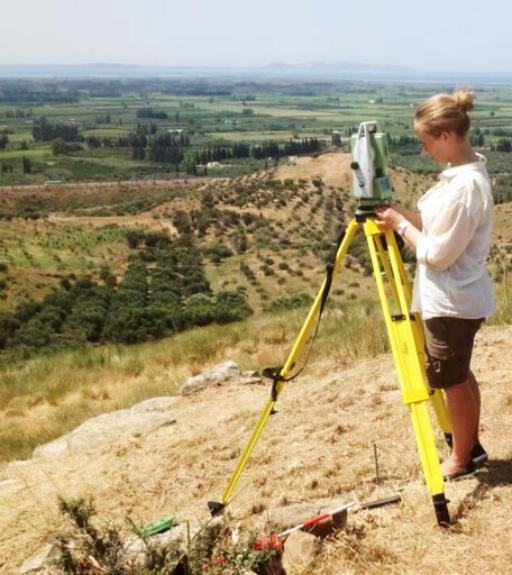
Sanne Hoffmann Photo: PROVIDED TO CSST
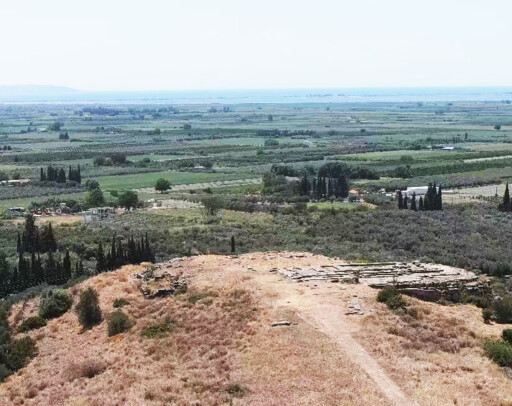
Archaeological site of Calydon Photo: Yang Xue/CSST
In an era when archaeology is at risk of being reduced to the study of isolated objects or monumental sites, Sanne Hoffmann, Director of the Danish Institute at Athens (DIA), calls for a more immersive, human-centered approach. In her view, the true value of archaeology lies not simply in artifacts themselves, but in contextualizing them within the lives, thoughts, and actions of the people who produced and used them. This “less art, more life” perspective shifts attention to the rhythms of everyday existence, networks of trade and social exchange, and the tangible realities underlying ancient religious practices.
Young institute, old heritage
CSST: How would you describe the DIA’s distinctive research ethos?
Hoffmann: Although the Danish Institute at Athens was formally established in 1992, Denmark’s archaeological engagement with Greece goes much further back, to as early as 1902, when Danish archaeologists conducted one of their largest field projects in the country at the Athena Lindia Sanctuary in Lindos on Rhodes. It was since well published and has been a great influence on the studies of ancient Greek cult and religion. In this sense, the Institute represents a long-standing Danish commitment to studying what is often described as the cradle of Western civilization.
A distinctive feature of the Institute’s research ethos is its emphasis on collaboration. From the outset, the DIA has fostered close cooperation with other foreign archaeological institutes as well as with Greek institutions and scholars, as well as local communities. A good example is the shared Nordic Library, which functions not only as a research facility but also as an important meeting place for scholarly exchange. This spirit of constructive cooperation—across national and institutional boundaries—has been central to the Institute’s development and continues to shape its work today.
CSST: The DIA’s portfolio includes several high-impact archaeological projects across Greece. Could you speak about some that, in your view, have been particularly influential in reinterpreting ancient Greek society?
Hoffmann: It is difficult to single out just one project, as each of our fieldwork initiatives has contributed in different ways to expanding our understanding of the past. Every project tells us something we did not know before. That said, the Calydon project is a particularly illustrative example. Originally initiated in 1926, it will celebrate its centenary this year. After intensive work in the late 1920s and 1930s, the project was revived in 2001–2005, and has now been running continuously since 2011.
Excavations at Calydon have focused on key areas such as the Acropolis, the Heroon, and the Sanctuary of Artemis Laphria. One of the most significant outcomes has been the realization that the ancient city was occupied and used for a much longer period than previously assumed, prompting a reassessment of Calydon’s historical development and regional importance. .
Our underwater archaeological projects have also been especially influential. The investigations of the Zea Harbour Project in Piraeus have shed new light on Athenian naval infrastructure during the Classical period, particularly from the late 5th to the 4th century BCE. The discovery of ship sheds capable of housing two warships each has provided valuable insight into the scale, organization, and logistical sophistication of the Athenian navy.
CSST: Athens is now home to 20 prestigious foreign institutions dedicated to Classical Studies. What are your expectations of the newly established Chinese School of Classical Studies at Athens?
Hoffmann: There is always room for new contributions in Athens. Classical Studies, by their very nature, is not a closed field, and the arrival of the Chinese School of Classical Studies at Athens will undoubtedly enrich the academic landscape by introducing new perspectives and research questions. Every foreign institute that establishes itself in Athens does so with a broader ambition: to define its own relevance while contributing to a shared international conversation.
From my perspective, what is especially valuable about the Chinese School is its potential to bring genuinely comparative approaches into Classical Studies. Comparative studies can help expand knowledge, for example, in practicalities such as craftsmanship, but also cultic studies in terms of ritualistic purposes, as well as cognitive and sensorial experiences.
Open-border Classical Studies
CSST: In Western academia, Classical Studies traditionally focuses on ancient Greece and Rome. However, recent scholarship has explored a broader, more multicultural interpretation of the classical world, raising questions about whether ancient Chinese civilization and other civilizations could be integrated into this field. How do you view this shift, and what implications do you think it has for the future of Classical Studies?
Hoffmann: From a teaching perspective, it is important to give students a clear sense of the scope of the field. Traditionally, Classical Studies refers to the study of ancient Greece and Rome, as well as the regions and cultures that were shaped through contact with them. In that sense, the discipline still needs a recognizable core. At the same time, those boundaries should not be rigid or closed. Classical Studies should be understood as having open borders rather than being confined to a narrowly defined geographical or cultural area.
Ancient China, of course, has its own rich and authoritative classical traditions. I see great potential in comparative and parallel approaches.
CSST: Amid the challenges facing the humanities, does the study of classical civilization remain relevant and vital today? What strategies could help reignite public interest and engagement in the field?
Hoffmann: History reminds us that intellectual priorities tend to move in waves. I remain hopeful that the foundational value of the humanities
Classical Studies continue to matter, even though they do not produce immediate or easily measurable outcomes.
In terms of strategies for revitalizing public engagement, I see at least two promising directions. One is the thoughtful use of new technologies, such as virtual reality, to enhance museum experiences. By moving beyond isolated objects toward a “less art, more life” approach, museums can help visitors visualize how ancient people lived, worked, thought, and interacted, filling in the gaps that artifacts alone cannot convey.
A second strategy lies in the creative retelling of classical narratives. Myths, for example, can be reinterpreted by shifting perspectives while retaining their core structures. Recent retellings, for example of the Odyssey from the viewpoint of Odysseus’ wife, Penelope, demonstrate how ancient stories can be used to explore themes such as women’s lives, labor, resilience, and survival—issues that resonate strongly today.
‘Peopling of the past’
CSST: Aetolia is often deemed marginal or underdeveloped in ancient sources. How does archaeological evidence redefine its cultural and political identity, and why is this Western Greek region a compelling focus of research today?
Hoffmann: What is often described as “less developed” in ancient literary sources might reflect gaps in knowledge rather than historical reality. It is true that there are few inscriptions found in the area. However, archaeological evidence, especially from Calydon in Aetolia, has shown quite clearly that the region was not culturally isolated.
Studying Aetolia therefore allows us to move beyond the traditional focus on well-known centers such as Athens or Corinth and to arrive at a more complete and nuanced picture of ancient Greece as a whole. It helps us understand how regions often considered peripheral contributed to political, social, and cultural dynamics on a wider scale.
Another advantage of Aetolia is the remarkable preservation of its archaeological layers, as much of the region has not been heavily overbuilt by modern construction. This allows us to trace the area’s development across millennia—from its earliest settlements, through the construction of fortifications and sanctuaries, and the growth of towns, all the way to the later periods documented in texts. Such continuity makes Aetolia an exceptionally rich landscape for exploring long-term cultural and social change.
CSST: Your work on the agency and life histories of terracotta figurines has been highly influential. Could you share your views on this line of research?
Hoffmann: My research builds on earlier studies that, for example, examined where the clay was sourced, why certain molds were chosen, the application of paint, and the level of craftsmanship. While these details are important, I consider it crucial to contextualize the figurines—how they were produced, used, and engaged with in their social and ritual settings. By situating these objects within the lived experiences of the past, we can better understand what people were thinking, feeling, and doing.
I like the term “peopling of the past”: ultimately, studying material culture is about understanding people themselves—their choices, intentions, and interactions. Contextualizing votive assemblages in this way allows us to gain deeper insights into ancient Greek religion, not as an abstract system, but as practices embedded in everyday life and human experience.
Editor:Yu Hui
Copyright©2023 CSSN All Rights Reserved