


Realism and practical significance in Chinese online literature
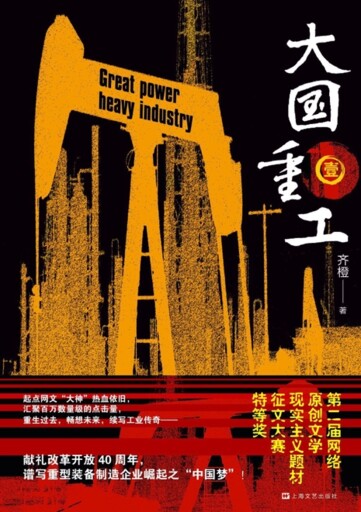
FILE PHOTO: Cover of Great Power, Heavy Industry
Whether depicting contemporary life through realistic narratives or constructing imaginary worlds through fantasy, online literature reflects both realism and practical significance. It either represents life through vivid portrayals of everyday experience or reshapes reality through an idealistic imaginative spirit.
Three types of realistic writing
The realism of Chinese online literature is evident in its acute sensitivity to social change. Based on existing works, realistic writing in Chinese online literature can broadly be divided into three types.
The first reflects the spirit of the times through depictions of social life. These works skillfully weave historical transformation and evolving social trends into the destinies of their characters, capturing the larger picture of society through everyday details. 1st Love, created by Cai Zhiheng (Pizi Cai) at the end of the 20th century, portrays the new lifestyle of young people falling in love via the internet. Through scenes of online interaction and a distinctly “internet-savvy” narrative style, the novel captured an emerging mode of social life.
The second focuses on major themes that showcase development and progress across various industries and fields since China’s reform and opening up. In recent years, the government has actively encouraged online writers to create works centered on realistic themes, leading to the emergence of numerous web novels with grand narratives. Works such as Great Power, Heavy Industry, for example, focus on China’s achievements in fields such as machinery manufacturing, aerospace, and intelligent robotics. They tell the stories of Chinese scientists and technicians as they courageously strive to scale the heights of science and make important contributions to technological development, demonstrating the heroic spirit of persistent innovation.
The third expands the scope of literary meaning by combining realism with fantasy. These works consciously break through the single temporal and spatial framework of traditional realism. By chronicling the destinies of characters across different historical eras, they explore the richness of human nature while conveying more complex spiritual implications. The Next Stop Is Pengcheng Square by Xiao Qi Xiao is a representative example. Using time-travel narrative techniques, the novel connects three eras—the Ming Dynasty (1368–1644), the Republic of China period (1912–49), and the 21st century—portraying the suffering, life and death struggles, grievances, and dramatic turns experienced by a group of characters across these periods. They live, struggle, and suffer, yet never relinquish their yearning for a better life.
Manifestations of practical significance
Online literature covers a broader range of subjects than traditional print literature, largely because of the diverse backgrounds of its authors. Many online writers come from different professions and integrate their vivid professional experience into their works.
Qi Cheng, an expert in economics, incorporates substantial professional knowledge into works such as Great Power, Heavy Industry, which recount the remarkable achievements of China’s industrial sector since reform and opening up. Such writing has contributed to the emergence of a genre often described as “hardcore” industrial fiction. Guo Yu and Liu Bo, both successful entrepreneurs, drew on their experience in the business world to provide the foundation for the Heroes of the Internet series, which portrays the competition between Chinese and foreign enterprises during the rise of China’s internet industry. Feijia, author of Critical Path, is an aerospace expert, while Zhen Xiong Chu Mo, author of Live Surgery Room, is a practicing clinician. Qin Ming, author of Medical Examiner Dr. Qin, works as a forensic doctor.
Together, such works have cultivated a distinctive genre known as “industry literature,” which reflects the spirit of the times across different professional fields while exhibiting a strong sense of realism and contemporary relevance.
The practical significance of online literature is reflected not only in the direct representation of reality but also in the reading experience itself. Online literature has an enormous readership, and real-time interaction between authors and readers allows these works to subtly influence readers’ emotions, thereby participating in their spiritual development. Many popular web novels feature protagonists who overcome adversity and ultimately prevail, conveying broadly positive values and offering readers spiritual encouragement.
Some outstanding works that engage actively with social reality often address issues that spark extensive public discussion and encourage social reflection. When adapted into films or TV dramas, these stories frequently become trending topics. The drama Ode to Joy, for example, portrays the living conditions of young urban women through the experiences of five female characters, making issues such as workplace development and evolving interpersonal relationships subjects of widespread discussion. Such works provide vivid material for observing the pressures of everyday life and exert a noticeable social influence.
The practical significance of online literature is also reflected in its inheritance of traditional Chinese culture. Deeply influenced by traditional cultural values, many online novels incorporate ideals such as warmth, kindness, courtesy, thrift, modesty, benevolence, righteousness, propriety, wisdom, and trustworthiness, as well as social responsibility and the spirit of unremitting self-improvement. Through storytelling, these cultural values exert a positive and enduring influence on society.
Chinese online literature portrays the lifestyles of the nation and the spirit of the times, reflecting social transformation and achievements since reform and opening up. By telling stories that resonate with readers, it has also achieved remarkable results in overseas communication. Responding to the evolving demands of the times, online literature continues to expand the expressive range of realism through stories that embody the spirit of contemporary China.
Zhou Zhixiong is a professor and director of the Online Literature Research Center at Anhui University.
Editor:Yu Hui
Copyright©2023 CSSN All Rights Reserved