


How can megacity community governance address challenges of ‘fluid daily life’
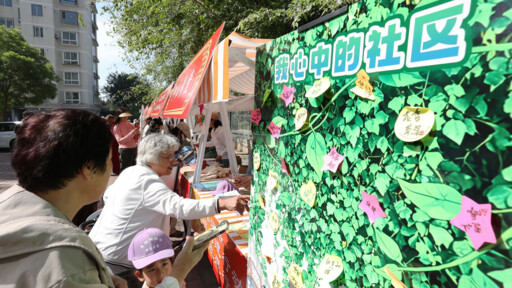
On May 10, the eighth Beijing Neighborhood Festival launched its Huairou district events. Under the theme “Neighbors Gather, Warmth Unites,” 37 communities across the district held 75 activities, including neighborhood markets, community feasts, resident performances, and parent-child craft workshops. Photo: IC PHOTO
Urbanization in China is moving from a period of rapid growth toward a more stable phase, while urban development is shifting from large-scale expansion to a stage focused on improving quality and efficiency. Social governance in megacities is crucial to the modernization of China’s governance system and governance capacity as a whole, requiring a careful balance between territoriality and mobility, stability and flexibility, and efficiency and equity. As the basic units of social governance in megacities, primary-level communities carry the social mission of meeting the people’s growing needs for a better life. Yet compared with small and medium-sized urban communities, megacity communities face a distinctive challenge: As urbanization deepens, mobility and uncertainty have steadily increased. A growing number of communities now display a highly fluid pattern, characterized by “a permanent community but transient residents.”
High mobility creates challenges
A first tension arises between the pursuit of certainty in governance and the uncertainty of governance space. Precision governance in megacities requires grassroots governance capacity to be deployed accurately. Yet megacity communities are home to large numbers of frequently mobile residents, and this uncertainty in governance space can disrupt the pursuit of certainty. Community consultation is also an important means of ensuring grassroots democratic governance. In the face of highly mobile populations, however, consultation mechanisms are vulnerable to instability: Outcomes reached through repeated rounds of consultation can quickly become fragile when group preferences shift. Highly mobile communities may also face disorder in daily management. In everyday governance, for example, waste sorting is often less effective because residents are highly mobile and their work and daily schedules do not align with designated waste-sorting hours.
A second tension lies between the bounded nature of governance organizations and the cross-boundary reality of community membership. Consider the “three pillars” of community governance: the homeowners’ association, the property management company, and the neighborhood committee. In highly mobile megacity communities, many residents are either non-resident property owners or non-owner residents. Even so, homeowners’ association decision-making still tends to take the interests of property owners as both its starting point and its ultimate goal. This “natural” decision-making tendency may overlook the needs of the relatively large population of mobile long-term residents.
Property management companies, operating according to market logic, also tend to treat property owners as their direct service targets. Their attention is focused primarily on the living needs of the owner group, namely those who pay service fees, while the many non-owner residents in highly mobile communities receive less attention.
In deliberation and decision-making bodies led by neighborhood committees, meanwhile, mobile long-term residents may have substantive demands related to their living environment and community governance. Yet these demands are often overlooked.
A third tension concerns the communitarian ideal of governance values and the growing alienation of the community’s emotional atmosphere. Community has long been imagined as a shared form of life—a public vehicle for sustaining morality and the common good. In highly mobile communities, however, the complex and fluid composition of the resident population has given rise to a life strategy of “no contact unless necessary.” Spatial and social separation among different resident groups becomes increasingly pronounced.
Fluid governance as innovation
Advancing “fluid governance” in primary-level communities requires grassroots self-governing organizations in megacities to adopt a more inclusive approach. This entails overcoming bias against and exclusionary attitudes toward social fluidity, while promoting innovation across multiple dimensions, including concepts, institutions, tools, and culture.
Community-level fluid governance emerges within the broader context of a fluid society and is guided by the values of respecting, protecting, and embracing fluidity. Its defining features include democratic participation at the institutional level, technological empowerment at the instrumental level, and emotionally attuned governance at the cultural level. Its overarching objective is to foster governance innovation and optimization in response to the highly fluid population composition, everyday practices, and social dynamics that characterize contemporary urban communities.
At the institutional level, mobility should be revitalized through democratic participation. The first priority is to improve the system of grassroots consultative democracy. As the saying goes, “matters that concern everyone should be discussed by everyone.” In megacities, grassroots self-governing organizations should pay attention not only to stable long-term residents, but also to the growing number of mobile long-term residents. Participation should be ensured at every stage of governance, including identifying needs, engaging stakeholders, exercising authority, providing feedback, and making and implementing decisions. In this way, consultative democracy can be expanded to achieve participation by the whole population and throughout the entire process.
The second priority is to empower a diverse range of participants. Grassroots organizations should guide, encourage, support, and mobilize multiple actors to participate in community self-governance. They should expand channels for the orderly participation of different social groups and foster an inclusive community of governance. Sublessors or “second landlords,” tenants, workers in new forms of employment, and local enterprises and institutions, for example, can all be incorporated into the community governance network. Community organizations should actively solicit residents’ views and suggestions, while strengthening the public character of community affairs. In rental communities with large concentrations of young people, new forms of community activity should be developed to attract their interest and build a stronger sense of belonging and civic responsibility. Such efforts can help address apathy and tokenistic participation.
The third priority is to strengthen policy advocacy and institutional support. Governments should promote the development of migrant-friendly and new resident-friendly communities. Community boundaries should become more open and inclusive, facilitating mobility and integration across urban–rurual and regional divides. Governments should also narrow disparities between mobile long-term residents and stable long-term residents in access to social insurance, housing security, healthcare, and compulsory education for their children. These measures will better protect the rights and entitlements of mobile long-term residents as full members of the urban community.
At the level of specific tools, the key task is to identify and respond to mobility through technological empowerment. Faced with highly mobile populations and uncertain spatial dynamics, megacity communities can make proactive use of advanced technologies to detect patterns of mobility and strengthen grassroots governance capacity.
Community X in Hangzhou, Zhejiang Province, offers a representative example. Located in the core area of a major transportation hub, the community has had a highly mobile population since its establishment, when mobile residents accounted for 70% of its total population. Managing this population and meeting its service needs soon became the community’s most significant governance challenge.
In recent years, the community has taken advantage of Zhejiang Province’s digital reform initiative to develop an innovative “community code” (xiaoqu ma). This digital tool addresses two core issues: management and service provision for mobile residents, and coordination among the “three pillars” of governance.
The functions of the community code have gradually expanded to cover a wide range of service scenarios, including administrative affairs, facility maintenance, and cultural activities. The platform is designed to remove identity-based barriers between stable long-term residents and mobile long-term residents. By integrating mechanisms for problem-solving and needs response for all residents, it creates a closed-loop system of governance and service aimed at improving residents’ quality of life.
The community code also provides transparent, real-time tracking of issues and their resolution. This feature enables effective coordination among the neighborhood committee, the homeowners’ association, and the property management company. As a result, it reduces the tendency of these organizations to shift responsibility to one another and improves both accountability and governance efficiency.
At the cultural level, mobility can be consolidated through emotional governance. Although high levels of mobility can weaken the interpersonal ties traditionally associated with acquaintance societies, this does not diminish residents’ need for emotional connection and social support. Communities should therefore cultivate an emotional atmosphere grounded in fairness, justice, care, and mutual assistance. This effort should operate at multiple levels, including everyday interpersonal interactions, organizational practices, and institutional norms. The goal is to foster stable and institutionalized forms of informal support among residents.
To this end, communities should fully activate their capacity for emotional cohesion through a variety of mechanisms, including community leaders, social organizations, community agreements, and public services. These mechanisms can help create the emotional stability captured in the phrase “mobile residents, but a stable community.”
Community Y in Hangzhou offers another example. Mobile residents account for 60% of its population, and population mobility poses significant governance challenges. In recent years, the community has developed an innovative “Community Partner” initiative. The project brings together individuals and organizations from both within and outside the community under a framework of collaborative partnership, promoting the formation of a governance community based on joint construction, shared governance, and mutual benefit.
At the same time, the initiative strengthens services that support the daily lives of children, older adults, and young people. By improving these essential services, the community fosters an atmosphere of cooperation, trust, and interaction. In doing so, it transforms a highly mobile population into a more emotionally connected and socially cohesive community.
Fluid governance in megacity communities demonstrates the practical wisdom of primary-level governance that adapts to mobility in the process of Chinese modernization. Its theoretical meaning and practical orientation require continuous enrichment and refinement within the “fluid daily life” of the grassroots.
Gao Yiduo is an associate professor from the School of Public Administration at Hangzhou Normal University.
Editor:Yu Hui
Copyright©2023 CSSN All Rights Reserved