


Historical consciousness, contemporary pathways for building philosophy and social sciences with Chinese characteristics
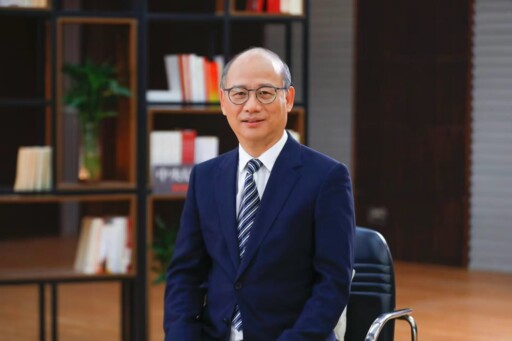
Yang Kaizhong Photo: PROVIDED TO CSST
The year 2026 marks the 10th anniversary of General Secretary of the CPC Central Committee Xi Jinping’s important speech at the Seminar on Philosophy and Social Sciences, as well as the 20th anniversary of the establishment of the Academic Division System at the Chinese Academy of Social Sciences (CASS). At this pivotal moment, the call to build an independent knowledge system for Chinese philosophy and social sciences has taken on renewed urgency. Recently, CSST invited Yang Kaizhong, a CASS Member and research fellow from the Research Institute for Eco-civilization at CASS, for an in-depth conversation on the core proposition of “subjectivity and originality,” with a focus on how Chinese scholarship can move beyond academic “dependency” and open new fields such as new quality productive forces and eco-agent cities.
Breaking ‘dependency’ dilemma
CSST: At the Seminar on Philosophy and Social Sciences, General Secretary Xi Jinping emphasized that “a sense of national identity and an emphasis on original thinking are what make our philosophy and social sciences distinct from those of other countries.” How do you interpret this assertion?
Yang Kaizhong: In the past, some scholars have misunderstood “Chinese characteristics” in two ways. First, they treated it as a hollow label, using Chinese elements merely to embellish stale research lacking innovation. Second, they viewed it as a marker of political correctness, thereby sidestepping genuine issues and wielding “Chinese characteristics” as a talisman to evade critical academic scrutiny. However, without national identity, one inevitably becomes an appendage to Western theories; without original thinking, scholarship remains trapped in the stages of imitation and verification.
Since the primary targets of this imitation-and-verification approach are Western epistemologies, this path dependency is, in essence, a deep-seated reliance on Western theories. The yardstick of “national identity and original thinking” precisely diagnoses the fundamental flaw of “tailoring Chinese practice to fit Western theories.”
The key to constructing knowledge with national identity and original thinking is to unlock this dependence on imitation and verification, thereby achieving a paradigm shift toward autonomous originality. Unlocking this path does not mean severing ties with international academia; rather, it entails transforming the institutional environment that regards imitation and verification as the safe route, so that critical assimilation and independent innovation become the mainstream.
CSST: In the decade since General Secretary Xi Jinping delivered his important speech at the Seminar on Philosophy and Social Sciences, what key progress has China’s academic community made in moving beyond the path of imitation?
Yang Kaizhong: The progress of the past decade should be understood on two levels: An epistemic awakening has already taken place, while substantive institutional breakthroughs are still underway, though fundamental change remains some distance away.
Over the past decade, a growing number of scholars have realized that Chinese practice has long crossed the threshold of “quantitative change.” The crux is not how long that practice has lasted, but whether the academic system has the theoretical capacity to transform local experience. This cognitive leap from “waiting” to “action” is the intellectual prerequisite for unlocking the path of imitation.
The closed loop of “problem transplantation–concept borrowing–methodology worship–evaluation imitation” has begun to break down. The proportion of papers centering on Chinese issues has risen significantly, while papers that “test Western hypotheses with Chinese data” have dropped sharply. Iconic concepts such as “Chinese modernization” and “new quality productive forces” have entered the academic discourse, and “finding problems from practice” has become the conscious choice of the majority.
The National Social Science Fund of China has established special programs to support original research. In textbook development, a fundamental restructuring remains difficult because the reserves of autonomously original knowledge are still insufficient, but important strides have been made in compiling independent textbooks. The institutional space for autonomous originality is expanding.
Regarding discipline evaluation, evaluation criteria now give significantly less weight to journal labels and publication counts, place greater emphasis on representative works, and reflect a growing consensus against overvaluing papers, projects, titles, degrees, and awards. Although the deeply ingrained habit of judging work simply by journal rankings is hard to eradicate, the monopoly of “journal label obsession” and “quantity obsession” has begun to loosen, and academic evaluation is returning to its core mission of “achieving excellence through innovation, serving society through excellence.” I use “loosen” rather than “break through” here because reversing institutional inertia requires more time.
Qualitative, historical, and fieldwork methodology courses are being introduced into PhD training programs. However, entrenched methodological preferences continue to generate strong conflicts in journal reviews and project evaluations, and “sectarian barriers” have not yet been completely dismantled.
Reforms to the evaluation system, adjustments to discipline assessments, pilot programs for the representative works system, and rewards for original achievements are all helping to dismantle the convention that “imitation is orthodoxy.”
New spatial economics
CSST: Spatial economics provides a theoretical basis for coordinating regional development. Over the past decade, you have devoted considerable effort to pioneering “new spatial economics.” How can this field generate theoretical achievements with Chinese characteristics?
Yang Kaizhong: New spatial economics synthesizes and moves beyond new economic geography, urban economics, and creative capital theory. Its core proposition is that the spatial economy is endogenous to the five-dimensional interplay among technological progress, increasing returns, factor flow, the transportation costs of material and human capital, and spatial quality. Its paradigm is manifested in breakthroughs across four dimensions.
The first is the unified perspective paradigm, which shifts from a single production-centered view to a dual framework that gives equal weight to life and production.
Second, the heterogeneous space paradigm shifts from homogeneous space to heterogeneous space, takes spatial quality as its theoretical core, and proposes that “talent location determines innovation location, and spatial quality determines talent location.”
The symbiotic network paradigm moves beyond a production network alone toward a production-living symbiotic network, placing travel costs on par with transportation costs.
The dual-force coupling paradigm shifts from a single centripetal force to a dual-drive mechanism based on both market access effects and quality access effects.
Together, these four logically connected breakthroughs attempt to systematically reconstruct mainstream spatial economics and have attracted considerable academic attention. However, new spatial economics currently remains at the stage of a “competing theory.” Its generalizability requires cross-country validation, and it will take time and sustained dialogue to gain acceptance from the international academic community—which is precisely the direction of our future efforts. The significance of new spatial economics lies in its exploration of a viable path: distilling original theories from Chinese practice while engaging in equal-footed dialogue with international mainstream scholarship.
Eco-agent cities
CSST: Since the 18th CPC National Congress, China’s ecological civilization endeavors have undergone historic, transformative, and comprehensive changes, from theory to practice, providing fertile ground for the construction of an independent knowledge system of ecological civilization. How do you view the building of this knowledge system?
Yang Kaizhong: Since the 18th CPC National Congress, abundant ecological civilization practices have laid a solid empirical foundation for building this independent knowledge system. However, building it systematically remains a formidable, long-term task. Particular attention should be paid to the dialectical relationships across the following five dimensions.
Ecological civilization is not merely a green civilization; it is a synthesis of green civilization, intelligent civilization, and resilient civilization. This means ecological civilization cannot be advanced through greening alone; it must be deeply integrated with intelligent development and resilience building.
From a historical perspective, new quality productive forces constitute an advanced state of productive forces driven by innovation and characterized by the synergy and integration of green, intelligence, and resilience. However, it is crucial to note that green productive forces are not equivalent to new quality productive forces. To stride into a new era of ecological civilization, the key lies in developing new quality productive forces where green, intelligent, and resilient elements are synergistically integrated.
Cities are the centers of civilization. Future eco-civilized cities will not be merely green and low-carbon cities, or eco-cities in the conventional sense; they will represent a new urban form characterized by the synergy and integration of green, intelligence, and resilience—namely, “eco-agent cities.” This concept emphasizes that a city is an organic whole where nature, the economy, and society are deeply fused and interconnected through the three factors of green, intelligence, and resilience. In its core composition, such a city is a hybrid, collaborative, organic network made up of eco-wise humans and ecological AI agents. Within this framework, humans serve as the value soul and strategic directors of the city; AI agents function as its sensory organs; and nature constitutes its substrate, memory, and immune foundation.
Our research proposes that humanity develops amid the six-dimensional interplay and mutual constitution of value evolution, institutional innovation, resource endowment, technological progress, scale laws, and distance of flow. This framework is recursive and applicable across all levels—from productive forces to civilizational forms, and from cities to regions and the globe. To develop new quality productive forces and eco-agent cities, and to construct an ecological civilization, we should adopt the methodology of canzan huayu—participating in, assisting, and mutually nurturing this process of mutual constitution.
Taking Xi Jinping Thought on Ecological Civilization as the fundamental guideline, we must integrate Marxist philosophy with China’s eco-civilization practices and with the philosophy of shengsheng in fine traditional Chinese culture, which concerns the continuous generation, evolution, and development of beings in the universe. By synthesizing process philosophy, systems philosophy, and cutting-edge achievements of empirical science, we can establish an independent Chinese ecological philosophy encompassing ontology, axiology, historical materialism, epistemology, and methodology. This is the core breakthrough needed for constructing an independent knowledge system of ecological civilization.
Editor:Yu Hui
Copyright©2023 CSSN All Rights Reserved