


Int’l scholars examine contemporary value of classics
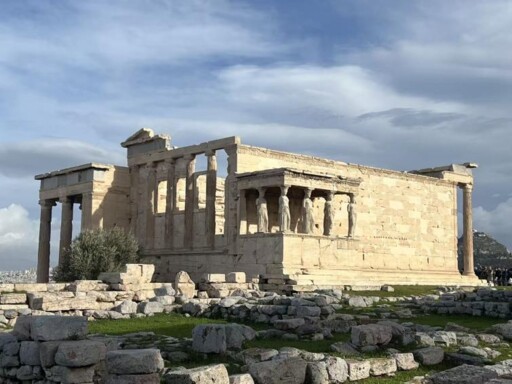
The Acropolis of Athens in Greece Photo: Lian Zhixian/CSST
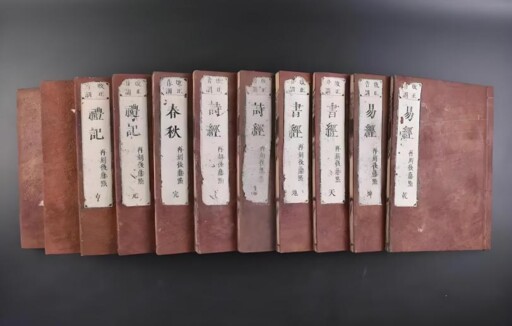
FILE PHOTO: Confucian classics in traditional binding
As the world remains shadowed by strife, division, and technological alienation, an ancient yet perennially relevant question has returned with new urgency: Is it necessary to look back to the classical world of thousands of years ago? What enduring relevance do the canonical works that emerged from the Axial Age, along with ancient inquiries into justice, happiness, virtue, and order, hold for us today? As the Second World Conference of Classics convened in Athens, Greece, on June 9–10, CSST interviewed several scholars of classical studies in search of answers.
Necessity of revisiting classics
To grasp the contemporary value of classical studies, we must first clarify a fundamental question: What exactly is classical studies? Lou Lin, a professor from the Department of Classics at Sichuan University, offered a concise explanation: “Classical studies are not simply the study of antiquity.” While classical studies encompasses fields such as classical linguistics, philology, literature, philosophy, history, art, and archaeology, as well as the collation and study of unearthed documents, its core lies in “classics”—the canonical works that laid the foundations for the formation and evolution of civilizations.
“The primary scope of classical studies should revolve around handed-down classical texts, with a focus on exploring the wisdom embedded in them, which has shaped the fundamental intellectual traits and essence of civilizations,” Lou remarked.
As a discipline both ancient and continually renewed, Lou further explained, classical studies derives its distinctive value from re-examining two forms of wholeness embodied in classical texts: “the holistic relationship between humanity and the world, and the possibility of inner integrity within individuals.” Classical education, in this sense, aims to cultivate more complete human beings, with both aspiration and capability.
This understanding distinguishes classical studies from the increasingly fragmented research in literature, history, and philosophy within modern academic systems. Rather than pursuing the mere accumulation of knowledge, classical studies is concerned with the wholeness of the human being.
Why, then, should the classics be revisited amid rapid technological advances and rampant information fragmentation? “While times have changed, and the social order along with it, human nature itself remains a constant,” stated Scott Cook, a Tan Chin Tuan professor of Chinese Studies with the Departments of Chinese Studies and History at the National University of Singapore. “It is by looking back upon how we as humans first devised the order and dealt with the basic questions that still surround us today that we gain a better perspective of how we have arrived at our present situation and which of our initial solutions inherited from the distant past stand in need of further improvement or reconceptualization,” he said.
Beyond ‘useful’ vs. ‘useless’ debate
Yet any discussion of the contemporary value of classical studies raises an even more basic question: Should its worth be measured by whether it is “useful?”
Xu Xingwu, a professor from the School of Liberal Arts at Nanjing University, argued that modern people tend to ask what ancient heritage can do for us, but this logic is flawed. “Modern civilization is itself a continuation of classical civilization. The very fact that we can pose such a question proves this point. Classical civilization has never faded away; we simply live immersed in it without full awareness,” he noted. Everyday Chinese expressions such as “What a joy it is to have friends coming from afar” and “I reflect on my conduct several times a day,” for example, all originate in the classics. Even those who have never read ancient texts continue to live amid the ideas they contain.
Nor do we turn to classical studies simply to achieve some practical end; rather, such inquiry is inherent to the way we live, Xu asserted. “The pursuit of self-exploration is an end in itself.”
Xu’s words capture the contemporary significance of classical studies. Far from being a tool that serves external purposes, it offers an indispensable path for humanity to understand itself and find spiritual anchorage.
This is not to suggest that classical studies exists in some realm apart from lived experience. Cook approached the question from another angle: “The works of the classical period inform everything we do today. Whether in early China or ancient Greece, the classics of ancient philosophy and literature represent the time when thinkers and artists first began to grapple in a sophisticated way with some of the major issues of human nature, society, political order, and inter-state relations that still confront us today.”
“While it may be some exaggeration to say that all of Western philosophy is simply ‘footnotes to Plato’—or, in the Chinese case, perhaps footnotes to Confucius and Laozi—there is nonetheless a core of truth to the idea that we are constantly revisiting ideas first established, imperfectly, during the classical period,” Cook said.
“Crucially, while we have evolved into distinct civilizations with diverging cultural norms and sociopolitical institutions, all of us share that same, constant human nature at our core, and comparing notes about how our societies first derived their norms and institutions at a time before they became firmly entrenched is one of the best ways of achieving mutual understanding in a present in which the gulfs that divide us might otherwise appear insurmountable,” he added.
Mutual learning between Chinese, Greek civilizations
If the universal value of classical studies lies in prompting humanity to return to fundamental questions, then comparison and dialogue between Chinese and ancient Greek civilizations may provide a distinctive theoretical foundation for building a system of shared human values.
Cook pointed to “happiness” as one example of the striking parallels between the classical traditions of China and Greece. Aristotle defined happiness (eudaimonia) as an activity of the soul in accordance with virtue, a formulation that may seem counterintuitive to many modern understandings of happiness. Yet the Confucians defined happiness (le)—or at least true happiness—in remarkably similar terms.
The Analects records Confucius as saying that rather than to know and delight in something, it is better to find happiness in it, which for him entailed a state in which one has so fully embodied virtuous action within that it becomes effortless and spontaneously joyful. Or, as Xun Zi put it: In contrast to the petty person, who finds happiness in the fulfillment of desires, the “noble man finds happiness in achieving the proper way.” “In short, for both early traditions, true happiness was to be understood as a lifelong pursuit and the ultimate state of contentment with a way of life lived in accordance with virtue,” Cook explained.
Lou, meanwhile, offered thought-provoking observations on the research methodologies of Chinese and Western classical studies. He noted that the two traditions can learn from each other in areas such as textual collation and annotation, while also differing in two important respects. First, ancient China developed more sophisticated theories and historical practices for the official compilation and canonization of classics. Second, modern Western classical studies took shape amid the gradual decline of classical societies, giving Western classical studies a more intrinsic relationship with modernity.
Chinese classical studies ‘going global’
While affirming the contemporary relevance of classical studies, scholars also pointed candidly to the challenges facing the field today.
Lou noted that new progress has been made in discussions of classical studies’ connotations, disciplinary practice, and academic research. Even so, the field still suffers from uneven scholarly accumulation and development. “Take Western classical studies as an example, research on ancient Greece and Rome constitutes its core. Yet studies of ancient Rome receive far less attention than those of ancient Greece. For instance, numerous works by Cicero, one of Rome’s preeminent thinkers, still lack high-quality scholarly translations, let alone in-depth research.”
Classical studies is often seen as an elite form of learning confined to the ivory tower. How, then, can it step out of that tower, enter social and cultural life, and nourish people’s inner worlds? Cook offered a concise yet profound answer: “Most fundamentally, I think it’s a matter of making the classics more accessible.”
“As scholars, many of us are consumed with detailed issues of interpretation, textual transmission, and the like—and this is as it should be, since our aim, when we translate the classics into our modern idioms, is to do so with as much precision and accuracy as possible. At the end of the day, however, we have to present our findings and translations in forms that can be more easily digested and utilized by non-specialists who are simply looking to learn from ancient wisdom and make it a part of their own social and cultural repertoire,” Cook appealed.
Cook also stressed the importance of sustained dialogue among scholars working on different ancient traditions, so that the commonalities among these traditions become more readily visible to all. “Conferences such as this one [World Conference of Classics] naturally are of great help in achieving and maintaining such goals.”
Beyond such mechanisms for exchange, China established the Chinese School of Classical Studies at Athens in 2024, the first Chinese institution for classical studies abroad. Cook described this as “quite a positive development.”
“As academic funding for the humanities is drying up worldwide, and universities around the globe are increasingly driven by practical considerations in their research aims and curricula, the establishment of an institution like this specifically aimed at promoting cultural exchange and cooperation between China and Greece and China and Europe should go a long way toward keeping classical studies alive and well in the face of such headwinds,” he concluded.
Editor:Yu Hui
Copyright©2023 CSSN All Rights Reserved